Jyoti R. Nagarale , Rupesh S. Pedanekar , Amitkumar R. Patil , Vinayak V. Ganbavle , Vinayak G. Parale , Keshav Y. Rajpure , Sudhir N. Kulkarni
{"title":"Li-Ni铁氧体增强染料降解:具有温度可调特性的溶胶-凝胶自燃烧合成策略","authors":"Jyoti R. Nagarale , Rupesh S. Pedanekar , Amitkumar R. Patil , Vinayak V. Ganbavle , Vinayak G. Parale , Keshav Y. Rajpure , Sudhir N. Kulkarni","doi":"10.1016/j.matchemphys.2025.130628","DOIUrl":null,"url":null,"abstract":"<div><div>In this study, <span><math><mrow><msub><mrow><mi>L</mi><mi>i</mi></mrow><mrow><mn>0.5</mn><mo>−</mo><mfrac><mi>x</mi><mn>2</mn></mfrac></mrow></msub><msub><mrow><mi>N</mi><mi>i</mi></mrow><mi>x</mi></msub><msub><mrow><mi>F</mi><mi>e</mi></mrow><mrow><mn>2.5</mn><mo>−</mo><mfrac><mi>x</mi><mn>2</mn></mfrac></mrow></msub><msub><mi>O</mi><mn>4</mn></msub></mrow></math></span> (X = 0.6) ferrites were synthesized via the sol-gel method, with a detailed investigation into the effects of annealing temperatures (400, 500, 600, and 700 °C) on their properties. X-ray diffraction (XRD), Fourier-transform infrared (FTIR) spectroscopy, and Raman spectroscopy confirmed the formation of a cubic spinel structure in the synthesized ferrites. The comprehensive crystalline analysis is carried out using the Williamson-Hall plot and Nelson-Riley function plot. FTIR confirmed two characteristic absorption peaks for cubic spinel ferrite around 460 cm<sup>−1</sup> and 580 cm<sup>−1</sup>. X-ray photoelectron spectroscopy (XPS) confirmed the chemical states of each element in the Li–Ni ferrite. UV–Vis diffuse reflectance spectroscopy (UV-DRS) revealed the bandgap energies of samples. The photocatalytic activity of Li–Ni ferrite for the degradation of rhodamine B, methylene blue, and methyl orange dyes was also studied, with samples annealed at 600 °C showing significant degradation efficiency. This high performance is attributed to enhanced crystallinity, favorable defect characteristics, and optimal optical properties. Overall, this work highlights Li–Ni ferrite as a highly effective photocatalyst for dye removal applications.</div></div>","PeriodicalId":18227,"journal":{"name":"Materials Chemistry and Physics","volume":"338 ","pages":"Article 130628"},"PeriodicalIF":4.7000,"publicationDate":"2025-07-01","publicationTypes":"Journal Article","fieldsOfStudy":null,"isOpenAccess":false,"openAccessPdf":"","citationCount":"0","resultStr":"{\"title\":\"Enhancing dye degradation with Li–Ni ferrite: A sol-gel auto-combustion synthesis strategy with temperature tunable properties\",\"authors\":\"Jyoti R. Nagarale , Rupesh S. Pedanekar , Amitkumar R. Patil , Vinayak V. Ganbavle , Vinayak G. Parale , Keshav Y. Rajpure , Sudhir N. Kulkarni\",\"doi\":\"10.1016/j.matchemphys.2025.130628\",\"DOIUrl\":null,\"url\":null,\"abstract\":\"<div><div>In this study, <span><math><mrow><msub><mrow><mi>L</mi><mi>i</mi></mrow><mrow><mn>0.5</mn><mo>−</mo><mfrac><mi>x</mi><mn>2</mn></mfrac></mrow></msub><msub><mrow><mi>N</mi><mi>i</mi></mrow><mi>x</mi></msub><msub><mrow><mi>F</mi><mi>e</mi></mrow><mrow><mn>2.5</mn><mo>−</mo><mfrac><mi>x</mi><mn>2</mn></mfrac></mrow></msub><msub><mi>O</mi><mn>4</mn></msub></mrow></math></span> (X = 0.6) ferrites were synthesized via the sol-gel method, with a detailed investigation into the effects of annealing temperatures (400, 500, 600, and 700 °C) on their properties. X-ray diffraction (XRD), Fourier-transform infrared (FTIR) spectroscopy, and Raman spectroscopy confirmed the formation of a cubic spinel structure in the synthesized ferrites. The comprehensive crystalline analysis is carried out using the Williamson-Hall plot and Nelson-Riley function plot. FTIR confirmed two characteristic absorption peaks for cubic spinel ferrite around 460 cm<sup>−1</sup> and 580 cm<sup>−1</sup>. X-ray photoelectron spectroscopy (XPS) confirmed the chemical states of each element in the Li–Ni ferrite. UV–Vis diffuse reflectance spectroscopy (UV-DRS) revealed the bandgap energies of samples. The photocatalytic activity of Li–Ni ferrite for the degradation of rhodamine B, methylene blue, and methyl orange dyes was also studied, with samples annealed at 600 °C showing significant degradation efficiency. This high performance is attributed to enhanced crystallinity, favorable defect characteristics, and optimal optical properties. Overall, this work highlights Li–Ni ferrite as a highly effective photocatalyst for dye removal applications.</div></div>\",\"PeriodicalId\":18227,\"journal\":{\"name\":\"Materials Chemistry and Physics\",\"volume\":\"338 \",\"pages\":\"Article 130628\"},\"PeriodicalIF\":4.7000,\"publicationDate\":\"2025-07-01\",\"publicationTypes\":\"Journal Article\",\"fieldsOfStudy\":null,\"isOpenAccess\":false,\"openAccessPdf\":\"\",\"citationCount\":\"0\",\"resultStr\":null,\"platform\":\"Semanticscholar\",\"paperid\":null,\"PeriodicalName\":\"Materials Chemistry and Physics\",\"FirstCategoryId\":\"88\",\"ListUrlMain\":\"https://www.sciencedirect.com/science/article/pii/S0254058425002743\",\"RegionNum\":3,\"RegionCategory\":\"材料科学\",\"ArticlePicture\":[],\"TitleCN\":null,\"AbstractTextCN\":null,\"PMCID\":null,\"EPubDate\":\"2025/3/5 0:00:00\",\"PubModel\":\"Epub\",\"JCR\":\"Q2\",\"JCRName\":\"MATERIALS SCIENCE, MULTIDISCIPLINARY\",\"Score\":null,\"Total\":0}","platform":"Semanticscholar","paperid":null,"PeriodicalName":"Materials Chemistry and Physics","FirstCategoryId":"88","ListUrlMain":"https://www.sciencedirect.com/science/article/pii/S0254058425002743","RegionNum":3,"RegionCategory":"材料科学","ArticlePicture":[],"TitleCN":null,"AbstractTextCN":null,"PMCID":null,"EPubDate":"2025/3/5 0:00:00","PubModel":"Epub","JCR":"Q2","JCRName":"MATERIALS SCIENCE, MULTIDISCIPLINARY","Score":null,"Total":0}
Enhancing dye degradation with Li–Ni ferrite: A sol-gel auto-combustion synthesis strategy with temperature tunable properties
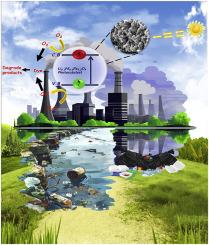
In this study, (X = 0.6) ferrites were synthesized via the sol-gel method, with a detailed investigation into the effects of annealing temperatures (400, 500, 600, and 700 °C) on their properties. X-ray diffraction (XRD), Fourier-transform infrared (FTIR) spectroscopy, and Raman spectroscopy confirmed the formation of a cubic spinel structure in the synthesized ferrites. The comprehensive crystalline analysis is carried out using the Williamson-Hall plot and Nelson-Riley function plot. FTIR confirmed two characteristic absorption peaks for cubic spinel ferrite around 460 cm−1 and 580 cm−1. X-ray photoelectron spectroscopy (XPS) confirmed the chemical states of each element in the Li–Ni ferrite. UV–Vis diffuse reflectance spectroscopy (UV-DRS) revealed the bandgap energies of samples. The photocatalytic activity of Li–Ni ferrite for the degradation of rhodamine B, methylene blue, and methyl orange dyes was also studied, with samples annealed at 600 °C showing significant degradation efficiency. This high performance is attributed to enhanced crystallinity, favorable defect characteristics, and optimal optical properties. Overall, this work highlights Li–Ni ferrite as a highly effective photocatalyst for dye removal applications.
期刊介绍:
Materials Chemistry and Physics is devoted to short communications, full-length research papers and feature articles on interrelationships among structure, properties, processing and performance of materials. The Editors welcome manuscripts on thin films, surface and interface science, materials degradation and reliability, metallurgy, semiconductors and optoelectronic materials, fine ceramics, magnetics, superconductors, specialty polymers, nano-materials and composite materials.




 京公网安备 11010802042870号
京ICP备2023020795号-1
京公网安备 11010802042870号
京ICP备2023020795号-1

 分享
分享
 求助内容:
求助内容: 应助结果提醒方式:
 扫码关注我们
