Tanli Lu , Xianmei Dong , Weiwei Lan , Bin Zhou , Jianwen Teng , Ning Xia , Muhammad Rafiullah Khan , Li Huang
{"title":"从微生物学角度:六泡茶的制备工艺、化学成分及保健作用综述","authors":"Tanli Lu , Xianmei Dong , Weiwei Lan , Bin Zhou , Jianwen Teng , Ning Xia , Muhammad Rafiullah Khan , Li Huang","doi":"10.1016/j.foodres.2025.116088","DOIUrl":null,"url":null,"abstract":"<div><div>Liupao tea (LPT) has garnered increasing attention from researchers due to its distinctive flavor, its role in traditional Chinese medicine for dispelling dampness and promoting health, and its rich cultural heritage. Over the past decade, studies have explored the chemical composition, biological activity, taste profile, microbial community, and safety aspects of LPT. However, a comprehensive understanding of the intricate relationships between LPT, its associated microorganisms, characteristic chemical components, and biological activities remains lacking. This review explores microorganisms' role in LPT production, focusing on their contributions to fermentation advantages, colony structure, identified species, and their impact on flavor, quality, and safety. Additionally, it highlights the role of microorganisms in chemical transformations and the link between these transformations and the tea's health benefits. The unique technological process of LPT involves a high-temperature, short-term fermentation stage (pile and tank fermentation) followed by a low-temperature, long-term fermentation stage (aging), during which microbial activity transitions from active to dormant. Key microbial genera such as <em>Sphingomonas</em>, <em>Staphylococcus</em>, <em>Kocuria</em>, <em>Trichomonascus</em>, <em>Blastobotrys</em>, and <em>Aspergillus</em> play vital roles in the development of quality and biotransformation of chemical components, including catechins, flavonoids, and alkaloids. The safety risks associated with fermentation, particularly concerning ochratoxin and citrinin, require close monitoring. Furthermore, research on the active ingredients of LPT and their corresponding physiological activities remains limited. Future studies should focus on the role of microorganisms in forming LPT's unique quality, its material transformation, risk control, and health-promoting effects such as dampness-removal, to further explore its potential scientific value and practical applications.</div></div>","PeriodicalId":323,"journal":{"name":"Food Research International","volume":"206 ","pages":"Article 116088"},"PeriodicalIF":8.8000,"publicationDate":"2025-04-01","publicationTypes":"Journal Article","fieldsOfStudy":null,"isOpenAccess":false,"openAccessPdf":"","citationCount":"0","resultStr":"{\"title\":\"From microbial perspective: Manufacturing process, chemical composition and health benefis of Liupao tea-A comprehensive review\",\"authors\":\"Tanli Lu , Xianmei Dong , Weiwei Lan , Bin Zhou , Jianwen Teng , Ning Xia , Muhammad Rafiullah Khan , Li Huang\",\"doi\":\"10.1016/j.foodres.2025.116088\",\"DOIUrl\":null,\"url\":null,\"abstract\":\"<div><div>Liupao tea (LPT) has garnered increasing attention from researchers due to its distinctive flavor, its role in traditional Chinese medicine for dispelling dampness and promoting health, and its rich cultural heritage. Over the past decade, studies have explored the chemical composition, biological activity, taste profile, microbial community, and safety aspects of LPT. However, a comprehensive understanding of the intricate relationships between LPT, its associated microorganisms, characteristic chemical components, and biological activities remains lacking. This review explores microorganisms' role in LPT production, focusing on their contributions to fermentation advantages, colony structure, identified species, and their impact on flavor, quality, and safety. Additionally, it highlights the role of microorganisms in chemical transformations and the link between these transformations and the tea's health benefits. The unique technological process of LPT involves a high-temperature, short-term fermentation stage (pile and tank fermentation) followed by a low-temperature, long-term fermentation stage (aging), during which microbial activity transitions from active to dormant. Key microbial genera such as <em>Sphingomonas</em>, <em>Staphylococcus</em>, <em>Kocuria</em>, <em>Trichomonascus</em>, <em>Blastobotrys</em>, and <em>Aspergillus</em> play vital roles in the development of quality and biotransformation of chemical components, including catechins, flavonoids, and alkaloids. The safety risks associated with fermentation, particularly concerning ochratoxin and citrinin, require close monitoring. Furthermore, research on the active ingredients of LPT and their corresponding physiological activities remains limited. Future studies should focus on the role of microorganisms in forming LPT's unique quality, its material transformation, risk control, and health-promoting effects such as dampness-removal, to further explore its potential scientific value and practical applications.</div></div>\",\"PeriodicalId\":323,\"journal\":{\"name\":\"Food Research International\",\"volume\":\"206 \",\"pages\":\"Article 116088\"},\"PeriodicalIF\":8.8000,\"publicationDate\":\"2025-04-01\",\"publicationTypes\":\"Journal Article\",\"fieldsOfStudy\":null,\"isOpenAccess\":false,\"openAccessPdf\":\"\",\"citationCount\":\"0\",\"resultStr\":null,\"platform\":\"Semanticscholar\",\"paperid\":null,\"PeriodicalName\":\"Food Research International\",\"FirstCategoryId\":\"97\",\"ListUrlMain\":\"https://www.sciencedirect.com/science/article/pii/S0963996925004259\",\"RegionNum\":1,\"RegionCategory\":\"农林科学\",\"ArticlePicture\":[],\"TitleCN\":null,\"AbstractTextCN\":null,\"PMCID\":null,\"EPubDate\":\"2025/2/25 0:00:00\",\"PubModel\":\"Epub\",\"JCR\":\"Q1\",\"JCRName\":\"FOOD SCIENCE & TECHNOLOGY\",\"Score\":null,\"Total\":0}","platform":"Semanticscholar","paperid":null,"PeriodicalName":"Food Research International","FirstCategoryId":"97","ListUrlMain":"https://www.sciencedirect.com/science/article/pii/S0963996925004259","RegionNum":1,"RegionCategory":"农林科学","ArticlePicture":[],"TitleCN":null,"AbstractTextCN":null,"PMCID":null,"EPubDate":"2025/2/25 0:00:00","PubModel":"Epub","JCR":"Q1","JCRName":"FOOD SCIENCE & TECHNOLOGY","Score":null,"Total":0}
From microbial perspective: Manufacturing process, chemical composition and health benefis of Liupao tea-A comprehensive review
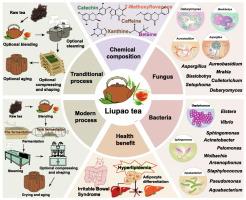
Liupao tea (LPT) has garnered increasing attention from researchers due to its distinctive flavor, its role in traditional Chinese medicine for dispelling dampness and promoting health, and its rich cultural heritage. Over the past decade, studies have explored the chemical composition, biological activity, taste profile, microbial community, and safety aspects of LPT. However, a comprehensive understanding of the intricate relationships between LPT, its associated microorganisms, characteristic chemical components, and biological activities remains lacking. This review explores microorganisms' role in LPT production, focusing on their contributions to fermentation advantages, colony structure, identified species, and their impact on flavor, quality, and safety. Additionally, it highlights the role of microorganisms in chemical transformations and the link between these transformations and the tea's health benefits. The unique technological process of LPT involves a high-temperature, short-term fermentation stage (pile and tank fermentation) followed by a low-temperature, long-term fermentation stage (aging), during which microbial activity transitions from active to dormant. Key microbial genera such as Sphingomonas, Staphylococcus, Kocuria, Trichomonascus, Blastobotrys, and Aspergillus play vital roles in the development of quality and biotransformation of chemical components, including catechins, flavonoids, and alkaloids. The safety risks associated with fermentation, particularly concerning ochratoxin and citrinin, require close monitoring. Furthermore, research on the active ingredients of LPT and their corresponding physiological activities remains limited. Future studies should focus on the role of microorganisms in forming LPT's unique quality, its material transformation, risk control, and health-promoting effects such as dampness-removal, to further explore its potential scientific value and practical applications.
期刊介绍:
Food Research International serves as a rapid dissemination platform for significant and impactful research in food science, technology, engineering, and nutrition. The journal focuses on publishing novel, high-quality, and high-impact review papers, original research papers, and letters to the editors across various disciplines in the science and technology of food. Additionally, it follows a policy of publishing special issues on topical and emergent subjects in food research or related areas. Selected, peer-reviewed papers from scientific meetings, workshops, and conferences on the science, technology, and engineering of foods are also featured in special issues.




 京公网安备 11010802042870号
京ICP备2023020795号-1
京公网安备 11010802042870号
京ICP备2023020795号-1

 分享
分享
 求助内容:
求助内容: 应助结果提醒方式:
 扫码关注我们
