Herojeet Rajkumar , Pradeep K. Naik , Rakesh K. Dewangan , Janak R. Verma , Prabir K. Naik
{"title":"一个部落感染不明原因慢性肾病的地下水地球化学特征和潜在污染物的来源分配","authors":"Herojeet Rajkumar , Pradeep K. Naik , Rakesh K. Dewangan , Janak R. Verma , Prabir K. Naik","doi":"10.1016/j.chemosphere.2025.144272","DOIUrl":null,"url":null,"abstract":"<div><div>This paper draws world attention toward a tribal stretch in central India exposed to chronic kidney disease of unknown etiology (CKDu). To date, about 100 people have died and more than 300 hospitalized from a single village, Supebeda, of 1200 inhabitants. The occurrence of CKDu in this part of the world is a recent discovery and its potential pollutants are still eluding human understanding. Since groundwater is being accused as the culprit, this contribution attempts to characterize the area geochemically, study major rock-water interactions, identify potential pollutants, and apportion their sources. Analytical results of 27 groundwater samples reveal that the area suffers from NO<sub>3</sub><sup>−</sup> (0–128.3 mg/L) and F<sup>−</sup> (0–1.9 mg/L) contamination with total hardness, Ca<sup>2+</sup>, Mg<sup>2+</sup>, and Cl<sup>−</sup> as other violator parameters. Comprehensive Water Quality Index classifies ∼52% of the samples as potable; ∼37% could be suitable for drinking pending certain treatment. While elevated F<sup>−</sup> concentrations are due to the weathering of fluoride-bearing minerals (fluorite, amphiboles, biotite, hornblende, granite gneiss, etc.), the excess Ca<sup>2+</sup> and Mg<sup>2+</sup> ions are attributed to 63% of the samples exhibiting cation exchange processes (Ca<sup>2+</sup>, Mg<sup>2+</sup>, Cl<sup>−</sup> < Na<sup>+</sup> + K<sup>+</sup>) resulting from the weathering of carbonate (calcite, dolomite), anhydrite, gypsum, calc-silicate (anorthite, plagioclase, amphiboles) and ferromagnesian (hornblende, biotite) minerals in the metamorphic rocks. About 22% of the samples depict reverse ion exchange processes (Ca<sup>2+</sup>, Mg<sup>2+</sup>, Cl<sup>−</sup> > Na<sup>+</sup> + K<sup>+</sup>) due to silicate weathering including dissolution of Cl<sup>−</sup> salts (albite and halite minerals) and anthropogenic inputs that also contribute to elevated concentrations of NO<sub>3</sub><sup>−</sup>.</div></div>","PeriodicalId":276,"journal":{"name":"Chemosphere","volume":"376 ","pages":"Article 144272"},"PeriodicalIF":8.1000,"publicationDate":"2025-05-01","publicationTypes":"Journal Article","fieldsOfStudy":null,"isOpenAccess":false,"openAccessPdf":"","citationCount":"0","resultStr":"{\"title\":\"Geochemical characterization of groundwater and source apportionment of potential pollutants in a tribal stretch infected with chronic kidney disease of unknown etiology\",\"authors\":\"Herojeet Rajkumar , Pradeep K. Naik , Rakesh K. Dewangan , Janak R. Verma , Prabir K. Naik\",\"doi\":\"10.1016/j.chemosphere.2025.144272\",\"DOIUrl\":null,\"url\":null,\"abstract\":\"<div><div>This paper draws world attention toward a tribal stretch in central India exposed to chronic kidney disease of unknown etiology (CKDu). To date, about 100 people have died and more than 300 hospitalized from a single village, Supebeda, of 1200 inhabitants. The occurrence of CKDu in this part of the world is a recent discovery and its potential pollutants are still eluding human understanding. Since groundwater is being accused as the culprit, this contribution attempts to characterize the area geochemically, study major rock-water interactions, identify potential pollutants, and apportion their sources. Analytical results of 27 groundwater samples reveal that the area suffers from NO<sub>3</sub><sup>−</sup> (0–128.3 mg/L) and F<sup>−</sup> (0–1.9 mg/L) contamination with total hardness, Ca<sup>2+</sup>, Mg<sup>2+</sup>, and Cl<sup>−</sup> as other violator parameters. Comprehensive Water Quality Index classifies ∼52% of the samples as potable; ∼37% could be suitable for drinking pending certain treatment. While elevated F<sup>−</sup> concentrations are due to the weathering of fluoride-bearing minerals (fluorite, amphiboles, biotite, hornblende, granite gneiss, etc.), the excess Ca<sup>2+</sup> and Mg<sup>2+</sup> ions are attributed to 63% of the samples exhibiting cation exchange processes (Ca<sup>2+</sup>, Mg<sup>2+</sup>, Cl<sup>−</sup> < Na<sup>+</sup> + K<sup>+</sup>) resulting from the weathering of carbonate (calcite, dolomite), anhydrite, gypsum, calc-silicate (anorthite, plagioclase, amphiboles) and ferromagnesian (hornblende, biotite) minerals in the metamorphic rocks. About 22% of the samples depict reverse ion exchange processes (Ca<sup>2+</sup>, Mg<sup>2+</sup>, Cl<sup>−</sup> > Na<sup>+</sup> + K<sup>+</sup>) due to silicate weathering including dissolution of Cl<sup>−</sup> salts (albite and halite minerals) and anthropogenic inputs that also contribute to elevated concentrations of NO<sub>3</sub><sup>−</sup>.</div></div>\",\"PeriodicalId\":276,\"journal\":{\"name\":\"Chemosphere\",\"volume\":\"376 \",\"pages\":\"Article 144272\"},\"PeriodicalIF\":8.1000,\"publicationDate\":\"2025-05-01\",\"publicationTypes\":\"Journal Article\",\"fieldsOfStudy\":null,\"isOpenAccess\":false,\"openAccessPdf\":\"\",\"citationCount\":\"0\",\"resultStr\":null,\"platform\":\"Semanticscholar\",\"paperid\":null,\"PeriodicalName\":\"Chemosphere\",\"FirstCategoryId\":\"93\",\"ListUrlMain\":\"https://www.sciencedirect.com/science/article/pii/S0045653525002140\",\"RegionNum\":2,\"RegionCategory\":\"环境科学与生态学\",\"ArticlePicture\":[],\"TitleCN\":null,\"AbstractTextCN\":null,\"PMCID\":null,\"EPubDate\":\"2025/3/5 0:00:00\",\"PubModel\":\"Epub\",\"JCR\":\"Q1\",\"JCRName\":\"ENVIRONMENTAL SCIENCES\",\"Score\":null,\"Total\":0}","platform":"Semanticscholar","paperid":null,"PeriodicalName":"Chemosphere","FirstCategoryId":"93","ListUrlMain":"https://www.sciencedirect.com/science/article/pii/S0045653525002140","RegionNum":2,"RegionCategory":"环境科学与生态学","ArticlePicture":[],"TitleCN":null,"AbstractTextCN":null,"PMCID":null,"EPubDate":"2025/3/5 0:00:00","PubModel":"Epub","JCR":"Q1","JCRName":"ENVIRONMENTAL SCIENCES","Score":null,"Total":0}
Geochemical characterization of groundwater and source apportionment of potential pollutants in a tribal stretch infected with chronic kidney disease of unknown etiology
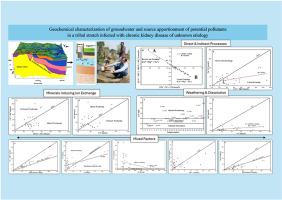
This paper draws world attention toward a tribal stretch in central India exposed to chronic kidney disease of unknown etiology (CKDu). To date, about 100 people have died and more than 300 hospitalized from a single village, Supebeda, of 1200 inhabitants. The occurrence of CKDu in this part of the world is a recent discovery and its potential pollutants are still eluding human understanding. Since groundwater is being accused as the culprit, this contribution attempts to characterize the area geochemically, study major rock-water interactions, identify potential pollutants, and apportion their sources. Analytical results of 27 groundwater samples reveal that the area suffers from NO3− (0–128.3 mg/L) and F− (0–1.9 mg/L) contamination with total hardness, Ca2+, Mg2+, and Cl− as other violator parameters. Comprehensive Water Quality Index classifies ∼52% of the samples as potable; ∼37% could be suitable for drinking pending certain treatment. While elevated F− concentrations are due to the weathering of fluoride-bearing minerals (fluorite, amphiboles, biotite, hornblende, granite gneiss, etc.), the excess Ca2+ and Mg2+ ions are attributed to 63% of the samples exhibiting cation exchange processes (Ca2+, Mg2+, Cl− < Na+ + K+) resulting from the weathering of carbonate (calcite, dolomite), anhydrite, gypsum, calc-silicate (anorthite, plagioclase, amphiboles) and ferromagnesian (hornblende, biotite) minerals in the metamorphic rocks. About 22% of the samples depict reverse ion exchange processes (Ca2+, Mg2+, Cl− > Na+ + K+) due to silicate weathering including dissolution of Cl− salts (albite and halite minerals) and anthropogenic inputs that also contribute to elevated concentrations of NO3−.
期刊介绍:
Chemosphere, being an international multidisciplinary journal, is dedicated to publishing original communications and review articles on chemicals in the environment. The scope covers a wide range of topics, including the identification, quantification, behavior, fate, toxicology, treatment, and remediation of chemicals in the bio-, hydro-, litho-, and atmosphere, ensuring the broad dissemination of research in this field.




 京公网安备 11010802042870号
京ICP备2023020795号-1
京公网安备 11010802042870号
京ICP备2023020795号-1

 分享
分享
 求助内容:
求助内容: 应助结果提醒方式:
 扫码关注我们
