{"title":"解读西孟加拉邦农业土壤中重金属和类金属危害的后果:一项综合土壤健康风险分析","authors":"Sourik Mondal, Arnab Sen","doi":"10.1016/j.scitotenv.2025.178976","DOIUrl":null,"url":null,"abstract":"<div><div>Heavy metals and metalloids (HMMs) pollution is an escalating global concern, driven by rapid industrialization, urbanization, and agricultural intensification. Contaminated soil not only compromise crop productivity but also introduce toxic elements into the food chain, posing serious risks to human health and ecological integrity. This study investigates the extent of HMMs-contamination (As, Cd, Pb, Ni, Cu, and Zn) in agricultural soils across the Gangetic plain and surrounding industrial regions of West Bengal, India, a microcosm of global challenges in soil pollution. Using Inductively Coupled Plasma – Atomic Emission Spectroscopy, we have analyzed a total 50 soil samples from Malda, Paschim Bardhaman, and Murshidabad districts. Results indicate significant contamination with arsenic (8.89–21.85 and 3.74–33.28 mg kg<sup>−1</sup>) and nickel, dominating the Gangetic plain soils due to overuse of contaminated groundwater and agrochemicals. While, industrial areas exhibited alarming levels of cadmium (0.89–3.39 mg kg<sup>−1</sup>), nickel (31.87–92.06 mg kg<sup>−1</sup>), and zinc. A pot experiment with soybean (<em>Glycine max</em>) seedlings revealed that HMMs-toxicity impaired growth, elevated reactive oxygen species, and caused DNA-damage. Human health risk assessments identified arsenic and cadmium as primary carcinogens (target carcinogenic risk >1.0 × 10<sup>−4</sup>) for adults and children under prolonged exposure. These findings underscore the urgency of global regulatory measures and innovative remediation strategies to mitigate soil pollution, safeguard food security, protect public health and prevent further environmental degradation. This also study highlights the Gangetic plain as a critical area reflecting broader environmental challenges, offering insights applicable to regions facing similar industrial and agricultural pressures worldwide.</div></div>","PeriodicalId":422,"journal":{"name":"Science of the Total Environment","volume":"970 ","pages":"Article 178976"},"PeriodicalIF":8.0000,"publicationDate":"2025-03-20","publicationTypes":"Journal Article","fieldsOfStudy":null,"isOpenAccess":false,"openAccessPdf":"","citationCount":"0","resultStr":"{\"title\":\"Deciphering the consequences of heavy metals and metalloid hazard in agricultural soil of West Bengal: A comprehensive soil to health risk analysis\",\"authors\":\"Sourik Mondal, Arnab Sen\",\"doi\":\"10.1016/j.scitotenv.2025.178976\",\"DOIUrl\":null,\"url\":null,\"abstract\":\"<div><div>Heavy metals and metalloids (HMMs) pollution is an escalating global concern, driven by rapid industrialization, urbanization, and agricultural intensification. Contaminated soil not only compromise crop productivity but also introduce toxic elements into the food chain, posing serious risks to human health and ecological integrity. This study investigates the extent of HMMs-contamination (As, Cd, Pb, Ni, Cu, and Zn) in agricultural soils across the Gangetic plain and surrounding industrial regions of West Bengal, India, a microcosm of global challenges in soil pollution. Using Inductively Coupled Plasma – Atomic Emission Spectroscopy, we have analyzed a total 50 soil samples from Malda, Paschim Bardhaman, and Murshidabad districts. Results indicate significant contamination with arsenic (8.89–21.85 and 3.74–33.28 mg kg<sup>−1</sup>) and nickel, dominating the Gangetic plain soils due to overuse of contaminated groundwater and agrochemicals. While, industrial areas exhibited alarming levels of cadmium (0.89–3.39 mg kg<sup>−1</sup>), nickel (31.87–92.06 mg kg<sup>−1</sup>), and zinc. A pot experiment with soybean (<em>Glycine max</em>) seedlings revealed that HMMs-toxicity impaired growth, elevated reactive oxygen species, and caused DNA-damage. Human health risk assessments identified arsenic and cadmium as primary carcinogens (target carcinogenic risk >1.0 × 10<sup>−4</sup>) for adults and children under prolonged exposure. These findings underscore the urgency of global regulatory measures and innovative remediation strategies to mitigate soil pollution, safeguard food security, protect public health and prevent further environmental degradation. This also study highlights the Gangetic plain as a critical area reflecting broader environmental challenges, offering insights applicable to regions facing similar industrial and agricultural pressures worldwide.</div></div>\",\"PeriodicalId\":422,\"journal\":{\"name\":\"Science of the Total Environment\",\"volume\":\"970 \",\"pages\":\"Article 178976\"},\"PeriodicalIF\":8.0000,\"publicationDate\":\"2025-03-20\",\"publicationTypes\":\"Journal Article\",\"fieldsOfStudy\":null,\"isOpenAccess\":false,\"openAccessPdf\":\"\",\"citationCount\":\"0\",\"resultStr\":null,\"platform\":\"Semanticscholar\",\"paperid\":null,\"PeriodicalName\":\"Science of the Total Environment\",\"FirstCategoryId\":\"93\",\"ListUrlMain\":\"https://www.sciencedirect.com/science/article/pii/S0048969725006114\",\"RegionNum\":1,\"RegionCategory\":\"环境科学与生态学\",\"ArticlePicture\":[],\"TitleCN\":null,\"AbstractTextCN\":null,\"PMCID\":null,\"EPubDate\":\"2025/3/4 0:00:00\",\"PubModel\":\"Epub\",\"JCR\":\"Q1\",\"JCRName\":\"ENVIRONMENTAL SCIENCES\",\"Score\":null,\"Total\":0}","platform":"Semanticscholar","paperid":null,"PeriodicalName":"Science of the Total Environment","FirstCategoryId":"93","ListUrlMain":"https://www.sciencedirect.com/science/article/pii/S0048969725006114","RegionNum":1,"RegionCategory":"环境科学与生态学","ArticlePicture":[],"TitleCN":null,"AbstractTextCN":null,"PMCID":null,"EPubDate":"2025/3/4 0:00:00","PubModel":"Epub","JCR":"Q1","JCRName":"ENVIRONMENTAL SCIENCES","Score":null,"Total":0}
引用次数: 0
摘要
随着工业化、城市化和农业集约化的快速发展,重金属和类金属污染日益成为全球关注的问题。受污染的土壤不仅影响作物生产力,而且还将有毒元素引入食物链,对人类健康和生态完整性构成严重威胁。本研究调查了印度西孟加拉邦恒河平原和周边工业区农业土壤中重金属污染(砷、镉、铅、镍、铜和锌)的程度,这是全球土壤污染挑战的一个缩影。利用电感耦合等离子体-原子发射光谱,我们分析了来自Malda、Paschim Bardhaman和Murshidabad地区的总共50个土壤样本。结果表明,由于地下水和农用化学品的过度使用,恒河平原土壤中砷(8.89 ~ 21.85和3.74 ~ 33.28 mg kg−1)和镍的污染显著。而工业区的镉(0.89-3.39 mg kg - 1)、镍(31.87-92.06 mg kg - 1)和锌的含量则达到了惊人的水平。在大豆(Glycine max)幼苗盆栽试验中发现,hmms毒性损害了大豆的生长,增加了活性氧,并导致dna损伤。人类健康风险评估将砷和镉确定为成人和儿童长期接触的主要致癌物(目标致癌风险>;1.0 × 10⁻⁴)。这些研究结果强调了采取全球监管措施和创新补救战略以减轻土壤污染、保障粮食安全、保护公众健康和防止环境进一步退化的紧迫性。该研究还强调,恒河平原是反映更广泛环境挑战的关键地区,为全球面临类似工业和农业压力的地区提供了适用的见解。
Deciphering the consequences of heavy metals and metalloid hazard in agricultural soil of West Bengal: A comprehensive soil to health risk analysis
Heavy metals and metalloids (HMMs) pollution is an escalating global concern, driven by rapid industrialization, urbanization, and agricultural intensification. Contaminated soil not only compromise crop productivity but also introduce toxic elements into the food chain, posing serious risks to human health and ecological integrity. This study investigates the extent of HMMs-contamination (As, Cd, Pb, Ni, Cu, and Zn) in agricultural soils across the Gangetic plain and surrounding industrial regions of West Bengal, India, a microcosm of global challenges in soil pollution. Using Inductively Coupled Plasma – Atomic Emission Spectroscopy, we have analyzed a total 50 soil samples from Malda, Paschim Bardhaman, and Murshidabad districts. Results indicate significant contamination with arsenic (8.89–21.85 and 3.74–33.28 mg kg−1) and nickel, dominating the Gangetic plain soils due to overuse of contaminated groundwater and agrochemicals. While, industrial areas exhibited alarming levels of cadmium (0.89–3.39 mg kg−1), nickel (31.87–92.06 mg kg−1), and zinc. A pot experiment with soybean (Glycine max) seedlings revealed that HMMs-toxicity impaired growth, elevated reactive oxygen species, and caused DNA-damage. Human health risk assessments identified arsenic and cadmium as primary carcinogens (target carcinogenic risk >1.0 × 10⁻⁴) for adults and children under prolonged exposure. These findings underscore the urgency of global regulatory measures and innovative remediation strategies to mitigate soil pollution, safeguard food security, protect public health and prevent further environmental degradation. This also study highlights the Gangetic plain as a critical area reflecting broader environmental challenges, offering insights applicable to regions facing similar industrial and agricultural pressures worldwide.
期刊介绍:
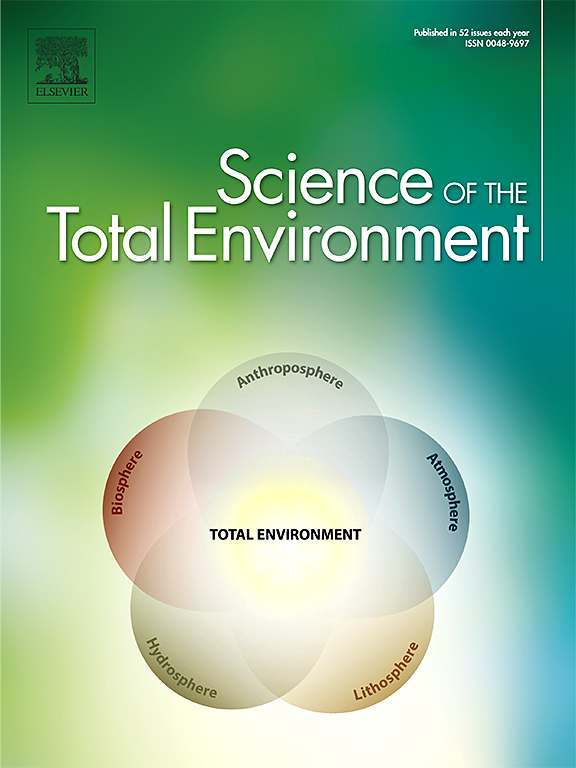
The Science of the Total Environment is an international journal dedicated to scientific research on the environment and its interaction with humanity. It covers a wide range of disciplines and seeks to publish innovative, hypothesis-driven, and impactful research that explores the entire environment, including the atmosphere, lithosphere, hydrosphere, biosphere, and anthroposphere.
The journal's updated Aims & Scope emphasizes the importance of interdisciplinary environmental research with broad impact. Priority is given to studies that advance fundamental understanding and explore the interconnectedness of multiple environmental spheres. Field studies are preferred, while laboratory experiments must demonstrate significant methodological advancements or mechanistic insights with direct relevance to the environment.





 京公网安备 11010802042870号
京ICP备2023020795号-1
京公网安备 11010802042870号
京ICP备2023020795号-1

 分享
分享
 求助内容:
求助内容: 应助结果提醒方式:
 扫码关注我们
