Juliana Aparecida Correia Bento , Maria Fernanda Rossetti Rogerio , Priscila Zaczuk Bassinello , B. Dave Oomah
{"title":"利用发酵使豆类副产品增值","authors":"Juliana Aparecida Correia Bento , Maria Fernanda Rossetti Rogerio , Priscila Zaczuk Bassinello , B. Dave Oomah","doi":"10.1016/j.tifs.2025.104957","DOIUrl":null,"url":null,"abstract":"<div><h3>Background</h3><div>Pulses/legumes are important for human nutrition due to their high content of protein, dietary fiber, complex carbohydrates, essential vitamins and minerals, and bioactive compounds, which help to prevent malnutrition, manage weight, reduce the risk of chronic diseases and enhance gut health. However, considerable loss occurs during processing/dehulling of these grains. Legumes residues from agro-industrial processing can be valuable sources of plant proteins and bioactive molecules, contributing to global protein demand and enabling applications in feed, food, cosmetic, and packaging products. These by-products are often underutilized, leading to economic and environmental waste. However, valorization techniques like fermentation can enhance the bioavailability of these compounds, opening opportunities for their direct use in the food and pharmaceutical industries or as substrates in biorefineries.</div></div><div><h3>Scope and approach</h3><div>This review aims to survey the by-product from the main commercial pulses (beans, faba beans, chickpeas, peas, and lupin) and the use of fermentation to reduce/valorize pulses by-product from a biorefinery concept.</div></div><div><h3>Key findings and conclusions</h3><div>By-products derived from pulses are pods, seed husks, broken grains, germ, and protein extraction residues. These by-products are rich in dietary fiber and have already been incorporated into food production as ingredients. Fermentation has been used as a strategy to produce ingredients or bioproducts using pulse residues/by-products as raw material. The fermented products show significant changes in their composition (improved amino acids and vitamins content), with reduced anti-nutritional (phytates and tannins) factors and increased bioactive compounds. Moreover, some materials show enhanced technological (foaming and emulsifying) and functional properties after fermentation.</div></div>","PeriodicalId":441,"journal":{"name":"Trends in Food Science & Technology","volume":"159 ","pages":"Article 104957"},"PeriodicalIF":15.4000,"publicationDate":"2025-05-01","publicationTypes":"Journal Article","fieldsOfStudy":null,"isOpenAccess":false,"openAccessPdf":"","citationCount":"0","resultStr":"{\"title\":\"The use of fermentation in the valorization of pulses by-products\",\"authors\":\"Juliana Aparecida Correia Bento , Maria Fernanda Rossetti Rogerio , Priscila Zaczuk Bassinello , B. Dave Oomah\",\"doi\":\"10.1016/j.tifs.2025.104957\",\"DOIUrl\":null,\"url\":null,\"abstract\":\"<div><h3>Background</h3><div>Pulses/legumes are important for human nutrition due to their high content of protein, dietary fiber, complex carbohydrates, essential vitamins and minerals, and bioactive compounds, which help to prevent malnutrition, manage weight, reduce the risk of chronic diseases and enhance gut health. However, considerable loss occurs during processing/dehulling of these grains. Legumes residues from agro-industrial processing can be valuable sources of plant proteins and bioactive molecules, contributing to global protein demand and enabling applications in feed, food, cosmetic, and packaging products. These by-products are often underutilized, leading to economic and environmental waste. However, valorization techniques like fermentation can enhance the bioavailability of these compounds, opening opportunities for their direct use in the food and pharmaceutical industries or as substrates in biorefineries.</div></div><div><h3>Scope and approach</h3><div>This review aims to survey the by-product from the main commercial pulses (beans, faba beans, chickpeas, peas, and lupin) and the use of fermentation to reduce/valorize pulses by-product from a biorefinery concept.</div></div><div><h3>Key findings and conclusions</h3><div>By-products derived from pulses are pods, seed husks, broken grains, germ, and protein extraction residues. These by-products are rich in dietary fiber and have already been incorporated into food production as ingredients. Fermentation has been used as a strategy to produce ingredients or bioproducts using pulse residues/by-products as raw material. The fermented products show significant changes in their composition (improved amino acids and vitamins content), with reduced anti-nutritional (phytates and tannins) factors and increased bioactive compounds. Moreover, some materials show enhanced technological (foaming and emulsifying) and functional properties after fermentation.</div></div>\",\"PeriodicalId\":441,\"journal\":{\"name\":\"Trends in Food Science & Technology\",\"volume\":\"159 \",\"pages\":\"Article 104957\"},\"PeriodicalIF\":15.4000,\"publicationDate\":\"2025-05-01\",\"publicationTypes\":\"Journal Article\",\"fieldsOfStudy\":null,\"isOpenAccess\":false,\"openAccessPdf\":\"\",\"citationCount\":\"0\",\"resultStr\":null,\"platform\":\"Semanticscholar\",\"paperid\":null,\"PeriodicalName\":\"Trends in Food Science & Technology\",\"FirstCategoryId\":\"97\",\"ListUrlMain\":\"https://www.sciencedirect.com/science/article/pii/S0924224425000937\",\"RegionNum\":1,\"RegionCategory\":\"农林科学\",\"ArticlePicture\":[],\"TitleCN\":null,\"AbstractTextCN\":null,\"PMCID\":null,\"EPubDate\":\"2025/3/3 0:00:00\",\"PubModel\":\"Epub\",\"JCR\":\"Q1\",\"JCRName\":\"FOOD SCIENCE & TECHNOLOGY\",\"Score\":null,\"Total\":0}","platform":"Semanticscholar","paperid":null,"PeriodicalName":"Trends in Food Science & Technology","FirstCategoryId":"97","ListUrlMain":"https://www.sciencedirect.com/science/article/pii/S0924224425000937","RegionNum":1,"RegionCategory":"农林科学","ArticlePicture":[],"TitleCN":null,"AbstractTextCN":null,"PMCID":null,"EPubDate":"2025/3/3 0:00:00","PubModel":"Epub","JCR":"Q1","JCRName":"FOOD SCIENCE & TECHNOLOGY","Score":null,"Total":0}
The use of fermentation in the valorization of pulses by-products
Background
Pulses/legumes are important for human nutrition due to their high content of protein, dietary fiber, complex carbohydrates, essential vitamins and minerals, and bioactive compounds, which help to prevent malnutrition, manage weight, reduce the risk of chronic diseases and enhance gut health. However, considerable loss occurs during processing/dehulling of these grains. Legumes residues from agro-industrial processing can be valuable sources of plant proteins and bioactive molecules, contributing to global protein demand and enabling applications in feed, food, cosmetic, and packaging products. These by-products are often underutilized, leading to economic and environmental waste. However, valorization techniques like fermentation can enhance the bioavailability of these compounds, opening opportunities for their direct use in the food and pharmaceutical industries or as substrates in biorefineries.
Scope and approach
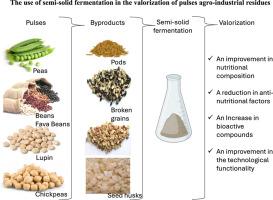
This review aims to survey the by-product from the main commercial pulses (beans, faba beans, chickpeas, peas, and lupin) and the use of fermentation to reduce/valorize pulses by-product from a biorefinery concept.
Key findings and conclusions
By-products derived from pulses are pods, seed husks, broken grains, germ, and protein extraction residues. These by-products are rich in dietary fiber and have already been incorporated into food production as ingredients. Fermentation has been used as a strategy to produce ingredients or bioproducts using pulse residues/by-products as raw material. The fermented products show significant changes in their composition (improved amino acids and vitamins content), with reduced anti-nutritional (phytates and tannins) factors and increased bioactive compounds. Moreover, some materials show enhanced technological (foaming and emulsifying) and functional properties after fermentation.
期刊介绍:
Trends in Food Science & Technology is a prestigious international journal that specializes in peer-reviewed articles covering the latest advancements in technology, food science, and human nutrition. It serves as a bridge between specialized primary journals and general trade magazines, providing readable and scientifically rigorous reviews and commentaries on current research developments and their potential applications in the food industry.
Unlike traditional journals, Trends in Food Science & Technology does not publish original research papers. Instead, it focuses on critical and comprehensive reviews to offer valuable insights for professionals in the field. By bringing together cutting-edge research and industry applications, this journal plays a vital role in disseminating knowledge and facilitating advancements in the food science and technology sector.




 京公网安备 11010802042870号
京ICP备2023020795号-1
京公网安备 11010802042870号
京ICP备2023020795号-1

 分享
分享
 求助内容:
求助内容: 应助结果提醒方式:
 扫码关注我们
