Lulu Wang , Tingting Hu , Ruxuan Zhang , Yingzhou Shi , Yan Wang , Qiuhui Xuan , Xinli Zhou
{"title":"利拉鲁肽调节alcat1介导的心磷脂重塑改善肥胖小鼠心功能","authors":"Lulu Wang , Tingting Hu , Ruxuan Zhang , Yingzhou Shi , Yan Wang , Qiuhui Xuan , Xinli Zhou","doi":"10.1016/j.bbrc.2025.151583","DOIUrl":null,"url":null,"abstract":"<div><div>Obesity, a significant risk factor for cardiovascular diseases, induces cardiolipin (CL) remodeling. Acyl-CoA:lysocardiolipin acyltransferase-1 (ALCAT1), a key enzyme in CL metabolism, drives mitochondrial impairment and cardiac dysfunction in obesity. Although glucagon-like peptide-1 receptor agonists (GLP-1RAs) exhibit cardioprotective properties, their effects on ALCAT1-mediated CL remodeling in obesity-induced myocardial injury remain unclear. Male C57BL/6 mice fed a high-fat diet (HFD) or standard diet (STD) for 12 weeks received liraglutide (200 μg/kg/day) or saline during the last 4 weeks. Cardiac function was evaluated by echocardiography; CL content was quantified using LC-MS, and myocardial alterations were assessed through histological and protein analyses. In HFD-fed mice, cardiac lipid accumulation, left ventricular hypertrophy, and myocardial collagen deposition were observed. Additionally, these mice exhibited reduced CL content, altered CL aliphatic chain composition, and upregulated ALCAT1 expression. In contrast, liraglutide treatment significantly increased total CL content, modified CL acyl chain composition, and downregulated ALCAT1 expression. Mechanistically, liraglutide activated the PI3K/AKT pathway via GLP-1 receptor signaling, attenuated oxidative stress markers (3-nitrotyrosine, Rac1 activation), and improved mitochondrial dynamics by reducing DRP1-mediated fission. These results demonstrate that liraglutide mitigates obesity-induced cardiac dysfunction by suppressing ALCAT1-driven CL remodeling, enhancing mitochondrial homeostasis, and reducing oxidative stress. This study elucidates the cardioprotective mechanisms of liraglutide and highlights its therapeutic potential for obesity-related cardiomyopathy.</div></div>","PeriodicalId":8779,"journal":{"name":"Biochemical and biophysical research communications","volume":"756 ","pages":"Article 151583"},"PeriodicalIF":2.5000,"publicationDate":"2025-04-05","publicationTypes":"Journal Article","fieldsOfStudy":null,"isOpenAccess":false,"openAccessPdf":"","citationCount":"0","resultStr":"{\"title\":\"Liraglutide modulates ALCAT1-Mediated cardiolipin remodeling to improve cardiac function in obese mice\",\"authors\":\"Lulu Wang , Tingting Hu , Ruxuan Zhang , Yingzhou Shi , Yan Wang , Qiuhui Xuan , Xinli Zhou\",\"doi\":\"10.1016/j.bbrc.2025.151583\",\"DOIUrl\":null,\"url\":null,\"abstract\":\"<div><div>Obesity, a significant risk factor for cardiovascular diseases, induces cardiolipin (CL) remodeling. Acyl-CoA:lysocardiolipin acyltransferase-1 (ALCAT1), a key enzyme in CL metabolism, drives mitochondrial impairment and cardiac dysfunction in obesity. Although glucagon-like peptide-1 receptor agonists (GLP-1RAs) exhibit cardioprotective properties, their effects on ALCAT1-mediated CL remodeling in obesity-induced myocardial injury remain unclear. Male C57BL/6 mice fed a high-fat diet (HFD) or standard diet (STD) for 12 weeks received liraglutide (200 μg/kg/day) or saline during the last 4 weeks. Cardiac function was evaluated by echocardiography; CL content was quantified using LC-MS, and myocardial alterations were assessed through histological and protein analyses. In HFD-fed mice, cardiac lipid accumulation, left ventricular hypertrophy, and myocardial collagen deposition were observed. Additionally, these mice exhibited reduced CL content, altered CL aliphatic chain composition, and upregulated ALCAT1 expression. In contrast, liraglutide treatment significantly increased total CL content, modified CL acyl chain composition, and downregulated ALCAT1 expression. Mechanistically, liraglutide activated the PI3K/AKT pathway via GLP-1 receptor signaling, attenuated oxidative stress markers (3-nitrotyrosine, Rac1 activation), and improved mitochondrial dynamics by reducing DRP1-mediated fission. These results demonstrate that liraglutide mitigates obesity-induced cardiac dysfunction by suppressing ALCAT1-driven CL remodeling, enhancing mitochondrial homeostasis, and reducing oxidative stress. This study elucidates the cardioprotective mechanisms of liraglutide and highlights its therapeutic potential for obesity-related cardiomyopathy.</div></div>\",\"PeriodicalId\":8779,\"journal\":{\"name\":\"Biochemical and biophysical research communications\",\"volume\":\"756 \",\"pages\":\"Article 151583\"},\"PeriodicalIF\":2.5000,\"publicationDate\":\"2025-04-05\",\"publicationTypes\":\"Journal Article\",\"fieldsOfStudy\":null,\"isOpenAccess\":false,\"openAccessPdf\":\"\",\"citationCount\":\"0\",\"resultStr\":null,\"platform\":\"Semanticscholar\",\"paperid\":null,\"PeriodicalName\":\"Biochemical and biophysical research communications\",\"FirstCategoryId\":\"99\",\"ListUrlMain\":\"https://www.sciencedirect.com/science/article/pii/S0006291X25002979\",\"RegionNum\":3,\"RegionCategory\":\"生物学\",\"ArticlePicture\":[],\"TitleCN\":null,\"AbstractTextCN\":null,\"PMCID\":null,\"EPubDate\":\"2025/3/4 0:00:00\",\"PubModel\":\"Epub\",\"JCR\":\"Q3\",\"JCRName\":\"BIOCHEMISTRY & MOLECULAR BIOLOGY\",\"Score\":null,\"Total\":0}","platform":"Semanticscholar","paperid":null,"PeriodicalName":"Biochemical and biophysical research communications","FirstCategoryId":"99","ListUrlMain":"https://www.sciencedirect.com/science/article/pii/S0006291X25002979","RegionNum":3,"RegionCategory":"生物学","ArticlePicture":[],"TitleCN":null,"AbstractTextCN":null,"PMCID":null,"EPubDate":"2025/3/4 0:00:00","PubModel":"Epub","JCR":"Q3","JCRName":"BIOCHEMISTRY & MOLECULAR BIOLOGY","Score":null,"Total":0}
Liraglutide modulates ALCAT1-Mediated cardiolipin remodeling to improve cardiac function in obese mice
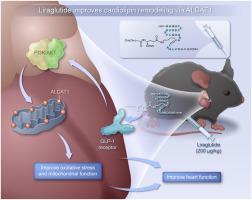
Obesity, a significant risk factor for cardiovascular diseases, induces cardiolipin (CL) remodeling. Acyl-CoA:lysocardiolipin acyltransferase-1 (ALCAT1), a key enzyme in CL metabolism, drives mitochondrial impairment and cardiac dysfunction in obesity. Although glucagon-like peptide-1 receptor agonists (GLP-1RAs) exhibit cardioprotective properties, their effects on ALCAT1-mediated CL remodeling in obesity-induced myocardial injury remain unclear. Male C57BL/6 mice fed a high-fat diet (HFD) or standard diet (STD) for 12 weeks received liraglutide (200 μg/kg/day) or saline during the last 4 weeks. Cardiac function was evaluated by echocardiography; CL content was quantified using LC-MS, and myocardial alterations were assessed through histological and protein analyses. In HFD-fed mice, cardiac lipid accumulation, left ventricular hypertrophy, and myocardial collagen deposition were observed. Additionally, these mice exhibited reduced CL content, altered CL aliphatic chain composition, and upregulated ALCAT1 expression. In contrast, liraglutide treatment significantly increased total CL content, modified CL acyl chain composition, and downregulated ALCAT1 expression. Mechanistically, liraglutide activated the PI3K/AKT pathway via GLP-1 receptor signaling, attenuated oxidative stress markers (3-nitrotyrosine, Rac1 activation), and improved mitochondrial dynamics by reducing DRP1-mediated fission. These results demonstrate that liraglutide mitigates obesity-induced cardiac dysfunction by suppressing ALCAT1-driven CL remodeling, enhancing mitochondrial homeostasis, and reducing oxidative stress. This study elucidates the cardioprotective mechanisms of liraglutide and highlights its therapeutic potential for obesity-related cardiomyopathy.
期刊介绍:
Biochemical and Biophysical Research Communications is the premier international journal devoted to the very rapid dissemination of timely and significant experimental results in diverse fields of biological research. The development of the "Breakthroughs and Views" section brings the minireview format to the journal, and issues often contain collections of special interest manuscripts. BBRC is published weekly (52 issues/year).Research Areas now include: Biochemistry; biophysics; cell biology; developmental biology; immunology
; molecular biology; neurobiology; plant biology and proteomics




 京公网安备 11010802042870号
京ICP备2023020795号-1
京公网安备 11010802042870号
京ICP备2023020795号-1

 分享
分享
 求助内容:
求助内容: 应助结果提醒方式:
 扫码关注我们
