{"title":"短跑激活后表现增强刺激对大学一级运动员铁饼投掷成绩的影响:一项初步研究。","authors":"Reagan Hulet, Mark DeBeliso, Marcus M Lawrence","doi":"10.70252/WHLI6641","DOIUrl":null,"url":null,"abstract":"<p><p>No study has determined the impact a sprinting potentiating stimulus has on discus throwing performance in collegiate throwers. To test the hypothesis, that compared to a dynamic warm-up alone (DyWU), a dynamic warm-up with a multi-set sprinting potentiating stimulus (DyWU+SPR) would enhance discus throw performance. 12 NCAA Division I thrower athletes (18-25 year) randomly completed two sessions separated by at least 48 hours. One session involved a standardized dynamic warm-up (DyWU) and the other session involved a DyWU with multiple sets of a sprinting post-activation performance enhancement (PAPE) stimulus (DyWU+SPR), with both sessions followed by three trials of competition discus throws. A two-way ANOVA (warm-up x timepoint) with repeated measures was used for analyses, p < 0.05. There were no significant (p>0.05) differences between DyWU alone versus DyWU+SPR stimulus for discus throw distances at 8 min. (35.7±5.4 vs 35.0±5.5 meters, respectively; <i>d</i> = -0.12, trivial), 11 min. (34.8±4.5 vs 35.6±5.0 meters, respectively; <i>d</i> = 0.18, trivial), 14 min. (37.5±4.5 vs 36.7±4.9 meters, respectively; <i>d</i> = -0.19, trivial), or best throw attempt (36.2±5.1 vs 36.6±5.0 meters, respectively; <i>d</i> = 0.07, trivial). Within the parameters of this study, there were no differences in discus throw performance with DyWU+SPR compared to a DyWU alone in NCAA Division I throwers. Coaches, athletes, and practitioners should be aware that these results do not support the use of multiple sets of a sprinting PAPE stimulus beyond a dynamic warm-up alone to enhance discus throw performance in collegiate throwers.</p>","PeriodicalId":14171,"journal":{"name":"International journal of exercise science","volume":"18 3","pages":"251-262"},"PeriodicalIF":0.0000,"publicationDate":"2025-02-02","publicationTypes":"Journal Article","fieldsOfStudy":null,"isOpenAccess":false,"openAccessPdf":"https://www.ncbi.nlm.nih.gov/pmc/articles/PMC11881986/pdf/","citationCount":"0","resultStr":"{\"title\":\"Effects of a Sprint Post-Activation Performance Enhancement Stimulus on Discus Throw Performance in Collegiate Division I Throwers: A Pilot Study.\",\"authors\":\"Reagan Hulet, Mark DeBeliso, Marcus M Lawrence\",\"doi\":\"10.70252/WHLI6641\",\"DOIUrl\":null,\"url\":null,\"abstract\":\"<p><p>No study has determined the impact a sprinting potentiating stimulus has on discus throwing performance in collegiate throwers. To test the hypothesis, that compared to a dynamic warm-up alone (DyWU), a dynamic warm-up with a multi-set sprinting potentiating stimulus (DyWU+SPR) would enhance discus throw performance. 12 NCAA Division I thrower athletes (18-25 year) randomly completed two sessions separated by at least 48 hours. One session involved a standardized dynamic warm-up (DyWU) and the other session involved a DyWU with multiple sets of a sprinting post-activation performance enhancement (PAPE) stimulus (DyWU+SPR), with both sessions followed by three trials of competition discus throws. A two-way ANOVA (warm-up x timepoint) with repeated measures was used for analyses, p < 0.05. There were no significant (p>0.05) differences between DyWU alone versus DyWU+SPR stimulus for discus throw distances at 8 min. (35.7±5.4 vs 35.0±5.5 meters, respectively; <i>d</i> = -0.12, trivial), 11 min. (34.8±4.5 vs 35.6±5.0 meters, respectively; <i>d</i> = 0.18, trivial), 14 min. (37.5±4.5 vs 36.7±4.9 meters, respectively; <i>d</i> = -0.19, trivial), or best throw attempt (36.2±5.1 vs 36.6±5.0 meters, respectively; <i>d</i> = 0.07, trivial). Within the parameters of this study, there were no differences in discus throw performance with DyWU+SPR compared to a DyWU alone in NCAA Division I throwers. Coaches, athletes, and practitioners should be aware that these results do not support the use of multiple sets of a sprinting PAPE stimulus beyond a dynamic warm-up alone to enhance discus throw performance in collegiate throwers.</p>\",\"PeriodicalId\":14171,\"journal\":{\"name\":\"International journal of exercise science\",\"volume\":\"18 3\",\"pages\":\"251-262\"},\"PeriodicalIF\":0.0000,\"publicationDate\":\"2025-02-02\",\"publicationTypes\":\"Journal Article\",\"fieldsOfStudy\":null,\"isOpenAccess\":false,\"openAccessPdf\":\"https://www.ncbi.nlm.nih.gov/pmc/articles/PMC11881986/pdf/\",\"citationCount\":\"0\",\"resultStr\":null,\"platform\":\"Semanticscholar\",\"paperid\":null,\"PeriodicalName\":\"International journal of exercise science\",\"FirstCategoryId\":\"1085\",\"ListUrlMain\":\"https://doi.org/10.70252/WHLI6641\",\"RegionNum\":0,\"RegionCategory\":null,\"ArticlePicture\":[],\"TitleCN\":null,\"AbstractTextCN\":null,\"PMCID\":null,\"EPubDate\":\"2025/1/1 0:00:00\",\"PubModel\":\"eCollection\",\"JCR\":\"Q1\",\"JCRName\":\"Health Professions\",\"Score\":null,\"Total\":0}","platform":"Semanticscholar","paperid":null,"PeriodicalName":"International journal of exercise science","FirstCategoryId":"1085","ListUrlMain":"https://doi.org/10.70252/WHLI6641","RegionNum":0,"RegionCategory":null,"ArticlePicture":[],"TitleCN":null,"AbstractTextCN":null,"PMCID":null,"EPubDate":"2025/1/1 0:00:00","PubModel":"eCollection","JCR":"Q1","JCRName":"Health Professions","Score":null,"Total":0}
引用次数: 0
摘要
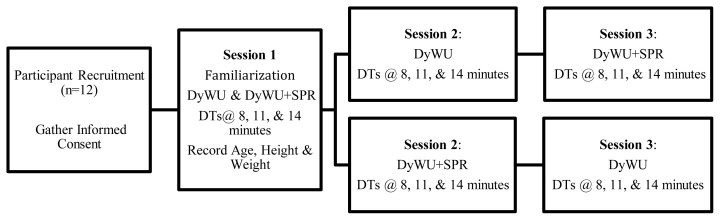
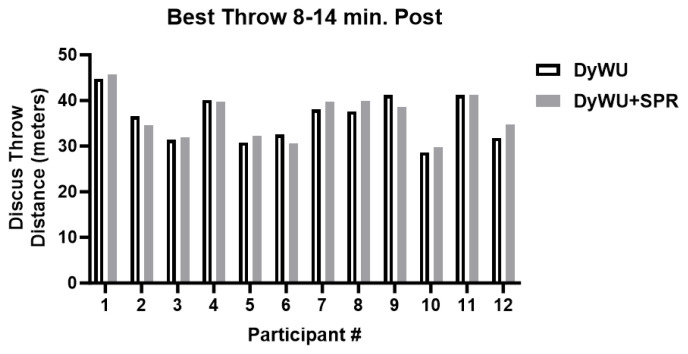
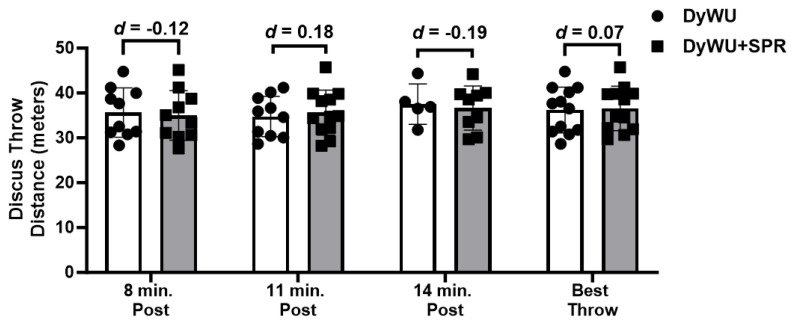
目前还没有研究确定短跑潜能刺激对大学生投掷运动员铁饼成绩的影响。为了验证以下假设:与单独的动态热身(DyWU)相比,带有多组短跑潜能刺激的动态热身(DyWU+SPR)将提高铁饼投掷成绩。12 名美国国家大学生体育协会 I 级投掷运动员(18-25 岁)随机完成了两次训练,每次训练至少间隔 48 小时。其中一次是标准化的动态热身(DyWU),另一次是多组短跑激活后成绩提高(PAPE)刺激(DyWU+SPR)的动态热身,两次热身后都进行了三次铁饼投掷比赛。采用重复测量的双向方差分析(热身 x 时间点)进行分析,P < 0.05。在 8 分钟(分别为 35.7±5.4 米 vs 35.0±5.5 米;d = -0.12,微不足道)、11 分钟(34.8±4.5 vs 35.6±5.0米;d = 0.18,微不足道)、14分钟(分别为37.5±4.5 vs 36.7±4.9米;d = -0.19,微不足道)或最佳投掷尝试(分别为36.2±5.1 vs 36.6±5.0米;d = 0.07,微不足道)。在本研究的参数范围内,使用 DyWU+SPR 与仅使用 DyWU 相比,NCAA I 级投掷运动员的铁饼投掷成绩没有差异。教练员、运动员和从业人员应该意识到,这些结果并不支持在单独的动态热身之外使用多组冲刺 PAPE 刺激来提高大学投掷运动员的铁饼投掷成绩。
Effects of a Sprint Post-Activation Performance Enhancement Stimulus on Discus Throw Performance in Collegiate Division I Throwers: A Pilot Study.
No study has determined the impact a sprinting potentiating stimulus has on discus throwing performance in collegiate throwers. To test the hypothesis, that compared to a dynamic warm-up alone (DyWU), a dynamic warm-up with a multi-set sprinting potentiating stimulus (DyWU+SPR) would enhance discus throw performance. 12 NCAA Division I thrower athletes (18-25 year) randomly completed two sessions separated by at least 48 hours. One session involved a standardized dynamic warm-up (DyWU) and the other session involved a DyWU with multiple sets of a sprinting post-activation performance enhancement (PAPE) stimulus (DyWU+SPR), with both sessions followed by three trials of competition discus throws. A two-way ANOVA (warm-up x timepoint) with repeated measures was used for analyses, p < 0.05. There were no significant (p>0.05) differences between DyWU alone versus DyWU+SPR stimulus for discus throw distances at 8 min. (35.7±5.4 vs 35.0±5.5 meters, respectively; d = -0.12, trivial), 11 min. (34.8±4.5 vs 35.6±5.0 meters, respectively; d = 0.18, trivial), 14 min. (37.5±4.5 vs 36.7±4.9 meters, respectively; d = -0.19, trivial), or best throw attempt (36.2±5.1 vs 36.6±5.0 meters, respectively; d = 0.07, trivial). Within the parameters of this study, there were no differences in discus throw performance with DyWU+SPR compared to a DyWU alone in NCAA Division I throwers. Coaches, athletes, and practitioners should be aware that these results do not support the use of multiple sets of a sprinting PAPE stimulus beyond a dynamic warm-up alone to enhance discus throw performance in collegiate throwers.





 京公网安备 11010802042870号
京ICP备2023020795号-1
京公网安备 11010802042870号
京ICP备2023020795号-1

 分享
分享
 求助内容:
求助内容: 应助结果提醒方式:
 扫码关注我们
