{"title":"重新设计生物打印应用的FDM平台。","authors":"Burak Turker","doi":"10.3390/mi16020226","DOIUrl":null,"url":null,"abstract":"<p><p>Fused Deposition Modeling (FDM) is a prominent additive manufacturing technique known for its ability to provide cost-effective and fast printing solutions. FDM enables the production of computer-aided 3D designs as solid objects at macro scales with high-precision alignment while sacrificing excellent surface smoothness compared to other 3D printing techniques such as SLA (Stereolithography) and SLS (Selective Laser Sintering). Electro-Spinning (ES) is another technique for producing soft-structured nonwoven micro-scale materials, such as nanofibers. However, compared to the FDM technique, it has limited accuracy and sensitivity regarding high-precision alignment. The need for high-precision alignment of micro-scaled soft structures during the printing process raises the question of whether FDM and ES techniques can be combined. Today, the printing technique with such capability is called Melt Electro Writing (MEW), and in practice, it refers to the basic working principle on which bio-printers are based. This paper aims to examine how these two techniques can be combined affordably. Comparatively, it presents output production processes, design components, parameters, and materials used in output production. It discusses the limitations and advantages of such a hybrid platform, specifically from the perspective of engineering design and its biomedical applications.</p>","PeriodicalId":18508,"journal":{"name":"Micromachines","volume":"16 2","pages":""},"PeriodicalIF":3.0000,"publicationDate":"2025-02-16","publicationTypes":"Journal Article","fieldsOfStudy":null,"isOpenAccess":false,"openAccessPdf":"https://www.ncbi.nlm.nih.gov/pmc/articles/PMC11857145/pdf/","citationCount":"0","resultStr":"{\"title\":\"Redesigning FDM Platforms for Bio-Printing Applications.\",\"authors\":\"Burak Turker\",\"doi\":\"10.3390/mi16020226\",\"DOIUrl\":null,\"url\":null,\"abstract\":\"<p><p>Fused Deposition Modeling (FDM) is a prominent additive manufacturing technique known for its ability to provide cost-effective and fast printing solutions. FDM enables the production of computer-aided 3D designs as solid objects at macro scales with high-precision alignment while sacrificing excellent surface smoothness compared to other 3D printing techniques such as SLA (Stereolithography) and SLS (Selective Laser Sintering). Electro-Spinning (ES) is another technique for producing soft-structured nonwoven micro-scale materials, such as nanofibers. However, compared to the FDM technique, it has limited accuracy and sensitivity regarding high-precision alignment. The need for high-precision alignment of micro-scaled soft structures during the printing process raises the question of whether FDM and ES techniques can be combined. Today, the printing technique with such capability is called Melt Electro Writing (MEW), and in practice, it refers to the basic working principle on which bio-printers are based. This paper aims to examine how these two techniques can be combined affordably. Comparatively, it presents output production processes, design components, parameters, and materials used in output production. It discusses the limitations and advantages of such a hybrid platform, specifically from the perspective of engineering design and its biomedical applications.</p>\",\"PeriodicalId\":18508,\"journal\":{\"name\":\"Micromachines\",\"volume\":\"16 2\",\"pages\":\"\"},\"PeriodicalIF\":3.0000,\"publicationDate\":\"2025-02-16\",\"publicationTypes\":\"Journal Article\",\"fieldsOfStudy\":null,\"isOpenAccess\":false,\"openAccessPdf\":\"https://www.ncbi.nlm.nih.gov/pmc/articles/PMC11857145/pdf/\",\"citationCount\":\"0\",\"resultStr\":null,\"platform\":\"Semanticscholar\",\"paperid\":null,\"PeriodicalName\":\"Micromachines\",\"FirstCategoryId\":\"5\",\"ListUrlMain\":\"https://doi.org/10.3390/mi16020226\",\"RegionNum\":3,\"RegionCategory\":\"工程技术\",\"ArticlePicture\":[],\"TitleCN\":null,\"AbstractTextCN\":null,\"PMCID\":null,\"EPubDate\":\"\",\"PubModel\":\"\",\"JCR\":\"Q2\",\"JCRName\":\"CHEMISTRY, ANALYTICAL\",\"Score\":null,\"Total\":0}","platform":"Semanticscholar","paperid":null,"PeriodicalName":"Micromachines","FirstCategoryId":"5","ListUrlMain":"https://doi.org/10.3390/mi16020226","RegionNum":3,"RegionCategory":"工程技术","ArticlePicture":[],"TitleCN":null,"AbstractTextCN":null,"PMCID":null,"EPubDate":"","PubModel":"","JCR":"Q2","JCRName":"CHEMISTRY, ANALYTICAL","Score":null,"Total":0}
Redesigning FDM Platforms for Bio-Printing Applications.
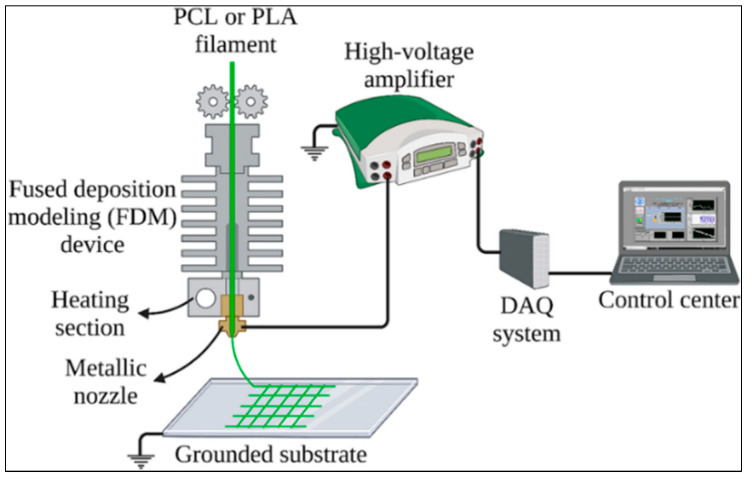
Fused Deposition Modeling (FDM) is a prominent additive manufacturing technique known for its ability to provide cost-effective and fast printing solutions. FDM enables the production of computer-aided 3D designs as solid objects at macro scales with high-precision alignment while sacrificing excellent surface smoothness compared to other 3D printing techniques such as SLA (Stereolithography) and SLS (Selective Laser Sintering). Electro-Spinning (ES) is another technique for producing soft-structured nonwoven micro-scale materials, such as nanofibers. However, compared to the FDM technique, it has limited accuracy and sensitivity regarding high-precision alignment. The need for high-precision alignment of micro-scaled soft structures during the printing process raises the question of whether FDM and ES techniques can be combined. Today, the printing technique with such capability is called Melt Electro Writing (MEW), and in practice, it refers to the basic working principle on which bio-printers are based. This paper aims to examine how these two techniques can be combined affordably. Comparatively, it presents output production processes, design components, parameters, and materials used in output production. It discusses the limitations and advantages of such a hybrid platform, specifically from the perspective of engineering design and its biomedical applications.
期刊介绍:
Micromachines (ISSN 2072-666X) is an international, peer-reviewed open access journal which provides an advanced forum for studies related to micro-scaled machines and micromachinery. It publishes reviews, regular research papers and short communications. Our aim is to encourage scientists to publish their experimental and theoretical results in as much detail as possible. There is no restriction on the length of the papers. The full experimental details must be provided so that the results can be reproduced.






 京公网安备 11010802042870号
京ICP备2023020795号-1
京公网安备 11010802042870号
京ICP备2023020795号-1

 分享
分享
 求助内容:
求助内容: 应助结果提醒方式:
 扫码关注我们
