Taixi Li , Xijian Liu , Boshen Yang , Zhixiang Wang , Yizhi Chen , Xian Jin , Chengxing Shen
{"title":"负载硒的多孔二氧化硅纳米球通过增强抗氧化活性和线粒体自噬改善心肌梗死后的心脏修复。","authors":"Taixi Li , Xijian Liu , Boshen Yang , Zhixiang Wang , Yizhi Chen , Xian Jin , Chengxing Shen","doi":"10.1016/j.freeradbiomed.2025.03.004","DOIUrl":null,"url":null,"abstract":"<div><div>Myocardial infarction (MI) is the leading cause of death globally, often resulting to significant loss of cardiac function. A key factor in the pathological progression of MI is the excessive generation of reactive oxygen species (ROS) by dysfunctional mitochondria. However, no antioxidant therapy has been approved for clinical treatment of MI to date. In this study, selenium-loaded porous silica nanospheres (Se@PSN) are synthesized as a novel therapeutic approach for MI. These nanospheres are capable of neutralizing various ROS, thereby reducing hypoxia-induced myocardial cell damage. Additionally, Se@PSN promote the upregulation of antioxidant proteins, providing sustained intracellular ROS scavenging, which helps reduce infarct size and preserve cardiac function post-MI. The sustained antioxidant effects of Se@PSN are attributed to their ability to safeguard mitochondrial function by modulating oxidative phosphorylation, mitochondrial dynamics, and mitophagy. The activation of mitophagy by Se@PSN is achieved through the upregulation of HIF-1α expression. In conclusion, Se@PSN show significant potential for clinical translation as a novel therapeutic strategy for MI.</div></div>","PeriodicalId":12407,"journal":{"name":"Free Radical Biology and Medicine","volume":"232 ","pages":"Pages 292-305"},"PeriodicalIF":8.0000,"publicationDate":"2025-05-01","publicationTypes":"Journal Article","fieldsOfStudy":null,"isOpenAccess":false,"openAccessPdf":"","citationCount":"0","resultStr":"{\"title\":\"Selenium-loaded porous silica nanospheres improve cardiac repair after myocardial infarction by enhancing antioxidant activity and mitophagy\",\"authors\":\"Taixi Li , Xijian Liu , Boshen Yang , Zhixiang Wang , Yizhi Chen , Xian Jin , Chengxing Shen\",\"doi\":\"10.1016/j.freeradbiomed.2025.03.004\",\"DOIUrl\":null,\"url\":null,\"abstract\":\"<div><div>Myocardial infarction (MI) is the leading cause of death globally, often resulting to significant loss of cardiac function. A key factor in the pathological progression of MI is the excessive generation of reactive oxygen species (ROS) by dysfunctional mitochondria. However, no antioxidant therapy has been approved for clinical treatment of MI to date. In this study, selenium-loaded porous silica nanospheres (Se@PSN) are synthesized as a novel therapeutic approach for MI. These nanospheres are capable of neutralizing various ROS, thereby reducing hypoxia-induced myocardial cell damage. Additionally, Se@PSN promote the upregulation of antioxidant proteins, providing sustained intracellular ROS scavenging, which helps reduce infarct size and preserve cardiac function post-MI. The sustained antioxidant effects of Se@PSN are attributed to their ability to safeguard mitochondrial function by modulating oxidative phosphorylation, mitochondrial dynamics, and mitophagy. The activation of mitophagy by Se@PSN is achieved through the upregulation of HIF-1α expression. In conclusion, Se@PSN show significant potential for clinical translation as a novel therapeutic strategy for MI.</div></div>\",\"PeriodicalId\":12407,\"journal\":{\"name\":\"Free Radical Biology and Medicine\",\"volume\":\"232 \",\"pages\":\"Pages 292-305\"},\"PeriodicalIF\":8.0000,\"publicationDate\":\"2025-05-01\",\"publicationTypes\":\"Journal Article\",\"fieldsOfStudy\":null,\"isOpenAccess\":false,\"openAccessPdf\":\"\",\"citationCount\":\"0\",\"resultStr\":null,\"platform\":\"Semanticscholar\",\"paperid\":null,\"PeriodicalName\":\"Free Radical Biology and Medicine\",\"FirstCategoryId\":\"3\",\"ListUrlMain\":\"https://www.sciencedirect.com/science/article/pii/S0891584925001352\",\"RegionNum\":2,\"RegionCategory\":\"生物学\",\"ArticlePicture\":[],\"TitleCN\":null,\"AbstractTextCN\":null,\"PMCID\":null,\"EPubDate\":\"2025/3/5 0:00:00\",\"PubModel\":\"Epub\",\"JCR\":\"Q1\",\"JCRName\":\"BIOCHEMISTRY & MOLECULAR BIOLOGY\",\"Score\":null,\"Total\":0}","platform":"Semanticscholar","paperid":null,"PeriodicalName":"Free Radical Biology and Medicine","FirstCategoryId":"3","ListUrlMain":"https://www.sciencedirect.com/science/article/pii/S0891584925001352","RegionNum":2,"RegionCategory":"生物学","ArticlePicture":[],"TitleCN":null,"AbstractTextCN":null,"PMCID":null,"EPubDate":"2025/3/5 0:00:00","PubModel":"Epub","JCR":"Q1","JCRName":"BIOCHEMISTRY & MOLECULAR BIOLOGY","Score":null,"Total":0}
Selenium-loaded porous silica nanospheres improve cardiac repair after myocardial infarction by enhancing antioxidant activity and mitophagy
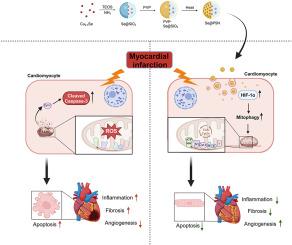
Myocardial infarction (MI) is the leading cause of death globally, often resulting to significant loss of cardiac function. A key factor in the pathological progression of MI is the excessive generation of reactive oxygen species (ROS) by dysfunctional mitochondria. However, no antioxidant therapy has been approved for clinical treatment of MI to date. In this study, selenium-loaded porous silica nanospheres (Se@PSN) are synthesized as a novel therapeutic approach for MI. These nanospheres are capable of neutralizing various ROS, thereby reducing hypoxia-induced myocardial cell damage. Additionally, Se@PSN promote the upregulation of antioxidant proteins, providing sustained intracellular ROS scavenging, which helps reduce infarct size and preserve cardiac function post-MI. The sustained antioxidant effects of Se@PSN are attributed to their ability to safeguard mitochondrial function by modulating oxidative phosphorylation, mitochondrial dynamics, and mitophagy. The activation of mitophagy by Se@PSN is achieved through the upregulation of HIF-1α expression. In conclusion, Se@PSN show significant potential for clinical translation as a novel therapeutic strategy for MI.
期刊介绍:
Free Radical Biology and Medicine is a leading journal in the field of redox biology, which is the study of the role of reactive oxygen species (ROS) and other oxidizing agents in biological systems. The journal serves as a premier forum for publishing innovative and groundbreaking research that explores the redox biology of health and disease, covering a wide range of topics and disciplines. Free Radical Biology and Medicine also commissions Special Issues that highlight recent advances in both basic and clinical research, with a particular emphasis on the mechanisms underlying altered metabolism and redox signaling. These Special Issues aim to provide a focused platform for the latest research in the field, fostering collaboration and knowledge exchange among researchers and clinicians.




 京公网安备 11010802042870号
京ICP备2023020795号-1
京公网安备 11010802042870号
京ICP备2023020795号-1

 分享
分享
 求助内容:
求助内容: 应助结果提醒方式:
 扫码关注我们
