Angenelle Eve Rosal, Sarah L Martin, Antonio P Strafella
{"title":"载脂蛋白E4在帕金森病和帕金森病认知功能障碍中的作用","authors":"Angenelle Eve Rosal, Sarah L Martin, Antonio P Strafella","doi":"10.3389/fnins.2025.1515374","DOIUrl":null,"url":null,"abstract":"<p><p>Cognitive impairment is a prevalent non-motor symptom of Parkinson's disease (PD), increasing the risk of dementia as the disease progresses. Despite its clinical significance, the etiology of cognitive impairment in PD remains unclear. <i>Apolipoprotein E4 (APOE4)</i>, a well-known genetic risk factor of Alzheimer's disease, has been studied for its potential role in PD-related cognitive impairment. However, findings have been conflicting and thus inconclusive, highlighting a need to critically evaluate the current research. Several studies using neuroimaging modalities have explored the brains of individuals with PD and atypical parkinsonian disorders who have <i>APOE4</i>. Some of these studies have identified distinct neuropathological changes that have been previously reported to be associated with cognitive impairments in those with Parkinsonisms. Here, we review the role of <i>APOE4</i> on cognitive impairment in PD and atypical Parkinsonisms using neuroimaging evidence. We will examine how <i>APOE4</i> may contribute to pathological changes within the brain and its association with cognitive impairment.</p>","PeriodicalId":12639,"journal":{"name":"Frontiers in Neuroscience","volume":"19 ","pages":"1515374"},"PeriodicalIF":4.0000,"publicationDate":"2025-02-20","publicationTypes":"Journal Article","fieldsOfStudy":null,"isOpenAccess":false,"openAccessPdf":"https://www.ncbi.nlm.nih.gov/pmc/articles/PMC11882537/pdf/","citationCount":"0","resultStr":"{\"title\":\"The role of <i>Apolipoprotein E4</i> on cognitive impairment in Parkinson's disease and Parkinsonisms.\",\"authors\":\"Angenelle Eve Rosal, Sarah L Martin, Antonio P Strafella\",\"doi\":\"10.3389/fnins.2025.1515374\",\"DOIUrl\":null,\"url\":null,\"abstract\":\"<p><p>Cognitive impairment is a prevalent non-motor symptom of Parkinson's disease (PD), increasing the risk of dementia as the disease progresses. Despite its clinical significance, the etiology of cognitive impairment in PD remains unclear. <i>Apolipoprotein E4 (APOE4)</i>, a well-known genetic risk factor of Alzheimer's disease, has been studied for its potential role in PD-related cognitive impairment. However, findings have been conflicting and thus inconclusive, highlighting a need to critically evaluate the current research. Several studies using neuroimaging modalities have explored the brains of individuals with PD and atypical parkinsonian disorders who have <i>APOE4</i>. Some of these studies have identified distinct neuropathological changes that have been previously reported to be associated with cognitive impairments in those with Parkinsonisms. Here, we review the role of <i>APOE4</i> on cognitive impairment in PD and atypical Parkinsonisms using neuroimaging evidence. We will examine how <i>APOE4</i> may contribute to pathological changes within the brain and its association with cognitive impairment.</p>\",\"PeriodicalId\":12639,\"journal\":{\"name\":\"Frontiers in Neuroscience\",\"volume\":\"19 \",\"pages\":\"1515374\"},\"PeriodicalIF\":4.0000,\"publicationDate\":\"2025-02-20\",\"publicationTypes\":\"Journal Article\",\"fieldsOfStudy\":null,\"isOpenAccess\":false,\"openAccessPdf\":\"https://www.ncbi.nlm.nih.gov/pmc/articles/PMC11882537/pdf/\",\"citationCount\":\"0\",\"resultStr\":null,\"platform\":\"Semanticscholar\",\"paperid\":null,\"PeriodicalName\":\"Frontiers in Neuroscience\",\"FirstCategoryId\":\"3\",\"ListUrlMain\":\"https://doi.org/10.3389/fnins.2025.1515374\",\"RegionNum\":3,\"RegionCategory\":\"医学\",\"ArticlePicture\":[],\"TitleCN\":null,\"AbstractTextCN\":null,\"PMCID\":null,\"EPubDate\":\"2025/1/1 0:00:00\",\"PubModel\":\"eCollection\",\"JCR\":\"Q2\",\"JCRName\":\"NEUROSCIENCES\",\"Score\":null,\"Total\":0}","platform":"Semanticscholar","paperid":null,"PeriodicalName":"Frontiers in Neuroscience","FirstCategoryId":"3","ListUrlMain":"https://doi.org/10.3389/fnins.2025.1515374","RegionNum":3,"RegionCategory":"医学","ArticlePicture":[],"TitleCN":null,"AbstractTextCN":null,"PMCID":null,"EPubDate":"2025/1/1 0:00:00","PubModel":"eCollection","JCR":"Q2","JCRName":"NEUROSCIENCES","Score":null,"Total":0}
The role of Apolipoprotein E4 on cognitive impairment in Parkinson's disease and Parkinsonisms.
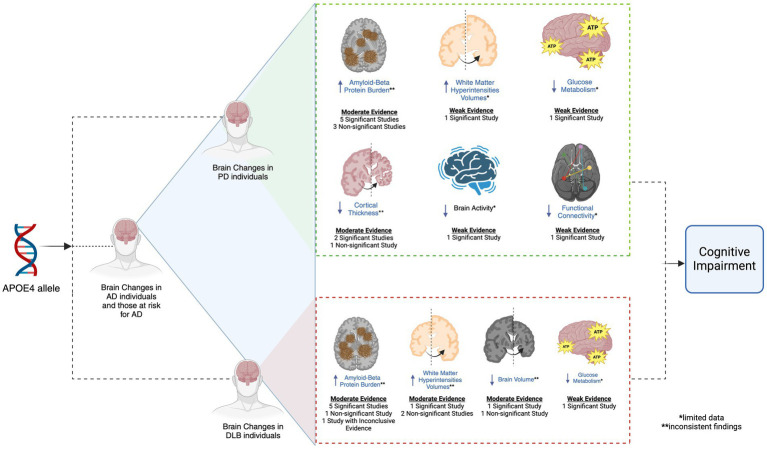
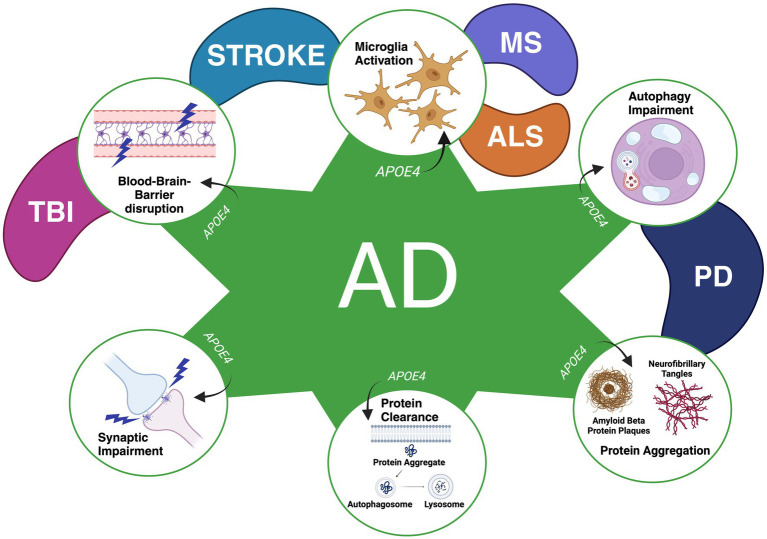
Cognitive impairment is a prevalent non-motor symptom of Parkinson's disease (PD), increasing the risk of dementia as the disease progresses. Despite its clinical significance, the etiology of cognitive impairment in PD remains unclear. Apolipoprotein E4 (APOE4), a well-known genetic risk factor of Alzheimer's disease, has been studied for its potential role in PD-related cognitive impairment. However, findings have been conflicting and thus inconclusive, highlighting a need to critically evaluate the current research. Several studies using neuroimaging modalities have explored the brains of individuals with PD and atypical parkinsonian disorders who have APOE4. Some of these studies have identified distinct neuropathological changes that have been previously reported to be associated with cognitive impairments in those with Parkinsonisms. Here, we review the role of APOE4 on cognitive impairment in PD and atypical Parkinsonisms using neuroimaging evidence. We will examine how APOE4 may contribute to pathological changes within the brain and its association with cognitive impairment.
期刊介绍:
Neural Technology is devoted to the convergence between neurobiology and quantum-, nano- and micro-sciences. In our vision, this interdisciplinary approach should go beyond the technological development of sophisticated methods and should contribute in generating a genuine change in our discipline.





 京公网安备 11010802042870号
京ICP备2023020795号-1
京公网安备 11010802042870号
京ICP备2023020795号-1

 分享
分享
 求助内容:
求助内容: 应助结果提醒方式:
 扫码关注我们
