{"title":"血管之外:揭示vegf对神经元功能和结构的影响。","authors":"Bahar Aksan, Daniela Mauceri","doi":"10.1186/s12929-025-01128-8","DOIUrl":null,"url":null,"abstract":"<p><p>Neurons rely on the bloodstream for essential nutrients and oxygen, which is facilitated by an intricate coupling of the neuronal and vascular systems. Central to this neurovascular interaction is the vascular endothelial growth factor (VEGF) family, a group of secreted growth factors traditionally known for their roles in promoting endothelial cell proliferation, migration, and survival in the cardiovascular and lymphatic systems. However, emerging evidence shows that VEGFs also play indispensable roles in the nervous system, extending beyond their canonical angiogenic and lymphangiogenic functions. Over the past two decades, VEGFs have been found to exert direct effects on neurons, influencing key aspects of neuronal function independently of their actions on vascular cells. In particular, it has become increasingly evident that VEGFs also play crucial functions in the development, regulation, and maintenance of neuronal morphology. Understanding the roles of VEGFs in neuronal development is of high scientific and clinical interest because of the significance of precise neuronal morphology for neural connectivity and network function, as well as the association of morphological abnormalities with neurological and neurodegenerative disorders. This review begins with an overview of the VEGF family members, their structural characteristics, receptors, and established roles in vasculature. However, it then highlights and focuses on the exciting variety of neuronal functions of VEGFs, especially their crucial role in the development, regulation, and maintenance of neuronal morphology.</p>","PeriodicalId":15365,"journal":{"name":"Journal of Biomedical Science","volume":"32 1","pages":"33"},"PeriodicalIF":14.5000,"publicationDate":"2025-03-06","publicationTypes":"Journal Article","fieldsOfStudy":null,"isOpenAccess":false,"openAccessPdf":"https://www.ncbi.nlm.nih.gov/pmc/articles/PMC11884128/pdf/","citationCount":"0","resultStr":"{\"title\":\"Beyond vessels: unraveling the impact of VEGFs on neuronal functions and structure.\",\"authors\":\"Bahar Aksan, Daniela Mauceri\",\"doi\":\"10.1186/s12929-025-01128-8\",\"DOIUrl\":null,\"url\":null,\"abstract\":\"<p><p>Neurons rely on the bloodstream for essential nutrients and oxygen, which is facilitated by an intricate coupling of the neuronal and vascular systems. Central to this neurovascular interaction is the vascular endothelial growth factor (VEGF) family, a group of secreted growth factors traditionally known for their roles in promoting endothelial cell proliferation, migration, and survival in the cardiovascular and lymphatic systems. However, emerging evidence shows that VEGFs also play indispensable roles in the nervous system, extending beyond their canonical angiogenic and lymphangiogenic functions. Over the past two decades, VEGFs have been found to exert direct effects on neurons, influencing key aspects of neuronal function independently of their actions on vascular cells. In particular, it has become increasingly evident that VEGFs also play crucial functions in the development, regulation, and maintenance of neuronal morphology. Understanding the roles of VEGFs in neuronal development is of high scientific and clinical interest because of the significance of precise neuronal morphology for neural connectivity and network function, as well as the association of morphological abnormalities with neurological and neurodegenerative disorders. This review begins with an overview of the VEGF family members, their structural characteristics, receptors, and established roles in vasculature. However, it then highlights and focuses on the exciting variety of neuronal functions of VEGFs, especially their crucial role in the development, regulation, and maintenance of neuronal morphology.</p>\",\"PeriodicalId\":15365,\"journal\":{\"name\":\"Journal of Biomedical Science\",\"volume\":\"32 1\",\"pages\":\"33\"},\"PeriodicalIF\":14.5000,\"publicationDate\":\"2025-03-06\",\"publicationTypes\":\"Journal Article\",\"fieldsOfStudy\":null,\"isOpenAccess\":false,\"openAccessPdf\":\"https://www.ncbi.nlm.nih.gov/pmc/articles/PMC11884128/pdf/\",\"citationCount\":\"0\",\"resultStr\":null,\"platform\":\"Semanticscholar\",\"paperid\":null,\"PeriodicalName\":\"Journal of Biomedical Science\",\"FirstCategoryId\":\"3\",\"ListUrlMain\":\"https://doi.org/10.1186/s12929-025-01128-8\",\"RegionNum\":2,\"RegionCategory\":\"医学\",\"ArticlePicture\":[],\"TitleCN\":null,\"AbstractTextCN\":null,\"PMCID\":null,\"EPubDate\":\"\",\"PubModel\":\"\",\"JCR\":\"Q1\",\"JCRName\":\"CELL BIOLOGY\",\"Score\":null,\"Total\":0}","platform":"Semanticscholar","paperid":null,"PeriodicalName":"Journal of Biomedical Science","FirstCategoryId":"3","ListUrlMain":"https://doi.org/10.1186/s12929-025-01128-8","RegionNum":2,"RegionCategory":"医学","ArticlePicture":[],"TitleCN":null,"AbstractTextCN":null,"PMCID":null,"EPubDate":"","PubModel":"","JCR":"Q1","JCRName":"CELL BIOLOGY","Score":null,"Total":0}
Beyond vessels: unraveling the impact of VEGFs on neuronal functions and structure.
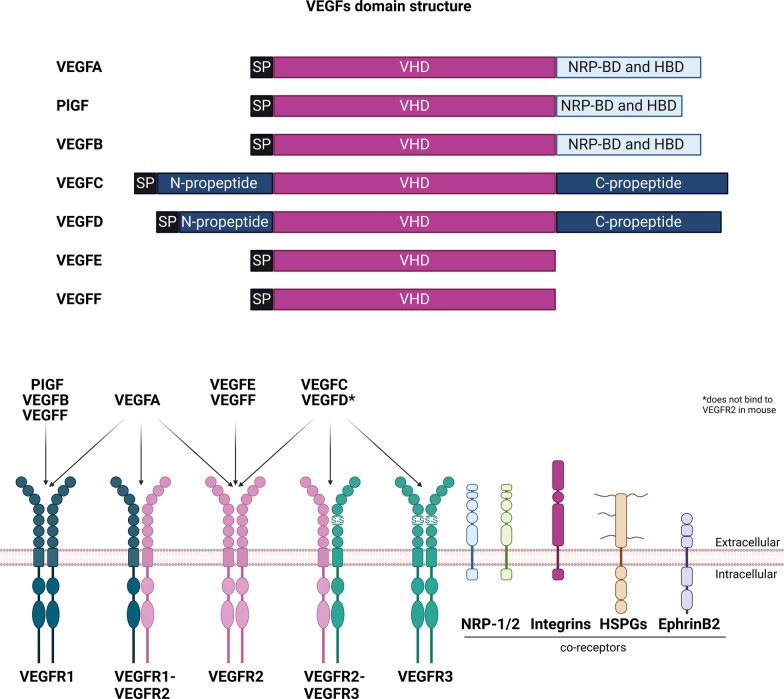
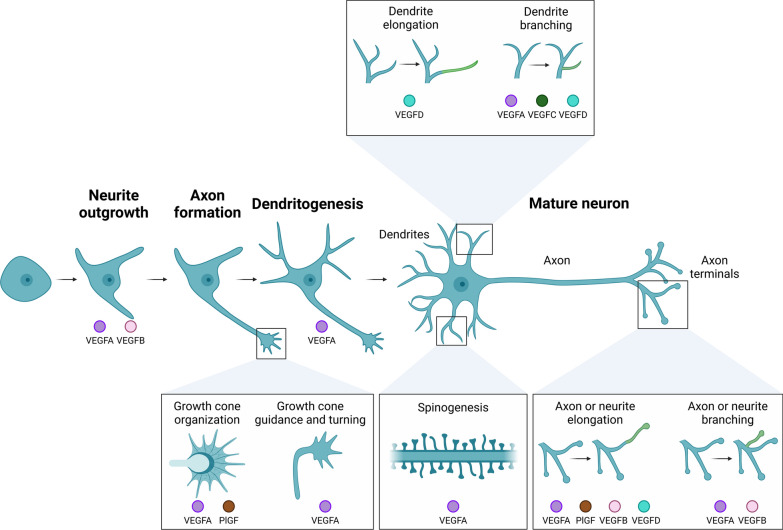
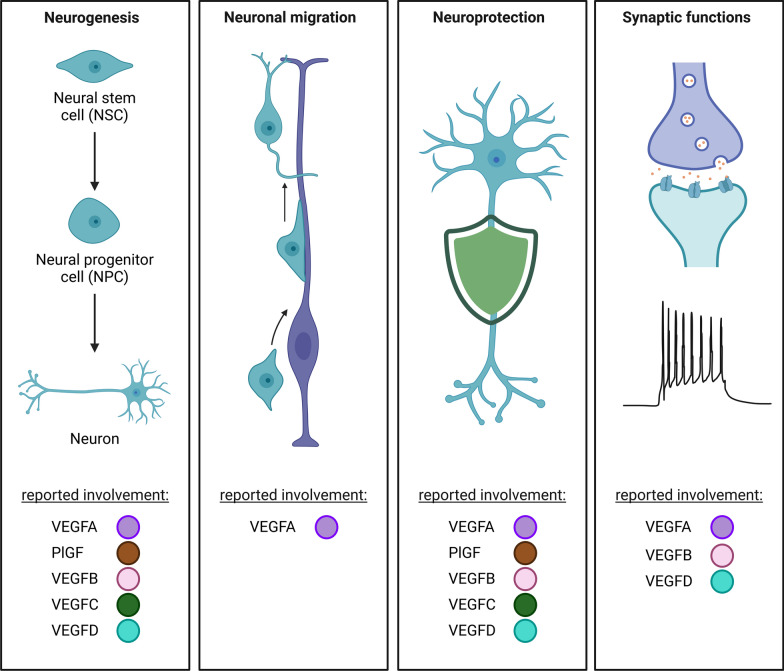
Neurons rely on the bloodstream for essential nutrients and oxygen, which is facilitated by an intricate coupling of the neuronal and vascular systems. Central to this neurovascular interaction is the vascular endothelial growth factor (VEGF) family, a group of secreted growth factors traditionally known for their roles in promoting endothelial cell proliferation, migration, and survival in the cardiovascular and lymphatic systems. However, emerging evidence shows that VEGFs also play indispensable roles in the nervous system, extending beyond their canonical angiogenic and lymphangiogenic functions. Over the past two decades, VEGFs have been found to exert direct effects on neurons, influencing key aspects of neuronal function independently of their actions on vascular cells. In particular, it has become increasingly evident that VEGFs also play crucial functions in the development, regulation, and maintenance of neuronal morphology. Understanding the roles of VEGFs in neuronal development is of high scientific and clinical interest because of the significance of precise neuronal morphology for neural connectivity and network function, as well as the association of morphological abnormalities with neurological and neurodegenerative disorders. This review begins with an overview of the VEGF family members, their structural characteristics, receptors, and established roles in vasculature. However, it then highlights and focuses on the exciting variety of neuronal functions of VEGFs, especially their crucial role in the development, regulation, and maintenance of neuronal morphology.
期刊介绍:
The Journal of Biomedical Science is an open access, peer-reviewed journal that focuses on fundamental and molecular aspects of basic medical sciences. It emphasizes molecular studies of biomedical problems and mechanisms. The National Science and Technology Council (NSTC), Taiwan supports the journal and covers the publication costs for accepted articles. The journal aims to provide an international platform for interdisciplinary discussions and contribute to the advancement of medicine. It benefits both readers and authors by accelerating the dissemination of research information and providing maximum access to scholarly communication. All articles published in the Journal of Biomedical Science are included in various databases such as Biological Abstracts, BIOSIS, CABI, CAS, Citebase, Current contents, DOAJ, Embase, EmBiology, and Global Health, among others.




 京公网安备 11010802042870号
京ICP备2023020795号-1
京公网安备 11010802042870号
京ICP备2023020795号-1

 分享
分享
 求助内容:
求助内容: 应助结果提醒方式:
 扫码关注我们
