Brian R Cornwell, Paige R Didier, Shannon E Grogans, Allegra S Anderson, Samiha Islam, Hyung Cho Kim, Manuel Kuhn, Rachael M Tillman, Juyoen Hur, Zachary S Scott, Andrew S Fox, Kathryn A DeYoung, Jason F Smith, Alexander J Shackman
{"title":"一个共享的威胁预测电路在不同时刻被确定的和不确定的威胁动态激活。","authors":"Brian R Cornwell, Paige R Didier, Shannon E Grogans, Allegra S Anderson, Samiha Islam, Hyung Cho Kim, Manuel Kuhn, Rachael M Tillman, Juyoen Hur, Zachary S Scott, Andrew S Fox, Kathryn A DeYoung, Jason F Smith, Alexander J Shackman","doi":"10.1523/JNEUROSCI.2113-24.2025","DOIUrl":null,"url":null,"abstract":"<p><p>Temporal dynamics play a central role in models of emotion: \"fear\" is widely conceptualized as a phasic response to certain-and-imminent danger, whereas \"anxiety\" is a sustained response to uncertain-or-distal harm. Yet the underlying neurobiology remains contentious. Leveraging a translationally relevant fMRI paradigm and theory-driven modeling approach in 220 adult humans, we demonstrate that certain- and uncertain-threat anticipation recruit a shared circuit that encompasses the central extended amygdala (EAc), periaqueductal gray, midcingulate, and anterior insula. This circuit exhibits persistently elevated activation when threat is uncertain and distal and transient bursts of activation just before certain encounters with threat. Although there is agreement that the EAc plays a critical role in orchestrating responses to threat, confusion persists about the respective contributions of its major subdivisions, the bed nucleus of the stria terminalis (BST) and central nucleus of the amygdala (Ce). Here we used anatomical regions of interest to demonstrate that the BST and Ce exhibit statistically indistinguishable threat dynamics. Both regions exhibited activation dynamics that run counter to popular models, with the Ce (and BST) showing sustained responses to uncertain-and-distal threat and the BST (and Ce) showing phasic responses to certain-and-imminent threat. For many scientists, feelings are the hallmark of fear and anxiety. Here we used an independently validated multivoxel brain \"signature\" to covertly probe the moment-by-moment dynamics of anticipatory distress for the first time. Results mirrored the dynamics of neural activation. These observations provide fresh insights into the neurobiology of threat-elicited emotions and set the stage for more ambitious clinical and mechanistic research.</p>","PeriodicalId":50114,"journal":{"name":"Journal of Neuroscience","volume":" ","pages":""},"PeriodicalIF":4.3000,"publicationDate":"2025-04-16","publicationTypes":"Journal Article","fieldsOfStudy":null,"isOpenAccess":false,"openAccessPdf":"https://www.ncbi.nlm.nih.gov/pmc/articles/PMC12005365/pdf/","citationCount":"0","resultStr":"{\"title\":\"A Shared Threat-Anticipation Circuit Is Dynamically Engaged at Different Moments by Certain and Uncertain Threat.\",\"authors\":\"Brian R Cornwell, Paige R Didier, Shannon E Grogans, Allegra S Anderson, Samiha Islam, Hyung Cho Kim, Manuel Kuhn, Rachael M Tillman, Juyoen Hur, Zachary S Scott, Andrew S Fox, Kathryn A DeYoung, Jason F Smith, Alexander J Shackman\",\"doi\":\"10.1523/JNEUROSCI.2113-24.2025\",\"DOIUrl\":null,\"url\":null,\"abstract\":\"<p><p>Temporal dynamics play a central role in models of emotion: \\\"fear\\\" is widely conceptualized as a phasic response to certain-and-imminent danger, whereas \\\"anxiety\\\" is a sustained response to uncertain-or-distal harm. Yet the underlying neurobiology remains contentious. Leveraging a translationally relevant fMRI paradigm and theory-driven modeling approach in 220 adult humans, we demonstrate that certain- and uncertain-threat anticipation recruit a shared circuit that encompasses the central extended amygdala (EAc), periaqueductal gray, midcingulate, and anterior insula. This circuit exhibits persistently elevated activation when threat is uncertain and distal and transient bursts of activation just before certain encounters with threat. Although there is agreement that the EAc plays a critical role in orchestrating responses to threat, confusion persists about the respective contributions of its major subdivisions, the bed nucleus of the stria terminalis (BST) and central nucleus of the amygdala (Ce). Here we used anatomical regions of interest to demonstrate that the BST and Ce exhibit statistically indistinguishable threat dynamics. Both regions exhibited activation dynamics that run counter to popular models, with the Ce (and BST) showing sustained responses to uncertain-and-distal threat and the BST (and Ce) showing phasic responses to certain-and-imminent threat. For many scientists, feelings are the hallmark of fear and anxiety. Here we used an independently validated multivoxel brain \\\"signature\\\" to covertly probe the moment-by-moment dynamics of anticipatory distress for the first time. Results mirrored the dynamics of neural activation. These observations provide fresh insights into the neurobiology of threat-elicited emotions and set the stage for more ambitious clinical and mechanistic research.</p>\",\"PeriodicalId\":50114,\"journal\":{\"name\":\"Journal of Neuroscience\",\"volume\":\" \",\"pages\":\"\"},\"PeriodicalIF\":4.3000,\"publicationDate\":\"2025-04-16\",\"publicationTypes\":\"Journal Article\",\"fieldsOfStudy\":null,\"isOpenAccess\":false,\"openAccessPdf\":\"https://www.ncbi.nlm.nih.gov/pmc/articles/PMC12005365/pdf/\",\"citationCount\":\"0\",\"resultStr\":null,\"platform\":\"Semanticscholar\",\"paperid\":null,\"PeriodicalName\":\"Journal of Neuroscience\",\"FirstCategoryId\":\"3\",\"ListUrlMain\":\"https://doi.org/10.1523/JNEUROSCI.2113-24.2025\",\"RegionNum\":2,\"RegionCategory\":\"医学\",\"ArticlePicture\":[],\"TitleCN\":null,\"AbstractTextCN\":null,\"PMCID\":null,\"EPubDate\":\"\",\"PubModel\":\"\",\"JCR\":\"Q1\",\"JCRName\":\"NEUROSCIENCES\",\"Score\":null,\"Total\":0}","platform":"Semanticscholar","paperid":null,"PeriodicalName":"Journal of Neuroscience","FirstCategoryId":"3","ListUrlMain":"https://doi.org/10.1523/JNEUROSCI.2113-24.2025","RegionNum":2,"RegionCategory":"医学","ArticlePicture":[],"TitleCN":null,"AbstractTextCN":null,"PMCID":null,"EPubDate":"","PubModel":"","JCR":"Q1","JCRName":"NEUROSCIENCES","Score":null,"Total":0}
A Shared Threat-Anticipation Circuit Is Dynamically Engaged at Different Moments by Certain and Uncertain Threat.
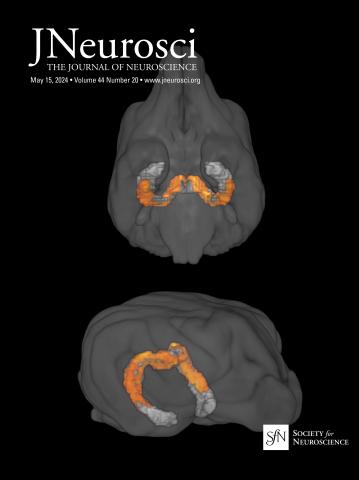
Temporal dynamics play a central role in models of emotion: "fear" is widely conceptualized as a phasic response to certain-and-imminent danger, whereas "anxiety" is a sustained response to uncertain-or-distal harm. Yet the underlying neurobiology remains contentious. Leveraging a translationally relevant fMRI paradigm and theory-driven modeling approach in 220 adult humans, we demonstrate that certain- and uncertain-threat anticipation recruit a shared circuit that encompasses the central extended amygdala (EAc), periaqueductal gray, midcingulate, and anterior insula. This circuit exhibits persistently elevated activation when threat is uncertain and distal and transient bursts of activation just before certain encounters with threat. Although there is agreement that the EAc plays a critical role in orchestrating responses to threat, confusion persists about the respective contributions of its major subdivisions, the bed nucleus of the stria terminalis (BST) and central nucleus of the amygdala (Ce). Here we used anatomical regions of interest to demonstrate that the BST and Ce exhibit statistically indistinguishable threat dynamics. Both regions exhibited activation dynamics that run counter to popular models, with the Ce (and BST) showing sustained responses to uncertain-and-distal threat and the BST (and Ce) showing phasic responses to certain-and-imminent threat. For many scientists, feelings are the hallmark of fear and anxiety. Here we used an independently validated multivoxel brain "signature" to covertly probe the moment-by-moment dynamics of anticipatory distress for the first time. Results mirrored the dynamics of neural activation. These observations provide fresh insights into the neurobiology of threat-elicited emotions and set the stage for more ambitious clinical and mechanistic research.
期刊介绍:
JNeurosci (ISSN 0270-6474) is an official journal of the Society for Neuroscience. It is published weekly by the Society, fifty weeks a year, one volume a year. JNeurosci publishes papers on a broad range of topics of general interest to those working on the nervous system. Authors now have an Open Choice option for their published articles




 京公网安备 11010802042870号
京ICP备2023020795号-1
京公网安备 11010802042870号
京ICP备2023020795号-1

 分享
分享
 求助内容:
求助内容: 应助结果提醒方式:
 扫码关注我们
