Nora Expósito , Jordi Sierra , Esther Martí , Jaume Folch , Nuno Ratola , Marta Schuhmacher , Joaquim Rovira
{"title":"使用荧光显微镜和红外光谱检测海滩沙子中的微塑料热点,用于国家调查:加泰罗尼亚海岸的案例研究","authors":"Nora Expósito , Jordi Sierra , Esther Martí , Jaume Folch , Nuno Ratola , Marta Schuhmacher , Joaquim Rovira","doi":"10.1016/j.marpolbul.2025.117761","DOIUrl":null,"url":null,"abstract":"<div><div>The aim of this study is the characterization of microplastics (60 μm −5 mm) on Catalan beaches. It takes into consideration factors as sand size distribution, geomorphology, meteorological parameters and anthropogenic pressures. MPs were measured in seventy (<em>n</em> = 70) intertidal sand samples covering 580 km coastline. After dry sieving the fraction over 0.5 mm was analysed by visual sorting and FTIR techniques. The fraction below 0.5 mm was separated by wet density separation processes, oxidation of organic matter and then analysed by Nile Red staining and fluorescence microscopy. A subset of samples (<em>n</em> = 23) was also subjected to μ-FTIR techniques for compositional analysis in order to compare and confirm the results given by the staining method. The concentration of MP > 0.5 mm ranged from <0.55 to 56.8 MPs/kg (60 % fragments). For sizes 60 μm-0.5 mm it varied from 0 to 2013 MPs/kg (70 % fibres). Polyethylene, polypropylene, polyethylene terephthalate, and polystyrene composed most fragments. Polyester, polyamide, polypropylene and acrylic constituted fibres. Although spectroscopy (μFTIR) is needed to confirm the results, the staining method can be a screening strategy to detect hotspots and provided good approximations for MPs quantification. Only sand particle size is correlated with MPs concentration. Sewage treatment plant discharges, runoff, and local ocean currents might all be significant in the accumulation of MPs along the coast.</div></div>","PeriodicalId":18215,"journal":{"name":"Marine pollution bulletin","volume":"214 ","pages":"Article 117761"},"PeriodicalIF":4.9000,"publicationDate":"2025-05-01","publicationTypes":"Journal Article","fieldsOfStudy":null,"isOpenAccess":false,"openAccessPdf":"","citationCount":"0","resultStr":"{\"title\":\"Detection of microplastic hotspots in beach sand for national surveys using fluorescence microscopy and infrared spectroscopy: Case study on the Catalan coast\",\"authors\":\"Nora Expósito , Jordi Sierra , Esther Martí , Jaume Folch , Nuno Ratola , Marta Schuhmacher , Joaquim Rovira\",\"doi\":\"10.1016/j.marpolbul.2025.117761\",\"DOIUrl\":null,\"url\":null,\"abstract\":\"<div><div>The aim of this study is the characterization of microplastics (60 μm −5 mm) on Catalan beaches. It takes into consideration factors as sand size distribution, geomorphology, meteorological parameters and anthropogenic pressures. MPs were measured in seventy (<em>n</em> = 70) intertidal sand samples covering 580 km coastline. After dry sieving the fraction over 0.5 mm was analysed by visual sorting and FTIR techniques. The fraction below 0.5 mm was separated by wet density separation processes, oxidation of organic matter and then analysed by Nile Red staining and fluorescence microscopy. A subset of samples (<em>n</em> = 23) was also subjected to μ-FTIR techniques for compositional analysis in order to compare and confirm the results given by the staining method. The concentration of MP > 0.5 mm ranged from <0.55 to 56.8 MPs/kg (60 % fragments). For sizes 60 μm-0.5 mm it varied from 0 to 2013 MPs/kg (70 % fibres). Polyethylene, polypropylene, polyethylene terephthalate, and polystyrene composed most fragments. Polyester, polyamide, polypropylene and acrylic constituted fibres. Although spectroscopy (μFTIR) is needed to confirm the results, the staining method can be a screening strategy to detect hotspots and provided good approximations for MPs quantification. Only sand particle size is correlated with MPs concentration. Sewage treatment plant discharges, runoff, and local ocean currents might all be significant in the accumulation of MPs along the coast.</div></div>\",\"PeriodicalId\":18215,\"journal\":{\"name\":\"Marine pollution bulletin\",\"volume\":\"214 \",\"pages\":\"Article 117761\"},\"PeriodicalIF\":4.9000,\"publicationDate\":\"2025-05-01\",\"publicationTypes\":\"Journal Article\",\"fieldsOfStudy\":null,\"isOpenAccess\":false,\"openAccessPdf\":\"\",\"citationCount\":\"0\",\"resultStr\":null,\"platform\":\"Semanticscholar\",\"paperid\":null,\"PeriodicalName\":\"Marine pollution bulletin\",\"FirstCategoryId\":\"93\",\"ListUrlMain\":\"https://www.sciencedirect.com/science/article/pii/S0025326X2500236X\",\"RegionNum\":3,\"RegionCategory\":\"环境科学与生态学\",\"ArticlePicture\":[],\"TitleCN\":null,\"AbstractTextCN\":null,\"PMCID\":null,\"EPubDate\":\"2025/3/8 0:00:00\",\"PubModel\":\"Epub\",\"JCR\":\"Q1\",\"JCRName\":\"ENVIRONMENTAL SCIENCES\",\"Score\":null,\"Total\":0}","platform":"Semanticscholar","paperid":null,"PeriodicalName":"Marine pollution bulletin","FirstCategoryId":"93","ListUrlMain":"https://www.sciencedirect.com/science/article/pii/S0025326X2500236X","RegionNum":3,"RegionCategory":"环境科学与生态学","ArticlePicture":[],"TitleCN":null,"AbstractTextCN":null,"PMCID":null,"EPubDate":"2025/3/8 0:00:00","PubModel":"Epub","JCR":"Q1","JCRName":"ENVIRONMENTAL SCIENCES","Score":null,"Total":0}
Detection of microplastic hotspots in beach sand for national surveys using fluorescence microscopy and infrared spectroscopy: Case study on the Catalan coast
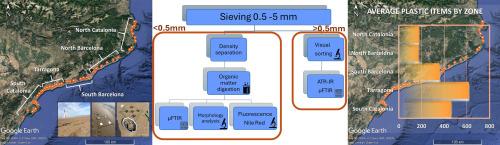
The aim of this study is the characterization of microplastics (60 μm −5 mm) on Catalan beaches. It takes into consideration factors as sand size distribution, geomorphology, meteorological parameters and anthropogenic pressures. MPs were measured in seventy (n = 70) intertidal sand samples covering 580 km coastline. After dry sieving the fraction over 0.5 mm was analysed by visual sorting and FTIR techniques. The fraction below 0.5 mm was separated by wet density separation processes, oxidation of organic matter and then analysed by Nile Red staining and fluorescence microscopy. A subset of samples (n = 23) was also subjected to μ-FTIR techniques for compositional analysis in order to compare and confirm the results given by the staining method. The concentration of MP > 0.5 mm ranged from <0.55 to 56.8 MPs/kg (60 % fragments). For sizes 60 μm-0.5 mm it varied from 0 to 2013 MPs/kg (70 % fibres). Polyethylene, polypropylene, polyethylene terephthalate, and polystyrene composed most fragments. Polyester, polyamide, polypropylene and acrylic constituted fibres. Although spectroscopy (μFTIR) is needed to confirm the results, the staining method can be a screening strategy to detect hotspots and provided good approximations for MPs quantification. Only sand particle size is correlated with MPs concentration. Sewage treatment plant discharges, runoff, and local ocean currents might all be significant in the accumulation of MPs along the coast.
期刊介绍:
Marine Pollution Bulletin is concerned with the rational use of maritime and marine resources in estuaries, the seas and oceans, as well as with documenting marine pollution and introducing new forms of measurement and analysis. A wide range of topics are discussed as news, comment, reviews and research reports, not only on effluent disposal and pollution control, but also on the management, economic aspects and protection of the marine environment in general.




 京公网安备 11010802042870号
京ICP备2023020795号-1
京公网安备 11010802042870号
京ICP备2023020795号-1

 分享
分享
 求助内容:
求助内容: 应助结果提醒方式:
 扫码关注我们
