{"title":"葡萄糖通过戊糖磷酸途径保护培养的视网膜细胞免受氧化损伤","authors":"John P.M. Wood , Glyn Chidlow , Robert J. Casson","doi":"10.1016/j.freeradbiomed.2025.03.006","DOIUrl":null,"url":null,"abstract":"<div><h3>Purpose</h3><div>Oxidative injury has been implicated in a range of common retinal neurodegenerative disorders. Protecting the retina from such an insult could therefore prove clinically beneficial. We sought to investigate whether glucose, acting via the pentose phosphate pathway (PPP), was able to counteract oxidative cytotoxicity to retinal cells in culture.</div></div><div><h3>Experimental</h3><div>Mixed retinal neuron-glial cultures were prepared from Sprague-Dawley rat neonates and used at 7 days in vitro; neuron-only and Müller glial cell-only mono-cultures were subsequently prepared from these cultures. At appropriate stages, cultures were treated with t-butyl hydroperoxide (tbH; 10 nM-1 mM) in glucose/pyruvate-free DMEM to induce oxidative stress. Some cultures were co-treated with glucose. Additional compounds were co-applied to inhibit glycolysis, PPP, cystine uptake, glutathione biosynthesis and glutathione reductase (GR). The effect of glucose on stimulation of reactive oxygen species (ROS), as well as levels of glutathione and NADPH were also investigated.</div></div><div><h3>Results</h3><div>Oxidative stress resulted in cytotoxicity to both retinal neurons and glial cells. Glucose was able to abrogate the toxicity to glial cells in mono-cultures and mixed cultures, but could only provide protection to neurons in the mixed cultures when glial cells were also present. Glucose was additionally shown to prevent stimulation of ROS and oxidative stress-induced depletions of glutathione and NADPH. Inhibition of PPP, cystine uptake or GR all diminished the protective response of glucose.</div></div><div><h3>Conclusion</h3><div>Glucose prevented oxidative stress to retinal cells via the PPP. Neurons were not subjected to glucose-induced protection except when glial cells were present, implying the passage of a transmissible mediator or other protective action between the two cell types.</div></div>","PeriodicalId":12407,"journal":{"name":"Free Radical Biology and Medicine","volume":"232 ","pages":"Pages 142-157"},"PeriodicalIF":8.0000,"publicationDate":"2025-05-01","publicationTypes":"Journal Article","fieldsOfStudy":null,"isOpenAccess":false,"openAccessPdf":"","citationCount":"0","resultStr":"{\"title\":\"Glucose protects cultured retinal cells from oxidative injury via the pentose phosphate pathway\",\"authors\":\"John P.M. Wood , Glyn Chidlow , Robert J. Casson\",\"doi\":\"10.1016/j.freeradbiomed.2025.03.006\",\"DOIUrl\":null,\"url\":null,\"abstract\":\"<div><h3>Purpose</h3><div>Oxidative injury has been implicated in a range of common retinal neurodegenerative disorders. Protecting the retina from such an insult could therefore prove clinically beneficial. We sought to investigate whether glucose, acting via the pentose phosphate pathway (PPP), was able to counteract oxidative cytotoxicity to retinal cells in culture.</div></div><div><h3>Experimental</h3><div>Mixed retinal neuron-glial cultures were prepared from Sprague-Dawley rat neonates and used at 7 days in vitro; neuron-only and Müller glial cell-only mono-cultures were subsequently prepared from these cultures. At appropriate stages, cultures were treated with t-butyl hydroperoxide (tbH; 10 nM-1 mM) in glucose/pyruvate-free DMEM to induce oxidative stress. Some cultures were co-treated with glucose. Additional compounds were co-applied to inhibit glycolysis, PPP, cystine uptake, glutathione biosynthesis and glutathione reductase (GR). The effect of glucose on stimulation of reactive oxygen species (ROS), as well as levels of glutathione and NADPH were also investigated.</div></div><div><h3>Results</h3><div>Oxidative stress resulted in cytotoxicity to both retinal neurons and glial cells. Glucose was able to abrogate the toxicity to glial cells in mono-cultures and mixed cultures, but could only provide protection to neurons in the mixed cultures when glial cells were also present. Glucose was additionally shown to prevent stimulation of ROS and oxidative stress-induced depletions of glutathione and NADPH. Inhibition of PPP, cystine uptake or GR all diminished the protective response of glucose.</div></div><div><h3>Conclusion</h3><div>Glucose prevented oxidative stress to retinal cells via the PPP. Neurons were not subjected to glucose-induced protection except when glial cells were present, implying the passage of a transmissible mediator or other protective action between the two cell types.</div></div>\",\"PeriodicalId\":12407,\"journal\":{\"name\":\"Free Radical Biology and Medicine\",\"volume\":\"232 \",\"pages\":\"Pages 142-157\"},\"PeriodicalIF\":8.0000,\"publicationDate\":\"2025-05-01\",\"publicationTypes\":\"Journal Article\",\"fieldsOfStudy\":null,\"isOpenAccess\":false,\"openAccessPdf\":\"\",\"citationCount\":\"0\",\"resultStr\":null,\"platform\":\"Semanticscholar\",\"paperid\":null,\"PeriodicalName\":\"Free Radical Biology and Medicine\",\"FirstCategoryId\":\"3\",\"ListUrlMain\":\"https://www.sciencedirect.com/science/article/pii/S0891584925001376\",\"RegionNum\":2,\"RegionCategory\":\"生物学\",\"ArticlePicture\":[],\"TitleCN\":null,\"AbstractTextCN\":null,\"PMCID\":null,\"EPubDate\":\"2025/3/5 0:00:00\",\"PubModel\":\"Epub\",\"JCR\":\"Q1\",\"JCRName\":\"BIOCHEMISTRY & MOLECULAR BIOLOGY\",\"Score\":null,\"Total\":0}","platform":"Semanticscholar","paperid":null,"PeriodicalName":"Free Radical Biology and Medicine","FirstCategoryId":"3","ListUrlMain":"https://www.sciencedirect.com/science/article/pii/S0891584925001376","RegionNum":2,"RegionCategory":"生物学","ArticlePicture":[],"TitleCN":null,"AbstractTextCN":null,"PMCID":null,"EPubDate":"2025/3/5 0:00:00","PubModel":"Epub","JCR":"Q1","JCRName":"BIOCHEMISTRY & MOLECULAR BIOLOGY","Score":null,"Total":0}
Glucose protects cultured retinal cells from oxidative injury via the pentose phosphate pathway
Purpose
Oxidative injury has been implicated in a range of common retinal neurodegenerative disorders. Protecting the retina from such an insult could therefore prove clinically beneficial. We sought to investigate whether glucose, acting via the pentose phosphate pathway (PPP), was able to counteract oxidative cytotoxicity to retinal cells in culture.
Experimental
Mixed retinal neuron-glial cultures were prepared from Sprague-Dawley rat neonates and used at 7 days in vitro; neuron-only and Müller glial cell-only mono-cultures were subsequently prepared from these cultures. At appropriate stages, cultures were treated with t-butyl hydroperoxide (tbH; 10 nM-1 mM) in glucose/pyruvate-free DMEM to induce oxidative stress. Some cultures were co-treated with glucose. Additional compounds were co-applied to inhibit glycolysis, PPP, cystine uptake, glutathione biosynthesis and glutathione reductase (GR). The effect of glucose on stimulation of reactive oxygen species (ROS), as well as levels of glutathione and NADPH were also investigated.
Results
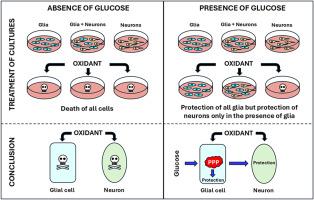
Oxidative stress resulted in cytotoxicity to both retinal neurons and glial cells. Glucose was able to abrogate the toxicity to glial cells in mono-cultures and mixed cultures, but could only provide protection to neurons in the mixed cultures when glial cells were also present. Glucose was additionally shown to prevent stimulation of ROS and oxidative stress-induced depletions of glutathione and NADPH. Inhibition of PPP, cystine uptake or GR all diminished the protective response of glucose.
Conclusion
Glucose prevented oxidative stress to retinal cells via the PPP. Neurons were not subjected to glucose-induced protection except when glial cells were present, implying the passage of a transmissible mediator or other protective action between the two cell types.
期刊介绍:
Free Radical Biology and Medicine is a leading journal in the field of redox biology, which is the study of the role of reactive oxygen species (ROS) and other oxidizing agents in biological systems. The journal serves as a premier forum for publishing innovative and groundbreaking research that explores the redox biology of health and disease, covering a wide range of topics and disciplines. Free Radical Biology and Medicine also commissions Special Issues that highlight recent advances in both basic and clinical research, with a particular emphasis on the mechanisms underlying altered metabolism and redox signaling. These Special Issues aim to provide a focused platform for the latest research in the field, fostering collaboration and knowledge exchange among researchers and clinicians.




 京公网安备 11010802042870号
京ICP备2023020795号-1
京公网安备 11010802042870号
京ICP备2023020795号-1

 分享
分享
 求助内容:
求助内容: 应助结果提醒方式:
 扫码关注我们
