Estefanía Enebral-Romero, Emiliano Martínez-Periñán, David López-Diego, Mónica Luna, Marina Garrido, Cristina Navío, Emilio M. Pérez, Encarnación Lorenzo, Tania García-Mendiola
{"title":"用于高性能DNA生物传感器的MoS 2 -DNA四面体生物偶联物:在病毒感染诊断中的应用","authors":"Estefanía Enebral-Romero, Emiliano Martínez-Periñán, David López-Diego, Mónica Luna, Marina Garrido, Cristina Navío, Emilio M. Pérez, Encarnación Lorenzo, Tania García-Mendiola","doi":"10.1007/s00604-025-07084-2","DOIUrl":null,"url":null,"abstract":"<div><p> An electrochemical DNA biosensor is presented for early viral infection detection, integrating molybdenum disulphide (MoS₂), tetrahedral DNA nanostructures (TDNs), and thionine-modified carbon nanodots (CNDsTy). The innovation of this work lies in the first-time integration of these nanomaterials for the preparation of a bioconjugate, whose synergy enables the biosensor’s functionality. MoS₂ anchors the TDNs, which carry the capture probe for virus identification via genetic code recognition. CNDsTy allow the electrochemical detection based on their different affinity for single-stranded (ssDNA) and double-stranded DNA (dsDNA), enabling hybridization event identification. The biosensor achieves high sensitivity (detection limit of 5.00 fM) and can distinguish viral loads, validated with the SARS-CoV-2 ORF1ab sequence in human nasopharyngeal samples.</p><h3>Graphical Abstract</h3>\n<div><figure><div><div><picture><source><img></source></picture></div></div></figure></div></div>","PeriodicalId":705,"journal":{"name":"Microchimica Acta","volume":"192 4","pages":""},"PeriodicalIF":5.3000,"publicationDate":"2025-03-11","publicationTypes":"Journal Article","fieldsOfStudy":null,"isOpenAccess":false,"openAccessPdf":"https://link.springer.com/content/pdf/10.1007/s00604-025-07084-2.pdf","citationCount":"0","resultStr":"{\"title\":\"MoS₂-DNA tetrahedral bioconjugate for high-performance DNA biosensors: application in viral infection diagnostics\",\"authors\":\"Estefanía Enebral-Romero, Emiliano Martínez-Periñán, David López-Diego, Mónica Luna, Marina Garrido, Cristina Navío, Emilio M. Pérez, Encarnación Lorenzo, Tania García-Mendiola\",\"doi\":\"10.1007/s00604-025-07084-2\",\"DOIUrl\":null,\"url\":null,\"abstract\":\"<div><p> An electrochemical DNA biosensor is presented for early viral infection detection, integrating molybdenum disulphide (MoS₂), tetrahedral DNA nanostructures (TDNs), and thionine-modified carbon nanodots (CNDsTy). The innovation of this work lies in the first-time integration of these nanomaterials for the preparation of a bioconjugate, whose synergy enables the biosensor’s functionality. MoS₂ anchors the TDNs, which carry the capture probe for virus identification via genetic code recognition. CNDsTy allow the electrochemical detection based on their different affinity for single-stranded (ssDNA) and double-stranded DNA (dsDNA), enabling hybridization event identification. The biosensor achieves high sensitivity (detection limit of 5.00 fM) and can distinguish viral loads, validated with the SARS-CoV-2 ORF1ab sequence in human nasopharyngeal samples.</p><h3>Graphical Abstract</h3>\\n<div><figure><div><div><picture><source><img></source></picture></div></div></figure></div></div>\",\"PeriodicalId\":705,\"journal\":{\"name\":\"Microchimica Acta\",\"volume\":\"192 4\",\"pages\":\"\"},\"PeriodicalIF\":5.3000,\"publicationDate\":\"2025-03-11\",\"publicationTypes\":\"Journal Article\",\"fieldsOfStudy\":null,\"isOpenAccess\":false,\"openAccessPdf\":\"https://link.springer.com/content/pdf/10.1007/s00604-025-07084-2.pdf\",\"citationCount\":\"0\",\"resultStr\":null,\"platform\":\"Semanticscholar\",\"paperid\":null,\"PeriodicalName\":\"Microchimica Acta\",\"FirstCategoryId\":\"92\",\"ListUrlMain\":\"https://link.springer.com/article/10.1007/s00604-025-07084-2\",\"RegionNum\":2,\"RegionCategory\":\"化学\",\"ArticlePicture\":[],\"TitleCN\":null,\"AbstractTextCN\":null,\"PMCID\":null,\"EPubDate\":\"\",\"PubModel\":\"\",\"JCR\":\"Q1\",\"JCRName\":\"CHEMISTRY, ANALYTICAL\",\"Score\":null,\"Total\":0}","platform":"Semanticscholar","paperid":null,"PeriodicalName":"Microchimica Acta","FirstCategoryId":"92","ListUrlMain":"https://link.springer.com/article/10.1007/s00604-025-07084-2","RegionNum":2,"RegionCategory":"化学","ArticlePicture":[],"TitleCN":null,"AbstractTextCN":null,"PMCID":null,"EPubDate":"","PubModel":"","JCR":"Q1","JCRName":"CHEMISTRY, ANALYTICAL","Score":null,"Total":0}
MoS₂-DNA tetrahedral bioconjugate for high-performance DNA biosensors: application in viral infection diagnostics
An electrochemical DNA biosensor is presented for early viral infection detection, integrating molybdenum disulphide (MoS₂), tetrahedral DNA nanostructures (TDNs), and thionine-modified carbon nanodots (CNDsTy). The innovation of this work lies in the first-time integration of these nanomaterials for the preparation of a bioconjugate, whose synergy enables the biosensor’s functionality. MoS₂ anchors the TDNs, which carry the capture probe for virus identification via genetic code recognition. CNDsTy allow the electrochemical detection based on their different affinity for single-stranded (ssDNA) and double-stranded DNA (dsDNA), enabling hybridization event identification. The biosensor achieves high sensitivity (detection limit of 5.00 fM) and can distinguish viral loads, validated with the SARS-CoV-2 ORF1ab sequence in human nasopharyngeal samples.
期刊介绍:
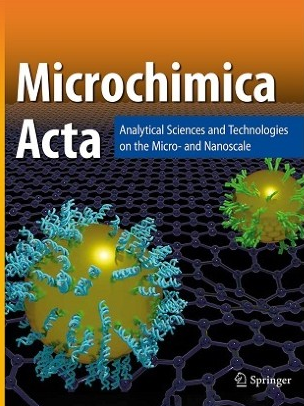
As a peer-reviewed journal for analytical sciences and technologies on the micro- and nanoscale, Microchimica Acta has established itself as a premier forum for truly novel approaches in chemical and biochemical analysis. Coverage includes methods and devices that provide expedient solutions to the most contemporary demands in this area. Examples are point-of-care technologies, wearable (bio)sensors, in-vivo-monitoring, micro/nanomotors and materials based on synthetic biology as well as biomedical imaging and targeting.




 京公网安备 11010802042870号
京ICP备2023020795号-1
京公网安备 11010802042870号
京ICP备2023020795号-1

 分享
分享
 求助内容:
求助内容: 应助结果提醒方式:
 扫码关注我们
