L. Engelbart , S. Bieger , K. Thompson , L. Fischer , T. Bader , M. Kramer , S.B. Haderlein , A.M. Röhnelt , P.R. Martin , D. Buchner , R. Bloch , H. Rügner , C. Huhn
{"title":"在家庭和工业中用作抗垢剂和漂白剂稳定剂的磷酸盐在活性污泥中原位形成草甘膦和AMPA","authors":"L. Engelbart , S. Bieger , K. Thompson , L. Fischer , T. Bader , M. Kramer , S.B. Haderlein , A.M. Röhnelt , P.R. Martin , D. Buchner , R. Bloch , H. Rügner , C. Huhn","doi":"10.1016/j.watres.2025.123464","DOIUrl":null,"url":null,"abstract":"<div><div>The herbicide glyphosate and aminomethyl phosphonic acid (AMPA), a transformation product of glyphosate and other aminopolyphosphonates are widespread pollutants in European rivers. We recently showed that besides rain-driven input after agricultural or urban herbicide application, municipal wastewater significantly contributes to glyphosate contamination in European rivers. The rather constant mass fluxes over the year, made an explanation by herbicide applications difficult. In our search for a new source of glyphosate and AMPA, we here provide experimental evidence that a certain aminopolyphosphonate, used as antiscalant and bleach stabilizer in household detergents and numerous industrial processes, is a precursor of both glyphosate and AMPA. During incubation experiments with diethylenetriamine penta(methylene phosphonic acid) (DTPMP) in fresh activated sludge, we observed the formation of glyphosate with yields ranging from 0.017 to 0.040 mol% and formation of AMPA in the range of 0.402 to 1.72 mol% after 72 h. Both compounds are formed from DTPMP and possible intermediates, but they are also further transformed themselves in consecutive reactions. Glyphosate formation from DTPMP was further proven by incubating <sup>13</sup>C-labeled DTPMP, which transformed into <sup>13</sup>C-glyphosate and <sup>13</sup>C-AMPA. The addition of DTPMP to azide-treated activated sludge yielded similar or even higher glyphosate and AMPA concentrations indicating that abiotic processes dominate the transformation process. In order to judge the relevance of this in-situ formation of glyphosate and AMPA from the laundry additive DTPMP, we estimated the average concentrations in wastewater.</div></div>","PeriodicalId":443,"journal":{"name":"Water Research","volume":"280 ","pages":"Article 123464"},"PeriodicalIF":12.8000,"publicationDate":"2025-07-15","publicationTypes":"Journal Article","fieldsOfStudy":null,"isOpenAccess":false,"openAccessPdf":"","citationCount":"0","resultStr":"{\"title\":\"In-situ formation of glyphosate and AMPA in activated sludge from phosphonates used as antiscalants and bleach stabilizers in households and industry\",\"authors\":\"L. Engelbart , S. Bieger , K. Thompson , L. Fischer , T. Bader , M. Kramer , S.B. Haderlein , A.M. Röhnelt , P.R. Martin , D. Buchner , R. Bloch , H. Rügner , C. Huhn\",\"doi\":\"10.1016/j.watres.2025.123464\",\"DOIUrl\":null,\"url\":null,\"abstract\":\"<div><div>The herbicide glyphosate and aminomethyl phosphonic acid (AMPA), a transformation product of glyphosate and other aminopolyphosphonates are widespread pollutants in European rivers. We recently showed that besides rain-driven input after agricultural or urban herbicide application, municipal wastewater significantly contributes to glyphosate contamination in European rivers. The rather constant mass fluxes over the year, made an explanation by herbicide applications difficult. In our search for a new source of glyphosate and AMPA, we here provide experimental evidence that a certain aminopolyphosphonate, used as antiscalant and bleach stabilizer in household detergents and numerous industrial processes, is a precursor of both glyphosate and AMPA. During incubation experiments with diethylenetriamine penta(methylene phosphonic acid) (DTPMP) in fresh activated sludge, we observed the formation of glyphosate with yields ranging from 0.017 to 0.040 mol% and formation of AMPA in the range of 0.402 to 1.72 mol% after 72 h. Both compounds are formed from DTPMP and possible intermediates, but they are also further transformed themselves in consecutive reactions. Glyphosate formation from DTPMP was further proven by incubating <sup>13</sup>C-labeled DTPMP, which transformed into <sup>13</sup>C-glyphosate and <sup>13</sup>C-AMPA. The addition of DTPMP to azide-treated activated sludge yielded similar or even higher glyphosate and AMPA concentrations indicating that abiotic processes dominate the transformation process. In order to judge the relevance of this in-situ formation of glyphosate and AMPA from the laundry additive DTPMP, we estimated the average concentrations in wastewater.</div></div>\",\"PeriodicalId\":443,\"journal\":{\"name\":\"Water Research\",\"volume\":\"280 \",\"pages\":\"Article 123464\"},\"PeriodicalIF\":12.8000,\"publicationDate\":\"2025-07-15\",\"publicationTypes\":\"Journal Article\",\"fieldsOfStudy\":null,\"isOpenAccess\":false,\"openAccessPdf\":\"\",\"citationCount\":\"0\",\"resultStr\":null,\"platform\":\"Semanticscholar\",\"paperid\":null,\"PeriodicalName\":\"Water Research\",\"FirstCategoryId\":\"93\",\"ListUrlMain\":\"https://www.sciencedirect.com/science/article/pii/S004313542500377X\",\"RegionNum\":1,\"RegionCategory\":\"环境科学与生态学\",\"ArticlePicture\":[],\"TitleCN\":null,\"AbstractTextCN\":null,\"PMCID\":null,\"EPubDate\":\"2025/3/11 0:00:00\",\"PubModel\":\"Epub\",\"JCR\":\"Q1\",\"JCRName\":\"ENGINEERING, ENVIRONMENTAL\",\"Score\":null,\"Total\":0}","platform":"Semanticscholar","paperid":null,"PeriodicalName":"Water Research","FirstCategoryId":"93","ListUrlMain":"https://www.sciencedirect.com/science/article/pii/S004313542500377X","RegionNum":1,"RegionCategory":"环境科学与生态学","ArticlePicture":[],"TitleCN":null,"AbstractTextCN":null,"PMCID":null,"EPubDate":"2025/3/11 0:00:00","PubModel":"Epub","JCR":"Q1","JCRName":"ENGINEERING, ENVIRONMENTAL","Score":null,"Total":0}
In-situ formation of glyphosate and AMPA in activated sludge from phosphonates used as antiscalants and bleach stabilizers in households and industry
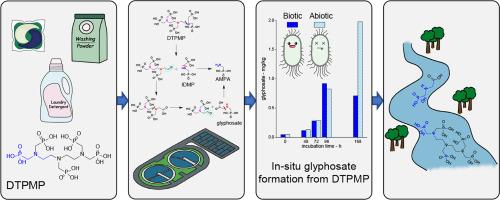
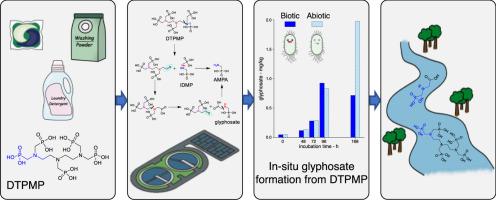
The herbicide glyphosate and aminomethyl phosphonic acid (AMPA), a transformation product of glyphosate and other aminopolyphosphonates are widespread pollutants in European rivers. We recently showed that besides rain-driven input after agricultural or urban herbicide application, municipal wastewater significantly contributes to glyphosate contamination in European rivers. The rather constant mass fluxes over the year, made an explanation by herbicide applications difficult. In our search for a new source of glyphosate and AMPA, we here provide experimental evidence that a certain aminopolyphosphonate, used as antiscalant and bleach stabilizer in household detergents and numerous industrial processes, is a precursor of both glyphosate and AMPA. During incubation experiments with diethylenetriamine penta(methylene phosphonic acid) (DTPMP) in fresh activated sludge, we observed the formation of glyphosate with yields ranging from 0.017 to 0.040 mol% and formation of AMPA in the range of 0.402 to 1.72 mol% after 72 h. Both compounds are formed from DTPMP and possible intermediates, but they are also further transformed themselves in consecutive reactions. Glyphosate formation from DTPMP was further proven by incubating 13C-labeled DTPMP, which transformed into 13C-glyphosate and 13C-AMPA. The addition of DTPMP to azide-treated activated sludge yielded similar or even higher glyphosate and AMPA concentrations indicating that abiotic processes dominate the transformation process. In order to judge the relevance of this in-situ formation of glyphosate and AMPA from the laundry additive DTPMP, we estimated the average concentrations in wastewater.
期刊介绍:
Water Research, along with its open access companion journal Water Research X, serves as a platform for publishing original research papers covering various aspects of the science and technology related to the anthropogenic water cycle, water quality, and its management worldwide. The audience targeted by the journal comprises biologists, chemical engineers, chemists, civil engineers, environmental engineers, limnologists, and microbiologists. The scope of the journal include:
•Treatment processes for water and wastewaters (municipal, agricultural, industrial, and on-site treatment), including resource recovery and residuals management;
•Urban hydrology including sewer systems, stormwater management, and green infrastructure;
•Drinking water treatment and distribution;
•Potable and non-potable water reuse;
•Sanitation, public health, and risk assessment;
•Anaerobic digestion, solid and hazardous waste management, including source characterization and the effects and control of leachates and gaseous emissions;
•Contaminants (chemical, microbial, anthropogenic particles such as nanoparticles or microplastics) and related water quality sensing, monitoring, fate, and assessment;
•Anthropogenic impacts on inland, tidal, coastal and urban waters, focusing on surface and ground waters, and point and non-point sources of pollution;
•Environmental restoration, linked to surface water, groundwater and groundwater remediation;
•Analysis of the interfaces between sediments and water, and between water and atmosphere, focusing specifically on anthropogenic impacts;
•Mathematical modelling, systems analysis, machine learning, and beneficial use of big data related to the anthropogenic water cycle;
•Socio-economic, policy, and regulations studies.




 京公网安备 11010802042870号
京ICP备2023020795号-1
京公网安备 11010802042870号
京ICP备2023020795号-1

 分享
分享
 求助内容:
求助内容: 应助结果提醒方式:
 扫码关注我们
