{"title":"都是你的幻觉吗?通过令人愉悦的气味图像减少虚拟现实引起的晕屏。","authors":"Luca Fantin, Gabriela Hossu, Cécile Rumeau, Guillaume Drouot, Hadrien Ceyte","doi":"10.1371/journal.pone.0319661","DOIUrl":null,"url":null,"abstract":"<p><p>Although immersive technologies such as virtual reality are constantly growing for personal and professional purposes, their use can often induce a transient state of discomfort known as cybersickness, resulting in numerous symptoms and perceptive-motor vulnerability. In an attempt to develop leads to mitigate cybersickness, encouraging findings have reported decreased symptoms during the presentation of pleasant smells. However, the diffusion of smells in ecological settings is very challenging. An interesting alternative could reside in odor imagery (OI), known for its neurophysiological, behavioral and psychological similarities with odor perception. The aim of this study was therefore to determine the effects of pleasant OI on virtual reality induced cybersickness. Thirty participants performed two 14-minute virtual reality sessions simulating a first-person view from a boat. During the second session we added a picture at the center of the visual field, allowing for pleasant and intense OI based on individualized psychometrical measures. Participants were instructed to focus on the smell evoked by this picture. For both immersions, cybersickness was characterized by the evolution of scores on the Simulator Sickness Questionnaire, and duration of immersion. Our results show that both measures were positively affected by pleasant OI, indicating a decreased intensity of cybersickness symptoms associated with a longer tolerance of the virtual environment. We suggest the observed effects could be mediated by emotional regulation mechanisms driven by pleasant OI, alleviating cybersickness in a similar way to pleasant odor perception. These findings could open the door to new applications of pleasant sensory imagery as strategies to alleviate transient states of discomfort in immersive technologies or perhaps motion-induced sickness.</p>","PeriodicalId":20189,"journal":{"name":"PLoS ONE","volume":"20 3","pages":"e0319661"},"PeriodicalIF":2.8000,"publicationDate":"2025-03-11","publicationTypes":"Journal Article","fieldsOfStudy":null,"isOpenAccess":false,"openAccessPdf":"https://www.ncbi.nlm.nih.gov/pmc/articles/PMC11896048/pdf/","citationCount":"0","resultStr":"{\"title\":\"Is it all in your head? Reducing virtual reality induced cybersickness by pleasant odor imagery.\",\"authors\":\"Luca Fantin, Gabriela Hossu, Cécile Rumeau, Guillaume Drouot, Hadrien Ceyte\",\"doi\":\"10.1371/journal.pone.0319661\",\"DOIUrl\":null,\"url\":null,\"abstract\":\"<p><p>Although immersive technologies such as virtual reality are constantly growing for personal and professional purposes, their use can often induce a transient state of discomfort known as cybersickness, resulting in numerous symptoms and perceptive-motor vulnerability. In an attempt to develop leads to mitigate cybersickness, encouraging findings have reported decreased symptoms during the presentation of pleasant smells. However, the diffusion of smells in ecological settings is very challenging. An interesting alternative could reside in odor imagery (OI), known for its neurophysiological, behavioral and psychological similarities with odor perception. The aim of this study was therefore to determine the effects of pleasant OI on virtual reality induced cybersickness. Thirty participants performed two 14-minute virtual reality sessions simulating a first-person view from a boat. During the second session we added a picture at the center of the visual field, allowing for pleasant and intense OI based on individualized psychometrical measures. Participants were instructed to focus on the smell evoked by this picture. For both immersions, cybersickness was characterized by the evolution of scores on the Simulator Sickness Questionnaire, and duration of immersion. Our results show that both measures were positively affected by pleasant OI, indicating a decreased intensity of cybersickness symptoms associated with a longer tolerance of the virtual environment. We suggest the observed effects could be mediated by emotional regulation mechanisms driven by pleasant OI, alleviating cybersickness in a similar way to pleasant odor perception. These findings could open the door to new applications of pleasant sensory imagery as strategies to alleviate transient states of discomfort in immersive technologies or perhaps motion-induced sickness.</p>\",\"PeriodicalId\":20189,\"journal\":{\"name\":\"PLoS ONE\",\"volume\":\"20 3\",\"pages\":\"e0319661\"},\"PeriodicalIF\":2.8000,\"publicationDate\":\"2025-03-11\",\"publicationTypes\":\"Journal Article\",\"fieldsOfStudy\":null,\"isOpenAccess\":false,\"openAccessPdf\":\"https://www.ncbi.nlm.nih.gov/pmc/articles/PMC11896048/pdf/\",\"citationCount\":\"0\",\"resultStr\":null,\"platform\":\"Semanticscholar\",\"paperid\":null,\"PeriodicalName\":\"PLoS ONE\",\"FirstCategoryId\":\"103\",\"ListUrlMain\":\"https://doi.org/10.1371/journal.pone.0319661\",\"RegionNum\":3,\"RegionCategory\":\"综合性期刊\",\"ArticlePicture\":[],\"TitleCN\":null,\"AbstractTextCN\":null,\"PMCID\":null,\"EPubDate\":\"2025/1/1 0:00:00\",\"PubModel\":\"eCollection\",\"JCR\":\"Q1\",\"JCRName\":\"MULTIDISCIPLINARY SCIENCES\",\"Score\":null,\"Total\":0}","platform":"Semanticscholar","paperid":null,"PeriodicalName":"PLoS ONE","FirstCategoryId":"103","ListUrlMain":"https://doi.org/10.1371/journal.pone.0319661","RegionNum":3,"RegionCategory":"综合性期刊","ArticlePicture":[],"TitleCN":null,"AbstractTextCN":null,"PMCID":null,"EPubDate":"2025/1/1 0:00:00","PubModel":"eCollection","JCR":"Q1","JCRName":"MULTIDISCIPLINARY SCIENCES","Score":null,"Total":0}
Is it all in your head? Reducing virtual reality induced cybersickness by pleasant odor imagery.
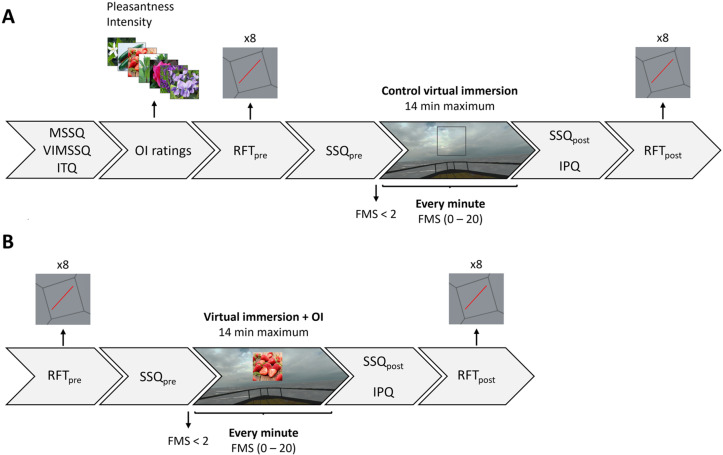
Although immersive technologies such as virtual reality are constantly growing for personal and professional purposes, their use can often induce a transient state of discomfort known as cybersickness, resulting in numerous symptoms and perceptive-motor vulnerability. In an attempt to develop leads to mitigate cybersickness, encouraging findings have reported decreased symptoms during the presentation of pleasant smells. However, the diffusion of smells in ecological settings is very challenging. An interesting alternative could reside in odor imagery (OI), known for its neurophysiological, behavioral and psychological similarities with odor perception. The aim of this study was therefore to determine the effects of pleasant OI on virtual reality induced cybersickness. Thirty participants performed two 14-minute virtual reality sessions simulating a first-person view from a boat. During the second session we added a picture at the center of the visual field, allowing for pleasant and intense OI based on individualized psychometrical measures. Participants were instructed to focus on the smell evoked by this picture. For both immersions, cybersickness was characterized by the evolution of scores on the Simulator Sickness Questionnaire, and duration of immersion. Our results show that both measures were positively affected by pleasant OI, indicating a decreased intensity of cybersickness symptoms associated with a longer tolerance of the virtual environment. We suggest the observed effects could be mediated by emotional regulation mechanisms driven by pleasant OI, alleviating cybersickness in a similar way to pleasant odor perception. These findings could open the door to new applications of pleasant sensory imagery as strategies to alleviate transient states of discomfort in immersive technologies or perhaps motion-induced sickness.
期刊介绍:
PLOS ONE is an international, peer-reviewed, open-access, online publication. PLOS ONE welcomes reports on primary research from any scientific discipline. It provides:
* Open-access—freely accessible online, authors retain copyright
* Fast publication times
* Peer review by expert, practicing researchers
* Post-publication tools to indicate quality and impact
* Community-based dialogue on articles
* Worldwide media coverage







 京公网安备 11010802042870号
京ICP备2023020795号-1
京公网安备 11010802042870号
京ICP备2023020795号-1

 分享
分享
 求助内容:
求助内容: 应助结果提醒方式:
 扫码关注我们
