Weiran Li , Xinying Li , Pingping Wang , Heng Zhang
{"title":"原花青素用于治疗帕金森病和缺血性中风","authors":"Weiran Li , Xinying Li , Pingping Wang , Heng Zhang","doi":"10.1016/j.jff.2025.106717","DOIUrl":null,"url":null,"abstract":"<div><div>Parkinson's disease (PD) is a neurodegenerative disorder characterized by the progressive degeneration of central nervous system structure and function. Ischemic stroke (IS) is the most common type of stroke, and its sequelae include neurodegeneration. The progressive degenerative changes are irreversible, and there are currently no effective treatments for neurodegeneration. Procyanidins, also known as proanthocyanidins, are natural compounds that can suppress oxidative stress, neuroinflammation, and abnormal protein aggregation, thereby reducing the occurrence and development of IS and neurodegenerative diseases such as PD. We reviewed relevant <em>in vitro</em>, <em>in vivo</em>, and clinical literature in PubMed, Web of Science, and Scopus databases from May 1998 to December 2024 using the key terms “procyanidins”, “proanthocyanidins”, “Parkinson's disease”, “ischemic stroke”, “oxidative stress”, “neuroinflammation” and“neurodegenerative disease”. We show that procyanidins represent potential new treatments or preventative strategies for PD and IS, as they target multiple implicated pathogenic pathways and can cross the blood-brain barrier.</div></div>","PeriodicalId":360,"journal":{"name":"Journal of Functional Foods","volume":"127 ","pages":"Article 106717"},"PeriodicalIF":4.0000,"publicationDate":"2025-04-01","publicationTypes":"Journal Article","fieldsOfStudy":null,"isOpenAccess":false,"openAccessPdf":"","citationCount":"0","resultStr":"{\"title\":\"Procyanidins for the treatment of Parkinson's disease and ischemic stroke\",\"authors\":\"Weiran Li , Xinying Li , Pingping Wang , Heng Zhang\",\"doi\":\"10.1016/j.jff.2025.106717\",\"DOIUrl\":null,\"url\":null,\"abstract\":\"<div><div>Parkinson's disease (PD) is a neurodegenerative disorder characterized by the progressive degeneration of central nervous system structure and function. Ischemic stroke (IS) is the most common type of stroke, and its sequelae include neurodegeneration. The progressive degenerative changes are irreversible, and there are currently no effective treatments for neurodegeneration. Procyanidins, also known as proanthocyanidins, are natural compounds that can suppress oxidative stress, neuroinflammation, and abnormal protein aggregation, thereby reducing the occurrence and development of IS and neurodegenerative diseases such as PD. We reviewed relevant <em>in vitro</em>, <em>in vivo</em>, and clinical literature in PubMed, Web of Science, and Scopus databases from May 1998 to December 2024 using the key terms “procyanidins”, “proanthocyanidins”, “Parkinson's disease”, “ischemic stroke”, “oxidative stress”, “neuroinflammation” and“neurodegenerative disease”. We show that procyanidins represent potential new treatments or preventative strategies for PD and IS, as they target multiple implicated pathogenic pathways and can cross the blood-brain barrier.</div></div>\",\"PeriodicalId\":360,\"journal\":{\"name\":\"Journal of Functional Foods\",\"volume\":\"127 \",\"pages\":\"Article 106717\"},\"PeriodicalIF\":4.0000,\"publicationDate\":\"2025-04-01\",\"publicationTypes\":\"Journal Article\",\"fieldsOfStudy\":null,\"isOpenAccess\":false,\"openAccessPdf\":\"\",\"citationCount\":\"0\",\"resultStr\":null,\"platform\":\"Semanticscholar\",\"paperid\":null,\"PeriodicalName\":\"Journal of Functional Foods\",\"FirstCategoryId\":\"97\",\"ListUrlMain\":\"https://www.sciencedirect.com/science/article/pii/S1756464625000593\",\"RegionNum\":2,\"RegionCategory\":\"农林科学\",\"ArticlePicture\":[],\"TitleCN\":null,\"AbstractTextCN\":null,\"PMCID\":null,\"EPubDate\":\"2025/3/12 0:00:00\",\"PubModel\":\"Epub\",\"JCR\":\"Q2\",\"JCRName\":\"FOOD SCIENCE & TECHNOLOGY\",\"Score\":null,\"Total\":0}","platform":"Semanticscholar","paperid":null,"PeriodicalName":"Journal of Functional Foods","FirstCategoryId":"97","ListUrlMain":"https://www.sciencedirect.com/science/article/pii/S1756464625000593","RegionNum":2,"RegionCategory":"农林科学","ArticlePicture":[],"TitleCN":null,"AbstractTextCN":null,"PMCID":null,"EPubDate":"2025/3/12 0:00:00","PubModel":"Epub","JCR":"Q2","JCRName":"FOOD SCIENCE & TECHNOLOGY","Score":null,"Total":0}
引用次数: 0
摘要
帕金森病(PD)是一种以中枢神经系统结构和功能进行性变性为特征的神经退行性疾病。缺血性中风(IS)是最常见的中风类型,其后遗症包括神经变性。进行性退行性改变是不可逆的,目前尚无有效的治疗方法。原花青素又称原花青素,是一种天然化合物,可以抑制氧化应激、神经炎症和异常蛋白聚集,从而减少IS和PD等神经退行性疾病的发生和发展。我们回顾了1998年5月至2024年12月PubMed、Web of Science和Scopus数据库中相关的体外、体内和临床文献,检索关键词为“原花青素”、“原花青素”、“帕金森病”、“缺血性中风”、“氧化应激”、“神经炎症”和“神经退行性疾病”。我们发现原花青素代表了PD和IS的潜在新治疗或预防策略,因为它们针对多种相关的致病途径,并且可以穿过血脑屏障。
Procyanidins for the treatment of Parkinson's disease and ischemic stroke
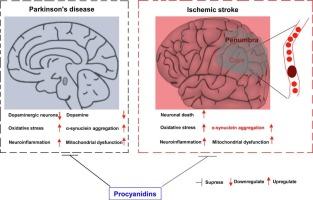
Parkinson's disease (PD) is a neurodegenerative disorder characterized by the progressive degeneration of central nervous system structure and function. Ischemic stroke (IS) is the most common type of stroke, and its sequelae include neurodegeneration. The progressive degenerative changes are irreversible, and there are currently no effective treatments for neurodegeneration. Procyanidins, also known as proanthocyanidins, are natural compounds that can suppress oxidative stress, neuroinflammation, and abnormal protein aggregation, thereby reducing the occurrence and development of IS and neurodegenerative diseases such as PD. We reviewed relevant in vitro, in vivo, and clinical literature in PubMed, Web of Science, and Scopus databases from May 1998 to December 2024 using the key terms “procyanidins”, “proanthocyanidins”, “Parkinson's disease”, “ischemic stroke”, “oxidative stress”, “neuroinflammation” and“neurodegenerative disease”. We show that procyanidins represent potential new treatments or preventative strategies for PD and IS, as they target multiple implicated pathogenic pathways and can cross the blood-brain barrier.
期刊介绍:
Journal of Functional Foods continues with the same aims and scope, editorial team, submission system and rigorous peer review. We give authors the possibility to publish their top-quality papers in a well-established leading journal in the food and nutrition fields. The Journal will keep its rigorous criteria to screen high impact research addressing relevant scientific topics and performed by sound methodologies.
The Journal of Functional Foods aims to bring together the results of fundamental and applied research into healthy foods and biologically active food ingredients.
The Journal is centered in the specific area at the boundaries among food technology, nutrition and health welcoming papers having a good interdisciplinary approach. The Journal will cover the fields of plant bioactives; dietary fibre, probiotics; functional lipids; bioactive peptides; vitamins, minerals and botanicals and other dietary supplements. Nutritional and technological aspects related to the development of functional foods and beverages are of core interest to the journal. Experimental works dealing with food digestion, bioavailability of food bioactives and on the mechanisms by which foods and their components are able to modulate physiological parameters connected with disease prevention are of particular interest as well as those dealing with personalized nutrition and nutritional needs in pathological subjects.




 京公网安备 11010802042870号
京ICP备2023020795号-1
京公网安备 11010802042870号
京ICP备2023020795号-1

 分享
分享
 求助内容:
求助内容: 应助结果提醒方式:
 扫码关注我们
