Dorota Olczak-Kowalczyk, Marcin Studnicki, Anna Turska-Szybka
{"title":"饮食和卫生相关知识与18岁青少年报告行为:一项全国性的横断面研究。","authors":"Dorota Olczak-Kowalczyk, Marcin Studnicki, Anna Turska-Szybka","doi":"10.3390/nu17050871","DOIUrl":null,"url":null,"abstract":"<p><p><b>Background/Objectives</b>: The aim of the present study was to examine eighteen-year-olds' self-assessed knowledge about diet and hygiene, behaviors that they report, and education they receive during dental appointments. <b>Methods</b>: Questionnaires distributed among 1611 subjects included questions concerning sociodemographic factors, dietary and hygiene knowledge and behaviors, and dental visits. Spearman's rank correlation and a bivariate and multivariate logistic regression analysis was conducted; odds ratios (ORs) and adjusted odds ratios (AORs) were calculated (<i>p</i> ≤ 0.05). <b>Results</b>: Respondents self-assessed their oral health knowledge; 63.1% of them considered it to be limited, and 40.7% understood the cariogenic effect of frequent snacking. Dentists and a dental team (DT) were the main source of information (55.7%). Dietary advice was recommended by 10.8% of dentists and the DT, while check-up appointments were advised by 49.2%. Parents' higher education contributed to a lower intake of cariogenic food. This effect was stronger for the mother's education. Dental appointments scheduled twice a year increased the chances of consuming healthy food (A2OR = 1.21 (1.07-2.11); <i>p</i> = 0.0028). Being informed increased the chances of toothbrushing ≥ 2 times (OR: 1.21, CI 1.10-1.46), using fluoridated toothpaste (OR: 1.26 CI1.05-1.55), and the frequency of appointments (A1OR: 1.56 CI 1.21-1.87; A2OR: 1.78 CI 1.54-1.91). <b>Conclusions</b>: Knowledge and oral health related behaviors, as well as the involvement of the dental team in education, are inadequate. Education and instruction in the dental office has a favorable influence on oral-health-related behaviors. It is, therefore, necessary to undertake systemic solutions so that dental practitioners are more involved. Providing oral health knowledge should be the standard of care.</p>","PeriodicalId":19486,"journal":{"name":"Nutrients","volume":"17 5","pages":""},"PeriodicalIF":5.0000,"publicationDate":"2025-02-28","publicationTypes":"Journal Article","fieldsOfStudy":null,"isOpenAccess":false,"openAccessPdf":"https://www.ncbi.nlm.nih.gov/pmc/articles/PMC11901471/pdf/","citationCount":"0","resultStr":"{\"title\":\"Dietary and Hygiene-Related Knowledge Versus Reported Behaviors of Eighteen-Year-Olds: A Nationwide Cross-Sectional Study.\",\"authors\":\"Dorota Olczak-Kowalczyk, Marcin Studnicki, Anna Turska-Szybka\",\"doi\":\"10.3390/nu17050871\",\"DOIUrl\":null,\"url\":null,\"abstract\":\"<p><p><b>Background/Objectives</b>: The aim of the present study was to examine eighteen-year-olds' self-assessed knowledge about diet and hygiene, behaviors that they report, and education they receive during dental appointments. <b>Methods</b>: Questionnaires distributed among 1611 subjects included questions concerning sociodemographic factors, dietary and hygiene knowledge and behaviors, and dental visits. Spearman's rank correlation and a bivariate and multivariate logistic regression analysis was conducted; odds ratios (ORs) and adjusted odds ratios (AORs) were calculated (<i>p</i> ≤ 0.05). <b>Results</b>: Respondents self-assessed their oral health knowledge; 63.1% of them considered it to be limited, and 40.7% understood the cariogenic effect of frequent snacking. Dentists and a dental team (DT) were the main source of information (55.7%). Dietary advice was recommended by 10.8% of dentists and the DT, while check-up appointments were advised by 49.2%. Parents' higher education contributed to a lower intake of cariogenic food. This effect was stronger for the mother's education. Dental appointments scheduled twice a year increased the chances of consuming healthy food (A2OR = 1.21 (1.07-2.11); <i>p</i> = 0.0028). Being informed increased the chances of toothbrushing ≥ 2 times (OR: 1.21, CI 1.10-1.46), using fluoridated toothpaste (OR: 1.26 CI1.05-1.55), and the frequency of appointments (A1OR: 1.56 CI 1.21-1.87; A2OR: 1.78 CI 1.54-1.91). <b>Conclusions</b>: Knowledge and oral health related behaviors, as well as the involvement of the dental team in education, are inadequate. Education and instruction in the dental office has a favorable influence on oral-health-related behaviors. It is, therefore, necessary to undertake systemic solutions so that dental practitioners are more involved. Providing oral health knowledge should be the standard of care.</p>\",\"PeriodicalId\":19486,\"journal\":{\"name\":\"Nutrients\",\"volume\":\"17 5\",\"pages\":\"\"},\"PeriodicalIF\":5.0000,\"publicationDate\":\"2025-02-28\",\"publicationTypes\":\"Journal Article\",\"fieldsOfStudy\":null,\"isOpenAccess\":false,\"openAccessPdf\":\"https://www.ncbi.nlm.nih.gov/pmc/articles/PMC11901471/pdf/\",\"citationCount\":\"0\",\"resultStr\":null,\"platform\":\"Semanticscholar\",\"paperid\":null,\"PeriodicalName\":\"Nutrients\",\"FirstCategoryId\":\"3\",\"ListUrlMain\":\"https://doi.org/10.3390/nu17050871\",\"RegionNum\":2,\"RegionCategory\":\"医学\",\"ArticlePicture\":[],\"TitleCN\":null,\"AbstractTextCN\":null,\"PMCID\":null,\"EPubDate\":\"\",\"PubModel\":\"\",\"JCR\":\"Q1\",\"JCRName\":\"NUTRITION & DIETETICS\",\"Score\":null,\"Total\":0}","platform":"Semanticscholar","paperid":null,"PeriodicalName":"Nutrients","FirstCategoryId":"3","ListUrlMain":"https://doi.org/10.3390/nu17050871","RegionNum":2,"RegionCategory":"医学","ArticlePicture":[],"TitleCN":null,"AbstractTextCN":null,"PMCID":null,"EPubDate":"","PubModel":"","JCR":"Q1","JCRName":"NUTRITION & DIETETICS","Score":null,"Total":0}
引用次数: 0
摘要
背景/目的:本研究的目的是检查18岁青少年自我评估的饮食和卫生知识,他们报告的行为,以及他们在牙科预约期间接受的教育。方法:对1611名调查对象进行问卷调查,内容包括社会人口因素、饮食卫生知识和行为、牙科就诊等。Spearman秩相关及双变量和多变量logistic回归分析;计算优势比(ORs)和校正优势比(AORs) (p≤0.05)。结果:受访者对口腔健康知识进行了自我评估;63.1%的人认为是有限的,40.7%的人了解频繁吃零食对龋齿的影响。牙医和牙科小组(DT)是主要的信息来源(55.7%)。10.8%的牙医和牙科医生建议提供饮食建议,49.2%的人建议预约检查。父母的高等教育程度有助于降低龋齿食物的摄入量。这种影响在母亲的教育程度上更为明显。一年两次的牙科预约增加了食用健康食品的机会(A2OR = 1.21 (1.07-2.11);P = 0.0028)。知情增加了刷牙≥2次的机会(OR: 1.21, CI 1.10-1.46),使用含氟牙膏的机会(OR: 1.26 CI1.05-1.55)和预约的频率(A1OR: 1.56 ci1.21 -1.87;A2or: 1.78 ci 1.54-1.91)。结论:口腔健康相关知识、口腔健康相关行为以及牙科团队参与教育的程度不足。牙科诊所的教育和指导对口腔健康行为有良好的影响。因此,有必要采取系统的解决方案,使牙科医生更多地参与进来。提供口腔健康知识应成为护理的标准。
Dietary and Hygiene-Related Knowledge Versus Reported Behaviors of Eighteen-Year-Olds: A Nationwide Cross-Sectional Study.
Background/Objectives: The aim of the present study was to examine eighteen-year-olds' self-assessed knowledge about diet and hygiene, behaviors that they report, and education they receive during dental appointments. Methods: Questionnaires distributed among 1611 subjects included questions concerning sociodemographic factors, dietary and hygiene knowledge and behaviors, and dental visits. Spearman's rank correlation and a bivariate and multivariate logistic regression analysis was conducted; odds ratios (ORs) and adjusted odds ratios (AORs) were calculated (p ≤ 0.05). Results: Respondents self-assessed their oral health knowledge; 63.1% of them considered it to be limited, and 40.7% understood the cariogenic effect of frequent snacking. Dentists and a dental team (DT) were the main source of information (55.7%). Dietary advice was recommended by 10.8% of dentists and the DT, while check-up appointments were advised by 49.2%. Parents' higher education contributed to a lower intake of cariogenic food. This effect was stronger for the mother's education. Dental appointments scheduled twice a year increased the chances of consuming healthy food (A2OR = 1.21 (1.07-2.11); p = 0.0028). Being informed increased the chances of toothbrushing ≥ 2 times (OR: 1.21, CI 1.10-1.46), using fluoridated toothpaste (OR: 1.26 CI1.05-1.55), and the frequency of appointments (A1OR: 1.56 CI 1.21-1.87; A2OR: 1.78 CI 1.54-1.91). Conclusions: Knowledge and oral health related behaviors, as well as the involvement of the dental team in education, are inadequate. Education and instruction in the dental office has a favorable influence on oral-health-related behaviors. It is, therefore, necessary to undertake systemic solutions so that dental practitioners are more involved. Providing oral health knowledge should be the standard of care.
期刊介绍:
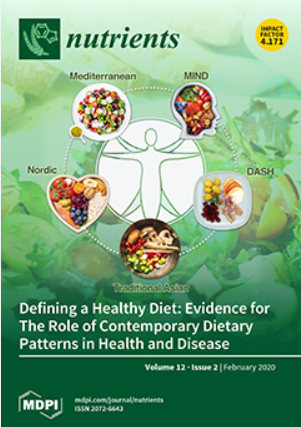
Nutrients (ISSN 2072-6643) is an international, peer-reviewed open access advanced forum for studies related to Human Nutrition. It publishes reviews, regular research papers and short communications. Our aim is to encourage scientists to publish their experimental and theoretical results in as much detail as possible. There is no restriction on the length of the papers. The full experimental details must be provided so that the results can be reproduced.





 京公网安备 11010802042870号
京ICP备2023020795号-1
京公网安备 11010802042870号
京ICP备2023020795号-1

 分享
分享
 求助内容:
求助内容: 应助结果提醒方式:
 扫码关注我们
