Marina Zanette Peuckert, Camila Ospina Ayala, Rita Mattiello, Thiago Wendt Viola, Marthina Streda Walker, Ana Maria Pandolfo Feoli, Caroline Abud Drumond Costa
{"title":"巴西儿童饮食行为问卷(CEBQ)的验证证据:一项横断面研究。","authors":"Marina Zanette Peuckert, Camila Ospina Ayala, Rita Mattiello, Thiago Wendt Viola, Marthina Streda Walker, Ana Maria Pandolfo Feoli, Caroline Abud Drumond Costa","doi":"10.3390/nu17050851","DOIUrl":null,"url":null,"abstract":"<p><strong>Background: </strong>Eating behavior is influenced by intrinsic and extrinsic factors from early infancy, shaping an individual's relationship with food. Tools such as the Children's Eating Behaviour Questionnaire (CEBQ) were designed to evaluate these patterns in children and facilitate the early identification of potential issues.</p><p><strong>Objective: </strong>The objective of this study is to validate the CEBQ for use in Brazilian children and adolescents.</p><p><strong>Methods: </strong>Parents/caregivers of students from public and private schools in southern Brazil completed the CEBQ. Anthropometric measurements of students' weight and height were also taken. Psychometric properties were assessed by internal consistency (Cronbach's alpha), construct validity (exploratory factor analysis), and criterion validity (correlation between CEBQ scores and participants' body mass index-for-age categories).</p><p><strong>Results: </strong>A total of 205 participants aged 3 to 13 and their caregivers participated in this study. Exploratory factor analysis resulted in a five-factor questionnaire and a reduction of four items. All remaining items had a factor loading > 0.3. Cronbach's alpha values were satisfactory, with values ≥ 0.7 in all factors, supporting the instrument's internal consistency. The findings also showed significant associations between CEBQ scales and participants' BMI for age.</p><p><strong>Conclusions: </strong>The findings of this study provide evidence that the CEBQ is a valid tool for assessing eating behavior in Brazilian children and adolescents.</p>","PeriodicalId":19486,"journal":{"name":"Nutrients","volume":"17 5","pages":""},"PeriodicalIF":5.8000,"publicationDate":"2025-02-28","publicationTypes":"Journal Article","fieldsOfStudy":null,"isOpenAccess":false,"openAccessPdf":"https://www.ncbi.nlm.nih.gov/pmc/articles/PMC11902245/pdf/","citationCount":"0","resultStr":"{\"title\":\"Validation Evidence for the Children's Eating Behaviour Questionnaire (CEBQ) in Brazil: A Cross-Sectional Study.\",\"authors\":\"Marina Zanette Peuckert, Camila Ospina Ayala, Rita Mattiello, Thiago Wendt Viola, Marthina Streda Walker, Ana Maria Pandolfo Feoli, Caroline Abud Drumond Costa\",\"doi\":\"10.3390/nu17050851\",\"DOIUrl\":null,\"url\":null,\"abstract\":\"<p><strong>Background: </strong>Eating behavior is influenced by intrinsic and extrinsic factors from early infancy, shaping an individual's relationship with food. Tools such as the Children's Eating Behaviour Questionnaire (CEBQ) were designed to evaluate these patterns in children and facilitate the early identification of potential issues.</p><p><strong>Objective: </strong>The objective of this study is to validate the CEBQ for use in Brazilian children and adolescents.</p><p><strong>Methods: </strong>Parents/caregivers of students from public and private schools in southern Brazil completed the CEBQ. Anthropometric measurements of students' weight and height were also taken. Psychometric properties were assessed by internal consistency (Cronbach's alpha), construct validity (exploratory factor analysis), and criterion validity (correlation between CEBQ scores and participants' body mass index-for-age categories).</p><p><strong>Results: </strong>A total of 205 participants aged 3 to 13 and their caregivers participated in this study. Exploratory factor analysis resulted in a five-factor questionnaire and a reduction of four items. All remaining items had a factor loading > 0.3. Cronbach's alpha values were satisfactory, with values ≥ 0.7 in all factors, supporting the instrument's internal consistency. The findings also showed significant associations between CEBQ scales and participants' BMI for age.</p><p><strong>Conclusions: </strong>The findings of this study provide evidence that the CEBQ is a valid tool for assessing eating behavior in Brazilian children and adolescents.</p>\",\"PeriodicalId\":19486,\"journal\":{\"name\":\"Nutrients\",\"volume\":\"17 5\",\"pages\":\"\"},\"PeriodicalIF\":5.8000,\"publicationDate\":\"2025-02-28\",\"publicationTypes\":\"Journal Article\",\"fieldsOfStudy\":null,\"isOpenAccess\":false,\"openAccessPdf\":\"https://www.ncbi.nlm.nih.gov/pmc/articles/PMC11902245/pdf/\",\"citationCount\":\"0\",\"resultStr\":null,\"platform\":\"Semanticscholar\",\"paperid\":null,\"PeriodicalName\":\"Nutrients\",\"FirstCategoryId\":\"3\",\"ListUrlMain\":\"https://doi.org/10.3390/nu17050851\",\"RegionNum\":2,\"RegionCategory\":\"医学\",\"ArticlePicture\":[],\"TitleCN\":null,\"AbstractTextCN\":null,\"PMCID\":null,\"EPubDate\":\"\",\"PubModel\":\"\",\"JCR\":\"Q1\",\"JCRName\":\"NUTRITION & DIETETICS\",\"Score\":null,\"Total\":0}","platform":"Semanticscholar","paperid":null,"PeriodicalName":"Nutrients","FirstCategoryId":"3","ListUrlMain":"https://doi.org/10.3390/nu17050851","RegionNum":2,"RegionCategory":"医学","ArticlePicture":[],"TitleCN":null,"AbstractTextCN":null,"PMCID":null,"EPubDate":"","PubModel":"","JCR":"Q1","JCRName":"NUTRITION & DIETETICS","Score":null,"Total":0}
Validation Evidence for the Children's Eating Behaviour Questionnaire (CEBQ) in Brazil: A Cross-Sectional Study.
Background: Eating behavior is influenced by intrinsic and extrinsic factors from early infancy, shaping an individual's relationship with food. Tools such as the Children's Eating Behaviour Questionnaire (CEBQ) were designed to evaluate these patterns in children and facilitate the early identification of potential issues.
Objective: The objective of this study is to validate the CEBQ for use in Brazilian children and adolescents.
Methods: Parents/caregivers of students from public and private schools in southern Brazil completed the CEBQ. Anthropometric measurements of students' weight and height were also taken. Psychometric properties were assessed by internal consistency (Cronbach's alpha), construct validity (exploratory factor analysis), and criterion validity (correlation between CEBQ scores and participants' body mass index-for-age categories).
Results: A total of 205 participants aged 3 to 13 and their caregivers participated in this study. Exploratory factor analysis resulted in a five-factor questionnaire and a reduction of four items. All remaining items had a factor loading > 0.3. Cronbach's alpha values were satisfactory, with values ≥ 0.7 in all factors, supporting the instrument's internal consistency. The findings also showed significant associations between CEBQ scales and participants' BMI for age.
Conclusions: The findings of this study provide evidence that the CEBQ is a valid tool for assessing eating behavior in Brazilian children and adolescents.
期刊介绍:
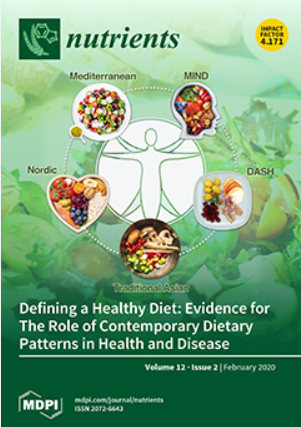
Nutrients (ISSN 2072-6643) is an international, peer-reviewed open access advanced forum for studies related to Human Nutrition. It publishes reviews, regular research papers and short communications. Our aim is to encourage scientists to publish their experimental and theoretical results in as much detail as possible. There is no restriction on the length of the papers. The full experimental details must be provided so that the results can be reproduced.





 京公网安备 11010802042870号
京ICP备2023020795号-1
京公网安备 11010802042870号
京ICP备2023020795号-1

 分享
分享
 求助内容:
求助内容: 应助结果提醒方式:
 扫码关注我们
