{"title":"通过添加剂集成提高聚丙烯的生物降解性,用于可持续和可重复使用的实验室应用。","authors":"Kanittika Samneingjam, Juthamas Mahajaroensiri, Maysinee Kanathananun, Cristina Velasco Aranda, Mario Muñoz, Somchoke Limwongsaree","doi":"10.3390/polym17050639","DOIUrl":null,"url":null,"abstract":"<p><p>The environmental challenges posed by laboratory plastic waste, particularly single-use items, underscore the urgent need for sustainable alternatives. This study investigated the development of reusable and biodegradable labware, addressing both functional and environmental demands. The content of the biodegradable additive in the polypropylene (PP) varied from 1% to 2% by weight via twin-screw extrusion, followed by injection molding to fabricate test specimens. Three different grades of PP were also compared. Optical, mechanical, and thermal properties were systematically assessed before and after repetitive autoclave sterilization for up to 10 cycles (121 °C, 15 min, 0.11 MPa). Additionally, cytotoxicity following electron beam irradiation (E-Beam 25 and 50 kGy) was evaluated in compliance with ISO 10993-5, alongside biodegradability studies conducted under ASTM D5511 conditions. The results demonstrate that the biodegradable additive stabilized the appearance and enhanced the flexural and impact strengths of PP without compromising thermal stability, particularly after five autoclave cycles. Cytotoxicity assays confirmed the biocompatibility of the additive-modified PP, while biodegradability tests indicated moderate degradation, with 12% biodegradation achieved over 6 months compared to negligible degradation in the negative control. These findings highlight the potential of additive-modified PP as a sustainable solution for reusable labware, balancing durability with improved environmental performance and providing a viable step toward more sustainable laboratory practices.</p>","PeriodicalId":20416,"journal":{"name":"Polymers","volume":"17 5","pages":""},"PeriodicalIF":5.8000,"publicationDate":"2025-02-27","publicationTypes":"Journal Article","fieldsOfStudy":null,"isOpenAccess":false,"openAccessPdf":"https://www.ncbi.nlm.nih.gov/pmc/articles/PMC11902804/pdf/","citationCount":"0","resultStr":"{\"title\":\"Enhancing Polypropylene Biodegradability Through Additive Integration for Sustainable and Reusable Laboratory Applications.\",\"authors\":\"Kanittika Samneingjam, Juthamas Mahajaroensiri, Maysinee Kanathananun, Cristina Velasco Aranda, Mario Muñoz, Somchoke Limwongsaree\",\"doi\":\"10.3390/polym17050639\",\"DOIUrl\":null,\"url\":null,\"abstract\":\"<p><p>The environmental challenges posed by laboratory plastic waste, particularly single-use items, underscore the urgent need for sustainable alternatives. This study investigated the development of reusable and biodegradable labware, addressing both functional and environmental demands. The content of the biodegradable additive in the polypropylene (PP) varied from 1% to 2% by weight via twin-screw extrusion, followed by injection molding to fabricate test specimens. Three different grades of PP were also compared. Optical, mechanical, and thermal properties were systematically assessed before and after repetitive autoclave sterilization for up to 10 cycles (121 °C, 15 min, 0.11 MPa). Additionally, cytotoxicity following electron beam irradiation (E-Beam 25 and 50 kGy) was evaluated in compliance with ISO 10993-5, alongside biodegradability studies conducted under ASTM D5511 conditions. The results demonstrate that the biodegradable additive stabilized the appearance and enhanced the flexural and impact strengths of PP without compromising thermal stability, particularly after five autoclave cycles. Cytotoxicity assays confirmed the biocompatibility of the additive-modified PP, while biodegradability tests indicated moderate degradation, with 12% biodegradation achieved over 6 months compared to negligible degradation in the negative control. These findings highlight the potential of additive-modified PP as a sustainable solution for reusable labware, balancing durability with improved environmental performance and providing a viable step toward more sustainable laboratory practices.</p>\",\"PeriodicalId\":20416,\"journal\":{\"name\":\"Polymers\",\"volume\":\"17 5\",\"pages\":\"\"},\"PeriodicalIF\":5.8000,\"publicationDate\":\"2025-02-27\",\"publicationTypes\":\"Journal Article\",\"fieldsOfStudy\":null,\"isOpenAccess\":false,\"openAccessPdf\":\"https://www.ncbi.nlm.nih.gov/pmc/articles/PMC11902804/pdf/\",\"citationCount\":\"0\",\"resultStr\":null,\"platform\":\"Semanticscholar\",\"paperid\":null,\"PeriodicalName\":\"Polymers\",\"FirstCategoryId\":\"5\",\"ListUrlMain\":\"https://doi.org/10.3390/polym17050639\",\"RegionNum\":3,\"RegionCategory\":\"工程技术\",\"ArticlePicture\":[],\"TitleCN\":null,\"AbstractTextCN\":null,\"PMCID\":null,\"EPubDate\":\"\",\"PubModel\":\"\",\"JCR\":\"Q1\",\"JCRName\":\"POLYMER SCIENCE\",\"Score\":null,\"Total\":0}","platform":"Semanticscholar","paperid":null,"PeriodicalName":"Polymers","FirstCategoryId":"5","ListUrlMain":"https://doi.org/10.3390/polym17050639","RegionNum":3,"RegionCategory":"工程技术","ArticlePicture":[],"TitleCN":null,"AbstractTextCN":null,"PMCID":null,"EPubDate":"","PubModel":"","JCR":"Q1","JCRName":"POLYMER SCIENCE","Score":null,"Total":0}
Enhancing Polypropylene Biodegradability Through Additive Integration for Sustainable and Reusable Laboratory Applications.
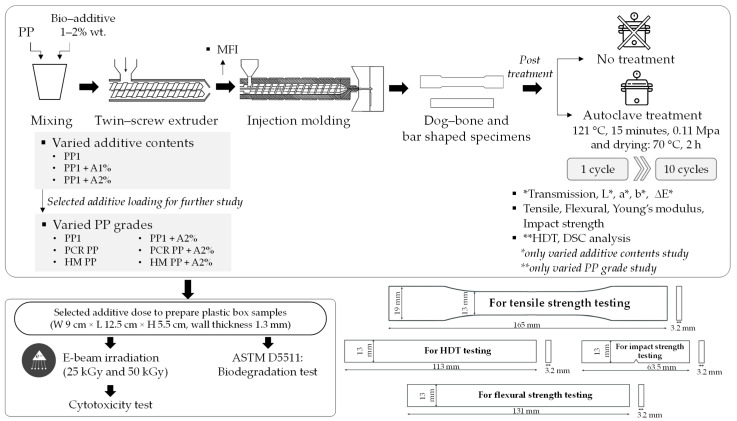
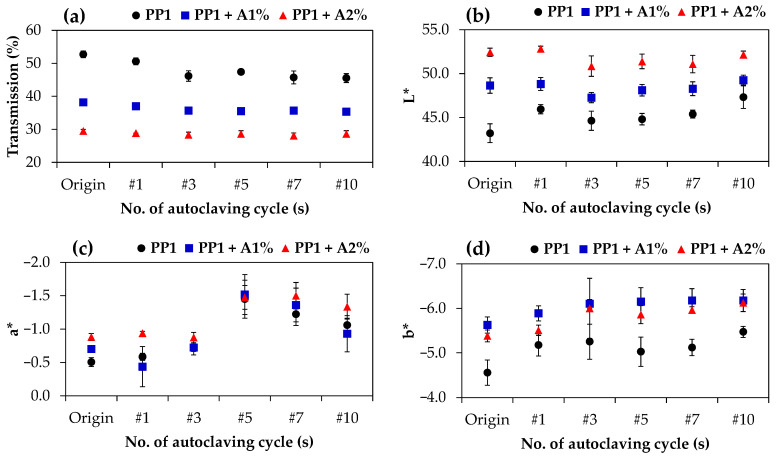
The environmental challenges posed by laboratory plastic waste, particularly single-use items, underscore the urgent need for sustainable alternatives. This study investigated the development of reusable and biodegradable labware, addressing both functional and environmental demands. The content of the biodegradable additive in the polypropylene (PP) varied from 1% to 2% by weight via twin-screw extrusion, followed by injection molding to fabricate test specimens. Three different grades of PP were also compared. Optical, mechanical, and thermal properties were systematically assessed before and after repetitive autoclave sterilization for up to 10 cycles (121 °C, 15 min, 0.11 MPa). Additionally, cytotoxicity following electron beam irradiation (E-Beam 25 and 50 kGy) was evaluated in compliance with ISO 10993-5, alongside biodegradability studies conducted under ASTM D5511 conditions. The results demonstrate that the biodegradable additive stabilized the appearance and enhanced the flexural and impact strengths of PP without compromising thermal stability, particularly after five autoclave cycles. Cytotoxicity assays confirmed the biocompatibility of the additive-modified PP, while biodegradability tests indicated moderate degradation, with 12% biodegradation achieved over 6 months compared to negligible degradation in the negative control. These findings highlight the potential of additive-modified PP as a sustainable solution for reusable labware, balancing durability with improved environmental performance and providing a viable step toward more sustainable laboratory practices.
期刊介绍:
Polymers (ISSN 2073-4360) is an international, open access journal of polymer science. It publishes research papers, short communications and review papers. Our aim is to encourage scientists to publish their experimental and theoretical results in as much detail as possible. Therefore, there is no restriction on the length of the papers. The full experimental details must be provided so that the results can be reproduced. Polymers provides an interdisciplinary forum for publishing papers which advance the fields of (i) polymerization methods, (ii) theory, simulation, and modeling, (iii) understanding of new physical phenomena, (iv) advances in characterization techniques, and (v) harnessing of self-assembly and biological strategies for producing complex multifunctional structures.





 京公网安备 11010802042870号
京ICP备2023020795号-1
京公网安备 11010802042870号
京ICP备2023020795号-1

 分享
分享
 求助内容:
求助内容: 应助结果提醒方式:
 扫码关注我们
