Angelo Aliberti, Fabiana Di Duca, Maria Triassi, Paolo Montuori, Stefano Scippa, Mirko Piscopo, Pietro Ausiello
{"title":"不同 pH 值和温度值对不同生物活性牙齿修复材料中 Ca2+、F-、PO43-、OH-、Si 和 Sr2+ 释放的影响:体外研究。","authors":"Angelo Aliberti, Fabiana Di Duca, Maria Triassi, Paolo Montuori, Stefano Scippa, Mirko Piscopo, Pietro Ausiello","doi":"10.3390/polym17050640","DOIUrl":null,"url":null,"abstract":"<p><p>Bioactive restorative materials are crucial for promoting remineralization and protecting dental tissues through ion release. This study examines how pH and temperature influence the short- and long-term ion (F<sup>-</sup>, Ca<sup>2+</sup>, Sr<sup>2+</sup>, OH<sup>-</sup>, Si, and PO<sub>4</sub><sup>3-</sup>) release from seven commercial materials: <i>Cention Forte Filling Material</i>, <i>Cention Primer</i>, <i>Stela Self Cure</i>, <i>Riva Light Cure HV</i>, <i>Riva Self Cure</i>, <i>Equia Forte HT Fil</i>, and <i>Fuji IX GP Fast</i>. Disks were prepared according to the manufacturers' instructions; immersed in buffer solutions at pH 4.8, 6.8, and 8.8; and stored at 37 °C and 44 °C. Ion release was measured after 1, 7, and 28 days using ion chromatography and mass spectrometry. Results revealed that ion release was significantly affected by pH, temperature, and exposure time. The highest fluoride (40.14 ± 0.32 mg/L) and calcium (74.23 ± 0.37 mg/L) releases were observed in <i>Riva Light Cure</i> at pH 4.8 and 44 °C after 28 days, with the highest strontium release (5.87 ± 0.06 mg/L) occurring under the same conditions. In contrast, silicon release peaked in <i>Cention Forte Filling</i> (31.72 ± 0.68 mg/L) at pH 4.8 and 37 °C. These findings highlight the impact of environmental factors on material performance, assisting clinicians in selecting optimal restorative materials for long-term dental health.</p>","PeriodicalId":20416,"journal":{"name":"Polymers","volume":"17 5","pages":""},"PeriodicalIF":4.9000,"publicationDate":"2025-02-27","publicationTypes":"Journal Article","fieldsOfStudy":null,"isOpenAccess":false,"openAccessPdf":"https://www.ncbi.nlm.nih.gov/pmc/articles/PMC11902544/pdf/","citationCount":"0","resultStr":"{\"title\":\"The Effect of Different pH and Temperature Values on Ca<sup>2+</sup>, F<sup>-</sup>, PO<sub>4</sub><sup>3-</sup>, OH<sup>-</sup>, Si, and Sr<sup>2+</sup> Release from Different Bioactive Restorative Dental Materials: An In Vitro Study.\",\"authors\":\"Angelo Aliberti, Fabiana Di Duca, Maria Triassi, Paolo Montuori, Stefano Scippa, Mirko Piscopo, Pietro Ausiello\",\"doi\":\"10.3390/polym17050640\",\"DOIUrl\":null,\"url\":null,\"abstract\":\"<p><p>Bioactive restorative materials are crucial for promoting remineralization and protecting dental tissues through ion release. This study examines how pH and temperature influence the short- and long-term ion (F<sup>-</sup>, Ca<sup>2+</sup>, Sr<sup>2+</sup>, OH<sup>-</sup>, Si, and PO<sub>4</sub><sup>3-</sup>) release from seven commercial materials: <i>Cention Forte Filling Material</i>, <i>Cention Primer</i>, <i>Stela Self Cure</i>, <i>Riva Light Cure HV</i>, <i>Riva Self Cure</i>, <i>Equia Forte HT Fil</i>, and <i>Fuji IX GP Fast</i>. Disks were prepared according to the manufacturers' instructions; immersed in buffer solutions at pH 4.8, 6.8, and 8.8; and stored at 37 °C and 44 °C. Ion release was measured after 1, 7, and 28 days using ion chromatography and mass spectrometry. Results revealed that ion release was significantly affected by pH, temperature, and exposure time. The highest fluoride (40.14 ± 0.32 mg/L) and calcium (74.23 ± 0.37 mg/L) releases were observed in <i>Riva Light Cure</i> at pH 4.8 and 44 °C after 28 days, with the highest strontium release (5.87 ± 0.06 mg/L) occurring under the same conditions. In contrast, silicon release peaked in <i>Cention Forte Filling</i> (31.72 ± 0.68 mg/L) at pH 4.8 and 37 °C. These findings highlight the impact of environmental factors on material performance, assisting clinicians in selecting optimal restorative materials for long-term dental health.</p>\",\"PeriodicalId\":20416,\"journal\":{\"name\":\"Polymers\",\"volume\":\"17 5\",\"pages\":\"\"},\"PeriodicalIF\":4.9000,\"publicationDate\":\"2025-02-27\",\"publicationTypes\":\"Journal Article\",\"fieldsOfStudy\":null,\"isOpenAccess\":false,\"openAccessPdf\":\"https://www.ncbi.nlm.nih.gov/pmc/articles/PMC11902544/pdf/\",\"citationCount\":\"0\",\"resultStr\":null,\"platform\":\"Semanticscholar\",\"paperid\":null,\"PeriodicalName\":\"Polymers\",\"FirstCategoryId\":\"5\",\"ListUrlMain\":\"https://doi.org/10.3390/polym17050640\",\"RegionNum\":3,\"RegionCategory\":\"工程技术\",\"ArticlePicture\":[],\"TitleCN\":null,\"AbstractTextCN\":null,\"PMCID\":null,\"EPubDate\":\"\",\"PubModel\":\"\",\"JCR\":\"Q1\",\"JCRName\":\"POLYMER SCIENCE\",\"Score\":null,\"Total\":0}","platform":"Semanticscholar","paperid":null,"PeriodicalName":"Polymers","FirstCategoryId":"5","ListUrlMain":"https://doi.org/10.3390/polym17050640","RegionNum":3,"RegionCategory":"工程技术","ArticlePicture":[],"TitleCN":null,"AbstractTextCN":null,"PMCID":null,"EPubDate":"","PubModel":"","JCR":"Q1","JCRName":"POLYMER SCIENCE","Score":null,"Total":0}
引用次数: 0
摘要
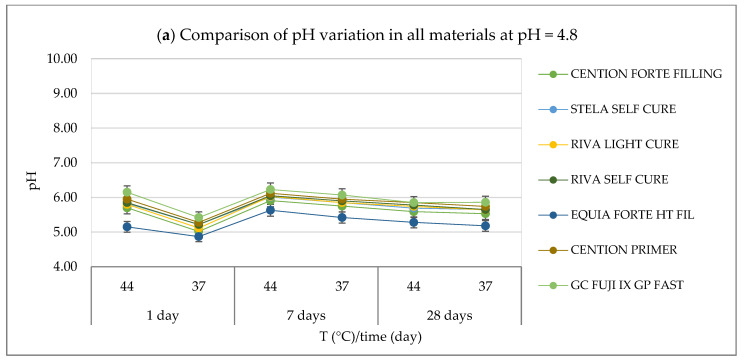
生物活性修复材料是促进再矿化和通过离子释放保护牙组织的关键。本研究考察了pH和温度如何影响七种商业材料(Cention Forte填充材料、Cention Primer、Stela Self Cure、Riva Light Cure HV、Riva Self Cure、Equia Forte HT Fil和Fuji IX GP Fast)的短期和长期离子(F-、Ca2+、Sr2+、OH-、Si和PO43-)释放。磁盘是根据制造商的说明制备的;浸泡在pH为4.8、6.8和8.8的缓冲液中;分别保存在37℃和44℃。用离子色谱和质谱法测定1、7和28天后的离子释放。结果表明,pH、温度和暴露时间对离子释放有显著影响。在pH值为4.8、温度为44°C的条件下,Riva光固化28天后,氟(40.14±0.32 mg/L)和钙(74.23±0.37 mg/L)的释放量最高,锶(5.87±0.06 mg/L)的释放量最高。在pH值为4.8、温度为37°C的条件下,Cention Forte填料的硅释放量达到最大值(31.72±0.68 mg/L)。这些发现强调了环境因素对材料性能的影响,帮助临床医生选择最佳的修复材料,以长期牙齿健康。
The Effect of Different pH and Temperature Values on Ca2+, F-, PO43-, OH-, Si, and Sr2+ Release from Different Bioactive Restorative Dental Materials: An In Vitro Study.
Bioactive restorative materials are crucial for promoting remineralization and protecting dental tissues through ion release. This study examines how pH and temperature influence the short- and long-term ion (F-, Ca2+, Sr2+, OH-, Si, and PO43-) release from seven commercial materials: Cention Forte Filling Material, Cention Primer, Stela Self Cure, Riva Light Cure HV, Riva Self Cure, Equia Forte HT Fil, and Fuji IX GP Fast. Disks were prepared according to the manufacturers' instructions; immersed in buffer solutions at pH 4.8, 6.8, and 8.8; and stored at 37 °C and 44 °C. Ion release was measured after 1, 7, and 28 days using ion chromatography and mass spectrometry. Results revealed that ion release was significantly affected by pH, temperature, and exposure time. The highest fluoride (40.14 ± 0.32 mg/L) and calcium (74.23 ± 0.37 mg/L) releases were observed in Riva Light Cure at pH 4.8 and 44 °C after 28 days, with the highest strontium release (5.87 ± 0.06 mg/L) occurring under the same conditions. In contrast, silicon release peaked in Cention Forte Filling (31.72 ± 0.68 mg/L) at pH 4.8 and 37 °C. These findings highlight the impact of environmental factors on material performance, assisting clinicians in selecting optimal restorative materials for long-term dental health.
期刊介绍:
Polymers (ISSN 2073-4360) is an international, open access journal of polymer science. It publishes research papers, short communications and review papers. Our aim is to encourage scientists to publish their experimental and theoretical results in as much detail as possible. Therefore, there is no restriction on the length of the papers. The full experimental details must be provided so that the results can be reproduced. Polymers provides an interdisciplinary forum for publishing papers which advance the fields of (i) polymerization methods, (ii) theory, simulation, and modeling, (iii) understanding of new physical phenomena, (iv) advances in characterization techniques, and (v) harnessing of self-assembly and biological strategies for producing complex multifunctional structures.






 京公网安备 11010802042870号
京ICP备2023020795号-1
京公网安备 11010802042870号
京ICP备2023020795号-1

 分享
分享
 求助内容:
求助内容: 应助结果提醒方式:
 扫码关注我们
