Jônatas Augusto Cursiol, Paulo Cezar Rocha Dos Santos, Victor Spiandor Beretta, Diego Orcioli-Silva, Lucas Simieli, Christian Schlenstedt, Daniel Boari Coelho, Fabio Augusto Barbieri
{"title":"节律性听觉提示改善帕金森病患者无障碍行走时的步态不对称,但对避障没有影响- asymmgaad -Parkinson研究","authors":"Jônatas Augusto Cursiol, Paulo Cezar Rocha Dos Santos, Victor Spiandor Beretta, Diego Orcioli-Silva, Lucas Simieli, Christian Schlenstedt, Daniel Boari Coelho, Fabio Augusto Barbieri","doi":"10.3389/fnagi.2025.1455432","DOIUrl":null,"url":null,"abstract":"<p><strong>Introduction: </strong>This study investigated the influence of rhythmic auditory cues (RAC) on gait asymmetry (GA) during unobstructed and obstacle avoidance walking in people with Parkinson's disease (PD) and neurologically healthy individuals.</p><p><strong>Methods: </strong>Thirteen individuals with PD (70.33 ± 6.02 years) and 13 healthy controls (CG) (70.77 ± 7.56 years) participated in this study. They performed a total of five trials during unobstructed walking and 10 trials during obstacle walking under each auditory cue condition (without and with RAC). For obstacle walking, five trials were performed with each limb as leading during obstacle avoidance. First, the volunteers performed the trials without RAC. The trial order, unobstructed or obstacle walking, was randomly defined, and the cues (controlled by a metronome) were personalized according to participants' cadence. The symmetric index of gait parameters was analyzed using 2 × 2 factorial analysis of variance (group and RAC as factors) separately for each gait type (unobstructed and obstructed walking).</p><p><strong>Results: </strong>A group-by-auditory cue interaction for step velocity (<i>p</i> = 0.027) showed that the PD group exhibited 57.6% reduced asymmetry with RAC during unobstructed walking, with no significant effects observed for the CG. However, RAC had no effect on GA during obstacle avoidance walking in people with PD. Conversely, the CG exhibited 10.5% greater step length asymmetry, 7.1% greater step duration asymmetry, 7.0% greater step velocity asymmetry, and 10.6% greater double support duration asymmetry during obstacle avoidance with RAC (<i>p</i> < 0.001).</p><p><strong>Conclusion: </strong>We conclude that RAC can reduce GA in people with PD during unobstructed walking, but appear to have no effect and negative effects on GA during obstacle walking in people with PD and neurologically healthy individuals, respectively.</p>","PeriodicalId":12450,"journal":{"name":"Frontiers in Aging Neuroscience","volume":"17 ","pages":"1455432"},"PeriodicalIF":4.5000,"publicationDate":"2025-02-27","publicationTypes":"Journal Article","fieldsOfStudy":null,"isOpenAccess":false,"openAccessPdf":"https://www.ncbi.nlm.nih.gov/pmc/articles/PMC11905297/pdf/","citationCount":"0","resultStr":"{\"title\":\"Rhythmic auditory cues improve gait asymmetry during unobstructed walking in people with Parkinson's disease but have no effect on obstacle avoidance - AsymmGait-Parkinson study.\",\"authors\":\"Jônatas Augusto Cursiol, Paulo Cezar Rocha Dos Santos, Victor Spiandor Beretta, Diego Orcioli-Silva, Lucas Simieli, Christian Schlenstedt, Daniel Boari Coelho, Fabio Augusto Barbieri\",\"doi\":\"10.3389/fnagi.2025.1455432\",\"DOIUrl\":null,\"url\":null,\"abstract\":\"<p><strong>Introduction: </strong>This study investigated the influence of rhythmic auditory cues (RAC) on gait asymmetry (GA) during unobstructed and obstacle avoidance walking in people with Parkinson's disease (PD) and neurologically healthy individuals.</p><p><strong>Methods: </strong>Thirteen individuals with PD (70.33 ± 6.02 years) and 13 healthy controls (CG) (70.77 ± 7.56 years) participated in this study. They performed a total of five trials during unobstructed walking and 10 trials during obstacle walking under each auditory cue condition (without and with RAC). For obstacle walking, five trials were performed with each limb as leading during obstacle avoidance. First, the volunteers performed the trials without RAC. The trial order, unobstructed or obstacle walking, was randomly defined, and the cues (controlled by a metronome) were personalized according to participants' cadence. The symmetric index of gait parameters was analyzed using 2 × 2 factorial analysis of variance (group and RAC as factors) separately for each gait type (unobstructed and obstructed walking).</p><p><strong>Results: </strong>A group-by-auditory cue interaction for step velocity (<i>p</i> = 0.027) showed that the PD group exhibited 57.6% reduced asymmetry with RAC during unobstructed walking, with no significant effects observed for the CG. However, RAC had no effect on GA during obstacle avoidance walking in people with PD. Conversely, the CG exhibited 10.5% greater step length asymmetry, 7.1% greater step duration asymmetry, 7.0% greater step velocity asymmetry, and 10.6% greater double support duration asymmetry during obstacle avoidance with RAC (<i>p</i> < 0.001).</p><p><strong>Conclusion: </strong>We conclude that RAC can reduce GA in people with PD during unobstructed walking, but appear to have no effect and negative effects on GA during obstacle walking in people with PD and neurologically healthy individuals, respectively.</p>\",\"PeriodicalId\":12450,\"journal\":{\"name\":\"Frontiers in Aging Neuroscience\",\"volume\":\"17 \",\"pages\":\"1455432\"},\"PeriodicalIF\":4.5000,\"publicationDate\":\"2025-02-27\",\"publicationTypes\":\"Journal Article\",\"fieldsOfStudy\":null,\"isOpenAccess\":false,\"openAccessPdf\":\"https://www.ncbi.nlm.nih.gov/pmc/articles/PMC11905297/pdf/\",\"citationCount\":\"0\",\"resultStr\":null,\"platform\":\"Semanticscholar\",\"paperid\":null,\"PeriodicalName\":\"Frontiers in Aging Neuroscience\",\"FirstCategoryId\":\"3\",\"ListUrlMain\":\"https://doi.org/10.3389/fnagi.2025.1455432\",\"RegionNum\":2,\"RegionCategory\":\"医学\",\"ArticlePicture\":[],\"TitleCN\":null,\"AbstractTextCN\":null,\"PMCID\":null,\"EPubDate\":\"2025/1/1 0:00:00\",\"PubModel\":\"eCollection\",\"JCR\":\"Q2\",\"JCRName\":\"GERIATRICS & GERONTOLOGY\",\"Score\":null,\"Total\":0}","platform":"Semanticscholar","paperid":null,"PeriodicalName":"Frontiers in Aging Neuroscience","FirstCategoryId":"3","ListUrlMain":"https://doi.org/10.3389/fnagi.2025.1455432","RegionNum":2,"RegionCategory":"医学","ArticlePicture":[],"TitleCN":null,"AbstractTextCN":null,"PMCID":null,"EPubDate":"2025/1/1 0:00:00","PubModel":"eCollection","JCR":"Q2","JCRName":"GERIATRICS & GERONTOLOGY","Score":null,"Total":0}
Rhythmic auditory cues improve gait asymmetry during unobstructed walking in people with Parkinson's disease but have no effect on obstacle avoidance - AsymmGait-Parkinson study.
Introduction: This study investigated the influence of rhythmic auditory cues (RAC) on gait asymmetry (GA) during unobstructed and obstacle avoidance walking in people with Parkinson's disease (PD) and neurologically healthy individuals.
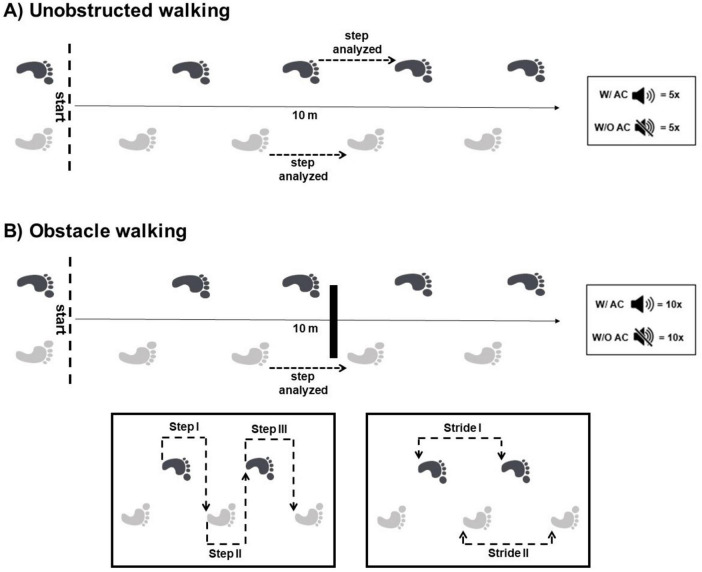
Methods: Thirteen individuals with PD (70.33 ± 6.02 years) and 13 healthy controls (CG) (70.77 ± 7.56 years) participated in this study. They performed a total of five trials during unobstructed walking and 10 trials during obstacle walking under each auditory cue condition (without and with RAC). For obstacle walking, five trials were performed with each limb as leading during obstacle avoidance. First, the volunteers performed the trials without RAC. The trial order, unobstructed or obstacle walking, was randomly defined, and the cues (controlled by a metronome) were personalized according to participants' cadence. The symmetric index of gait parameters was analyzed using 2 × 2 factorial analysis of variance (group and RAC as factors) separately for each gait type (unobstructed and obstructed walking).
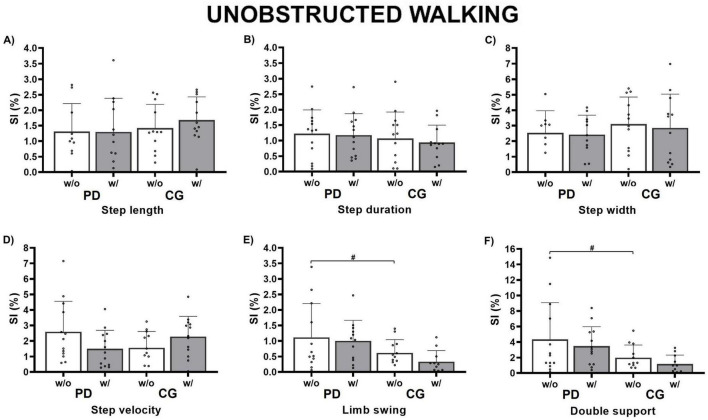
Results: A group-by-auditory cue interaction for step velocity (p = 0.027) showed that the PD group exhibited 57.6% reduced asymmetry with RAC during unobstructed walking, with no significant effects observed for the CG. However, RAC had no effect on GA during obstacle avoidance walking in people with PD. Conversely, the CG exhibited 10.5% greater step length asymmetry, 7.1% greater step duration asymmetry, 7.0% greater step velocity asymmetry, and 10.6% greater double support duration asymmetry during obstacle avoidance with RAC (p < 0.001).
Conclusion: We conclude that RAC can reduce GA in people with PD during unobstructed walking, but appear to have no effect and negative effects on GA during obstacle walking in people with PD and neurologically healthy individuals, respectively.
期刊介绍:
Frontiers in Aging Neuroscience is a leading journal in its field, publishing rigorously peer-reviewed research that advances our understanding of the mechanisms of Central Nervous System aging and age-related neural diseases. Specialty Chief Editor Thomas Wisniewski at the New York University School of Medicine is supported by an outstanding Editorial Board of international researchers. This multidisciplinary open-access journal is at the forefront of disseminating and communicating scientific knowledge and impactful discoveries to researchers, academics, clinicians and the public worldwide.





 京公网安备 11010802042870号
京ICP备2023020795号-1
京公网安备 11010802042870号
京ICP备2023020795号-1

 分享
分享
 求助内容:
求助内容: 应助结果提醒方式:
 扫码关注我们
