Raed H. Althomali , Khaled A. Alamry , Mahmoud A. Hussein , Mohamed A. Abdel-Fadeel
{"title":"壳聚糖接枝β-ketosulfones@naphthalene和吡啶分子/Ag纳米复合材料对有机污染物的催化降解","authors":"Raed H. Althomali , Khaled A. Alamry , Mahmoud A. Hussein , Mohamed A. Abdel-Fadeel","doi":"10.1016/j.rechem.2025.102188","DOIUrl":null,"url":null,"abstract":"<div><div>By employing the abbreviations (Cs-β-KS) naph and (Cs-β-KS) pyr, respectively, the current research investigates the production and characterisation of two novel chitosan-grafted β-ketosulfone derivatives involving naphthalene and pyridine constituents. In the specific case of chitosan-grafted naphthalene derivatives, the impact of preloaded Ag NPs on the catalytic capabilities of such contaminants was also investigated. (Cs-β-KS)naph/Ag was used to demonstrate the catalytic devaluation of p-NP, along with facilitating the catalytic discoloration of CR, MeO, and ArO. Exposure to Ag nanoparticle-laden (Cs-β-KS)naph/Ag resulted in peak absorption of CR, MeO, and ArO at 480 nm, 460 nm, and 480 nm, respectively, disappearing after 15 min, 50 min, and 60 min, respectively. The results indicated that the primary factors, initial concentration, and further research all had a direct effect on their ability to adsorb. Reduction-inducing reactions occur in the method of removal, which aligns with pseudo-second-order kinetics theories. The maximum reduction reaction was anticipated by the pseudo-second-order approach which served as an ideal match to the empirical observations. Leveraging an efficient catalyst (Cs-β-KS)naph / Ag nanocomposites facilitated the efficient removal of p-nitro-phenol and dye molecules. The (Cs-β-KS)naph /Ag nanocomposites exhibited superior catalytic effectiveness across the range of synthesised catalysts for the elimination of p-nitro-phenol Congo Red (CR), Methyl Orange (MeO), and Acridine Orange (ArO<strong>)</strong>in the presence of sodium borohydride, at prominent intervals of 24 min for p-NP and 15 min for CR.</div></div>","PeriodicalId":420,"journal":{"name":"Results in Chemistry","volume":"15 ","pages":"Article 102188"},"PeriodicalIF":4.2000,"publicationDate":"2025-05-01","publicationTypes":"Journal Article","fieldsOfStudy":null,"isOpenAccess":false,"openAccessPdf":"","citationCount":"0","resultStr":"{\"title\":\"Chitosan-grafted β-ketosulfones@naphthalene and pyridine molecules/Ag nanocomposites for the catalytic degradation of organic pollutants\",\"authors\":\"Raed H. Althomali , Khaled A. Alamry , Mahmoud A. Hussein , Mohamed A. Abdel-Fadeel\",\"doi\":\"10.1016/j.rechem.2025.102188\",\"DOIUrl\":null,\"url\":null,\"abstract\":\"<div><div>By employing the abbreviations (Cs-β-KS) naph and (Cs-β-KS) pyr, respectively, the current research investigates the production and characterisation of two novel chitosan-grafted β-ketosulfone derivatives involving naphthalene and pyridine constituents. In the specific case of chitosan-grafted naphthalene derivatives, the impact of preloaded Ag NPs on the catalytic capabilities of such contaminants was also investigated. (Cs-β-KS)naph/Ag was used to demonstrate the catalytic devaluation of p-NP, along with facilitating the catalytic discoloration of CR, MeO, and ArO. Exposure to Ag nanoparticle-laden (Cs-β-KS)naph/Ag resulted in peak absorption of CR, MeO, and ArO at 480 nm, 460 nm, and 480 nm, respectively, disappearing after 15 min, 50 min, and 60 min, respectively. The results indicated that the primary factors, initial concentration, and further research all had a direct effect on their ability to adsorb. Reduction-inducing reactions occur in the method of removal, which aligns with pseudo-second-order kinetics theories. The maximum reduction reaction was anticipated by the pseudo-second-order approach which served as an ideal match to the empirical observations. Leveraging an efficient catalyst (Cs-β-KS)naph / Ag nanocomposites facilitated the efficient removal of p-nitro-phenol and dye molecules. The (Cs-β-KS)naph /Ag nanocomposites exhibited superior catalytic effectiveness across the range of synthesised catalysts for the elimination of p-nitro-phenol Congo Red (CR), Methyl Orange (MeO), and Acridine Orange (ArO<strong>)</strong>in the presence of sodium borohydride, at prominent intervals of 24 min for p-NP and 15 min for CR.</div></div>\",\"PeriodicalId\":420,\"journal\":{\"name\":\"Results in Chemistry\",\"volume\":\"15 \",\"pages\":\"Article 102188\"},\"PeriodicalIF\":4.2000,\"publicationDate\":\"2025-05-01\",\"publicationTypes\":\"Journal Article\",\"fieldsOfStudy\":null,\"isOpenAccess\":false,\"openAccessPdf\":\"\",\"citationCount\":\"0\",\"resultStr\":null,\"platform\":\"Semanticscholar\",\"paperid\":null,\"PeriodicalName\":\"Results in Chemistry\",\"FirstCategoryId\":\"1085\",\"ListUrlMain\":\"https://www.sciencedirect.com/science/article/pii/S2211715625001717\",\"RegionNum\":0,\"RegionCategory\":null,\"ArticlePicture\":[],\"TitleCN\":null,\"AbstractTextCN\":null,\"PMCID\":null,\"EPubDate\":\"2025/3/8 0:00:00\",\"PubModel\":\"Epub\",\"JCR\":\"Q2\",\"JCRName\":\"CHEMISTRY, MULTIDISCIPLINARY\",\"Score\":null,\"Total\":0}","platform":"Semanticscholar","paperid":null,"PeriodicalName":"Results in Chemistry","FirstCategoryId":"1085","ListUrlMain":"https://www.sciencedirect.com/science/article/pii/S2211715625001717","RegionNum":0,"RegionCategory":null,"ArticlePicture":[],"TitleCN":null,"AbstractTextCN":null,"PMCID":null,"EPubDate":"2025/3/8 0:00:00","PubModel":"Epub","JCR":"Q2","JCRName":"CHEMISTRY, MULTIDISCIPLINARY","Score":null,"Total":0}
引用次数: 0
摘要
目前的研究分别采用 (Cs-β-KS) naph 和 (Cs-β-KS) pyr 缩写,研究了两种新型壳聚糖接枝β-酮砜衍生物的生产和特性,其中涉及萘和吡啶成分。在壳聚糖接枝萘衍生物的特定情况下,还研究了预载 Ag NPs 对此类污染物催化能力的影响。(Cs-β-KS)萘/银被用来证明对萘酚的催化降解,同时促进 CR、MeO 和 ArO 的催化变色。暴露于添加了 Ag 纳米粒子的 (Cs-β-KS)naph/Ag 后,CR、MeO 和 ArO 分别在 480 纳米、460 纳米和 480 纳米处出现吸收峰值,并分别在 15 分钟、50 分钟和 60 分钟后消失。结果表明,主要因素、初始浓度和进一步研究都会直接影响它们的吸附能力。在去除方法中出现了还原诱导反应,这与伪二阶动力学理论相一致。最大还原反应是通过伪二阶方法预测的,与经验观察结果非常吻合。利用高效催化剂(Cs-β-KS)萘/银纳米复合材料促进了对硝基苯酚和染料分子的高效去除。在硼氢化钠存在下,(Cs-β-KS)萘/银纳米复合材料在消除对硝基苯酚刚果红(CR)、甲基橙(MeO)和吖啶橙(ArO)方面,在对硝基苯酚和对硝基苯酚分别为 24 分钟和 15 分钟时,在合成催化剂的范围内均表现出卓越的催化效力。
Chitosan-grafted β-ketosulfones@naphthalene and pyridine molecules/Ag nanocomposites for the catalytic degradation of organic pollutants
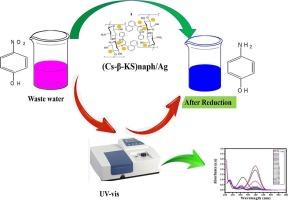
By employing the abbreviations (Cs-β-KS) naph and (Cs-β-KS) pyr, respectively, the current research investigates the production and characterisation of two novel chitosan-grafted β-ketosulfone derivatives involving naphthalene and pyridine constituents. In the specific case of chitosan-grafted naphthalene derivatives, the impact of preloaded Ag NPs on the catalytic capabilities of such contaminants was also investigated. (Cs-β-KS)naph/Ag was used to demonstrate the catalytic devaluation of p-NP, along with facilitating the catalytic discoloration of CR, MeO, and ArO. Exposure to Ag nanoparticle-laden (Cs-β-KS)naph/Ag resulted in peak absorption of CR, MeO, and ArO at 480 nm, 460 nm, and 480 nm, respectively, disappearing after 15 min, 50 min, and 60 min, respectively. The results indicated that the primary factors, initial concentration, and further research all had a direct effect on their ability to adsorb. Reduction-inducing reactions occur in the method of removal, which aligns with pseudo-second-order kinetics theories. The maximum reduction reaction was anticipated by the pseudo-second-order approach which served as an ideal match to the empirical observations. Leveraging an efficient catalyst (Cs-β-KS)naph / Ag nanocomposites facilitated the efficient removal of p-nitro-phenol and dye molecules. The (Cs-β-KS)naph /Ag nanocomposites exhibited superior catalytic effectiveness across the range of synthesised catalysts for the elimination of p-nitro-phenol Congo Red (CR), Methyl Orange (MeO), and Acridine Orange (ArO)in the presence of sodium borohydride, at prominent intervals of 24 min for p-NP and 15 min for CR.





 京公网安备 11010802042870号
京ICP备2023020795号-1
京公网安备 11010802042870号
京ICP备2023020795号-1

 分享
分享
 求助内容:
求助内容: 应助结果提醒方式:
 扫码关注我们
