Hanne M Boen, Lobke L Pype, Konstantinos Papadimitriou, Sevilay Altintas, Laure-Anne Teuwen, Sébastien Anguille, Kirsten Saevels, Anke Verlinden, Leen Delrue, Ward A Heggermont, Matthias Bosman, Pieter-Jan Guns, Hein Heidbuchel, Caroline M Van De Heyning, Emeline M Van Craenenbroeck, Constantijn Franssen
{"title":"SERPINA3对蒽环类药物治疗和心血管功能障碍的动态反应。","authors":"Hanne M Boen, Lobke L Pype, Konstantinos Papadimitriou, Sevilay Altintas, Laure-Anne Teuwen, Sébastien Anguille, Kirsten Saevels, Anke Verlinden, Leen Delrue, Ward A Heggermont, Matthias Bosman, Pieter-Jan Guns, Hein Heidbuchel, Caroline M Van De Heyning, Emeline M Van Craenenbroeck, Constantijn Franssen","doi":"10.1186/s40959-025-00324-7","DOIUrl":null,"url":null,"abstract":"<p><strong>Background: </strong>SERPINA3 recently emerged as potential prognostic biomarker in heart failure. In a population of cancer survivors with cancer therapy-related cardiac dysfunction (CTRCD) circulating SERPINA3 was elevated compared to age-matched controls. We aimed to assess the longitudinal dynamics of circulating SERPINA3 levels in patients with cancer treated with anthracycline chemotherapy (AnC) and its relation to CTRCD.</p><p><strong>Methods: </strong>In this single centre cohort study, 55 patients with cancer scheduled for AnC were prospectively enrolled. Cardiac evaluation (echocardiography, high-sensitive cardiac troponin I and NT-proBNP) was performed and SERPINA3 levels in plasma were assessed at 4 timepoints: before chemotherapy, directly after the end of chemotherapy, three months and twelve months after the end of chemotherapy.</p><p><strong>Results: </strong>Forty-two out of 55 patients (76.4%) developed CTRCD within 1 year after end of treatment. CTRCD was mild in 32 and moderate in 10 patients, defined as a change in cardiac biomarkers or GLS and LVEF decline < 50% respectively. Overall, median SERPINA3 levels decreased from baseline to three months after AnC (215.7 [62.0-984.0] to 176.9 [94.7-678.0] µg/ml, p = 0.031). This decrease was most prominent in patients without CTRCD (30.8% decrease, p = 0.007), followed by mild CTRCD (9.0% decrease, p = 0.022), while patients with moderate CTRCD did not show a reduction in SERPINA3 (5.1% increase, p = 0.987). SERPINA3 values at three months after AnC were positively correlated with NT-proBNP (r = 0.47, p = 0.002). Several malignancy, treatment and patient characteristics were associated with higher SERPINA3 values.</p><p><strong>Conclusion: </strong>Circulating SERPINA3 levels show dynamic changes in a population of patients with cancer, with an overall decrease following AnC. However, in patients that developed moderate CTRCD, SERPINA3 levels remained elevated. The potential of SERPINA3 dynamics as a biomarker for CTRCD, deserves validation in larger cohorts.</p>","PeriodicalId":9804,"journal":{"name":"Cardio-oncology","volume":"11 1","pages":"27"},"PeriodicalIF":3.4000,"publicationDate":"2025-03-14","publicationTypes":"Journal Article","fieldsOfStudy":null,"isOpenAccess":false,"openAccessPdf":"https://www.ncbi.nlm.nih.gov/pmc/articles/PMC11907982/pdf/","citationCount":"0","resultStr":"{\"title\":\"Dynamics of SERPINA3 in response to anthracycline treatment and cardiovascular dysfunction.\",\"authors\":\"Hanne M Boen, Lobke L Pype, Konstantinos Papadimitriou, Sevilay Altintas, Laure-Anne Teuwen, Sébastien Anguille, Kirsten Saevels, Anke Verlinden, Leen Delrue, Ward A Heggermont, Matthias Bosman, Pieter-Jan Guns, Hein Heidbuchel, Caroline M Van De Heyning, Emeline M Van Craenenbroeck, Constantijn Franssen\",\"doi\":\"10.1186/s40959-025-00324-7\",\"DOIUrl\":null,\"url\":null,\"abstract\":\"<p><strong>Background: </strong>SERPINA3 recently emerged as potential prognostic biomarker in heart failure. In a population of cancer survivors with cancer therapy-related cardiac dysfunction (CTRCD) circulating SERPINA3 was elevated compared to age-matched controls. We aimed to assess the longitudinal dynamics of circulating SERPINA3 levels in patients with cancer treated with anthracycline chemotherapy (AnC) and its relation to CTRCD.</p><p><strong>Methods: </strong>In this single centre cohort study, 55 patients with cancer scheduled for AnC were prospectively enrolled. Cardiac evaluation (echocardiography, high-sensitive cardiac troponin I and NT-proBNP) was performed and SERPINA3 levels in plasma were assessed at 4 timepoints: before chemotherapy, directly after the end of chemotherapy, three months and twelve months after the end of chemotherapy.</p><p><strong>Results: </strong>Forty-two out of 55 patients (76.4%) developed CTRCD within 1 year after end of treatment. CTRCD was mild in 32 and moderate in 10 patients, defined as a change in cardiac biomarkers or GLS and LVEF decline < 50% respectively. Overall, median SERPINA3 levels decreased from baseline to three months after AnC (215.7 [62.0-984.0] to 176.9 [94.7-678.0] µg/ml, p = 0.031). This decrease was most prominent in patients without CTRCD (30.8% decrease, p = 0.007), followed by mild CTRCD (9.0% decrease, p = 0.022), while patients with moderate CTRCD did not show a reduction in SERPINA3 (5.1% increase, p = 0.987). SERPINA3 values at three months after AnC were positively correlated with NT-proBNP (r = 0.47, p = 0.002). Several malignancy, treatment and patient characteristics were associated with higher SERPINA3 values.</p><p><strong>Conclusion: </strong>Circulating SERPINA3 levels show dynamic changes in a population of patients with cancer, with an overall decrease following AnC. However, in patients that developed moderate CTRCD, SERPINA3 levels remained elevated. The potential of SERPINA3 dynamics as a biomarker for CTRCD, deserves validation in larger cohorts.</p>\",\"PeriodicalId\":9804,\"journal\":{\"name\":\"Cardio-oncology\",\"volume\":\"11 1\",\"pages\":\"27\"},\"PeriodicalIF\":3.4000,\"publicationDate\":\"2025-03-14\",\"publicationTypes\":\"Journal Article\",\"fieldsOfStudy\":null,\"isOpenAccess\":false,\"openAccessPdf\":\"https://www.ncbi.nlm.nih.gov/pmc/articles/PMC11907982/pdf/\",\"citationCount\":\"0\",\"resultStr\":null,\"platform\":\"Semanticscholar\",\"paperid\":null,\"PeriodicalName\":\"Cardio-oncology\",\"FirstCategoryId\":\"1085\",\"ListUrlMain\":\"https://doi.org/10.1186/s40959-025-00324-7\",\"RegionNum\":0,\"RegionCategory\":null,\"ArticlePicture\":[],\"TitleCN\":null,\"AbstractTextCN\":null,\"PMCID\":null,\"EPubDate\":\"\",\"PubModel\":\"\",\"JCR\":\"Q2\",\"JCRName\":\"CARDIAC & CARDIOVASCULAR SYSTEMS\",\"Score\":null,\"Total\":0}","platform":"Semanticscholar","paperid":null,"PeriodicalName":"Cardio-oncology","FirstCategoryId":"1085","ListUrlMain":"https://doi.org/10.1186/s40959-025-00324-7","RegionNum":0,"RegionCategory":null,"ArticlePicture":[],"TitleCN":null,"AbstractTextCN":null,"PMCID":null,"EPubDate":"","PubModel":"","JCR":"Q2","JCRName":"CARDIAC & CARDIOVASCULAR SYSTEMS","Score":null,"Total":0}
Dynamics of SERPINA3 in response to anthracycline treatment and cardiovascular dysfunction.
Background: SERPINA3 recently emerged as potential prognostic biomarker in heart failure. In a population of cancer survivors with cancer therapy-related cardiac dysfunction (CTRCD) circulating SERPINA3 was elevated compared to age-matched controls. We aimed to assess the longitudinal dynamics of circulating SERPINA3 levels in patients with cancer treated with anthracycline chemotherapy (AnC) and its relation to CTRCD.
Methods: In this single centre cohort study, 55 patients with cancer scheduled for AnC were prospectively enrolled. Cardiac evaluation (echocardiography, high-sensitive cardiac troponin I and NT-proBNP) was performed and SERPINA3 levels in plasma were assessed at 4 timepoints: before chemotherapy, directly after the end of chemotherapy, three months and twelve months after the end of chemotherapy.
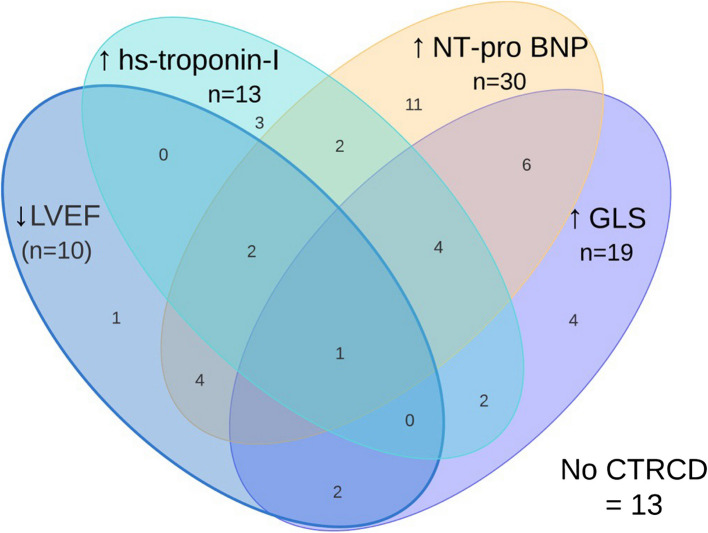
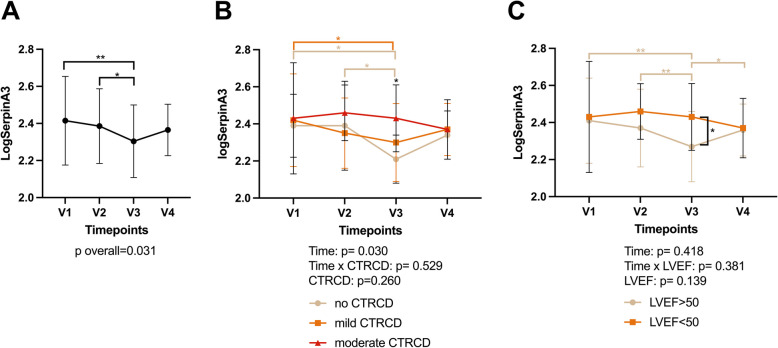
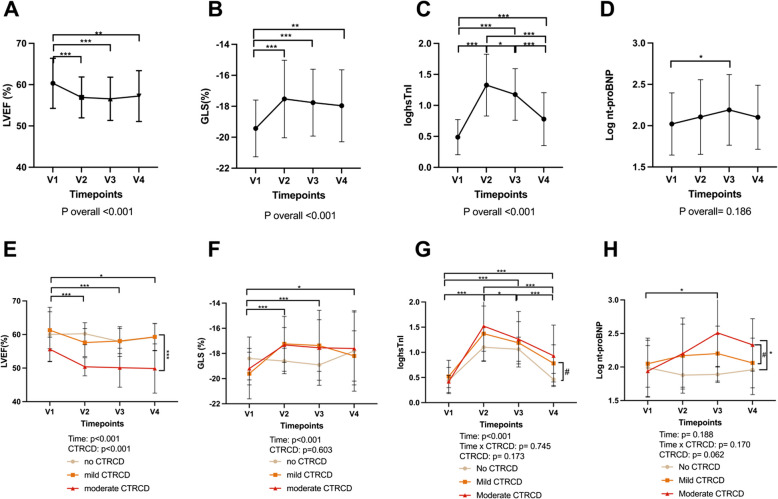
Results: Forty-two out of 55 patients (76.4%) developed CTRCD within 1 year after end of treatment. CTRCD was mild in 32 and moderate in 10 patients, defined as a change in cardiac biomarkers or GLS and LVEF decline < 50% respectively. Overall, median SERPINA3 levels decreased from baseline to three months after AnC (215.7 [62.0-984.0] to 176.9 [94.7-678.0] µg/ml, p = 0.031). This decrease was most prominent in patients without CTRCD (30.8% decrease, p = 0.007), followed by mild CTRCD (9.0% decrease, p = 0.022), while patients with moderate CTRCD did not show a reduction in SERPINA3 (5.1% increase, p = 0.987). SERPINA3 values at three months after AnC were positively correlated with NT-proBNP (r = 0.47, p = 0.002). Several malignancy, treatment and patient characteristics were associated with higher SERPINA3 values.
Conclusion: Circulating SERPINA3 levels show dynamic changes in a population of patients with cancer, with an overall decrease following AnC. However, in patients that developed moderate CTRCD, SERPINA3 levels remained elevated. The potential of SERPINA3 dynamics as a biomarker for CTRCD, deserves validation in larger cohorts.





 京公网安备 11010802042870号
京ICP备2023020795号-1
京公网安备 11010802042870号
京ICP备2023020795号-1

 分享
分享
 求助内容:
求助内容: 应助结果提醒方式:
 扫码关注我们
