Nicole E St Clair, Kristina Devi Singh-Verdeflor, Vanessa McFadden, Elizabeth Groothuis, Stephanie Lauden, Megan S McHenry, Stephen Merry, Stephen Warrick, Samantha L Wilson, James H Conway
{"title":"项目PRIME(国际医学选修课的心理社会反应):医学学员的结果。","authors":"Nicole E St Clair, Kristina Devi Singh-Verdeflor, Vanessa McFadden, Elizabeth Groothuis, Stephanie Lauden, Megan S McHenry, Stephen Merry, Stephen Warrick, Samantha L Wilson, James H Conway","doi":"10.5334/aogh.4627","DOIUrl":null,"url":null,"abstract":"<p><p><i>Background:</i> Participation in global health (GH) training experiences is common for US medical trainees (students, residents, and fellows). However, little is known about their experience of \"culture shock\" (CS), which frequently occurs during these transformative cross‑cultural immersions. <i>Objectives:</i> The objectives of this study include: (1) quantitatively measure medical trainee psychosocial responses to short‑term GH electives, (2) identify factors that influence their CS experiences, and (3) determine if the stage‑based CS conceptual framework applies to medical trainees. <i>Methods:</i> Undergraduate and graduate medical education trainees (UME and GME) who participated in short‑term GH electives between 2016 and 2020 were recruited across nine US institutions. Using a longitudinal survey method, we gathered data predeparture (demographics, resilience, perceived stress (PS), and CS assessments), every 5 days during the elective (CS, PS assessments, and training site conditions), and 30 days postreturn (perceptions of CS experiences). Analyses included summary statistics, linear regressions, and a linear mixed effects model (LMM). <i>Findings:</i> 252 trainees were enrolled, with 140 (56%) included in the LMM. The primary outcome was a culture shock profile (CSP) score, with 96% reporting CS. The only trainee‑specific factor that significantly increased CSP score was trainee type (UME > GME (+22%)). Several GH elective site‑specific factors significantly influenced CSP score (e.g., support network [-10%], role clarity [-11%], and overwhelmed by medical needs [+10%]). CS experiences were variable and did not progress in predictable, stage‑based fashions, which is discordant from common CS descriptions. <i>Conclusions:</i> Culture shock was a near‑universal, diverse experience during GH electives. On‑site training conditions and elective site host factors influenced CS more than trainee factors in this prepandemic cohort. Further research is required to (1) determine the optimal CS \"balance\" (i.e., promoting transformative learning while mitigating negative professional and personal impacts), (2) offer insight into harmful CS thresholds, (3) identify host perspectives, and (4) inform best practices for GH electives and global partnerships.</p>","PeriodicalId":48857,"journal":{"name":"Annals of Global Health","volume":"91 1","pages":"13"},"PeriodicalIF":5.1000,"publicationDate":"2025-03-10","publicationTypes":"Journal Article","fieldsOfStudy":null,"isOpenAccess":false,"openAccessPdf":"https://www.ncbi.nlm.nih.gov/pmc/articles/PMC11908413/pdf/","citationCount":"0","resultStr":"{\"title\":\"Project PRIME (Psychosocial Response to International Medical Electives): Results from Medical Trainees.\",\"authors\":\"Nicole E St Clair, Kristina Devi Singh-Verdeflor, Vanessa McFadden, Elizabeth Groothuis, Stephanie Lauden, Megan S McHenry, Stephen Merry, Stephen Warrick, Samantha L Wilson, James H Conway\",\"doi\":\"10.5334/aogh.4627\",\"DOIUrl\":null,\"url\":null,\"abstract\":\"<p><p><i>Background:</i> Participation in global health (GH) training experiences is common for US medical trainees (students, residents, and fellows). However, little is known about their experience of \\\"culture shock\\\" (CS), which frequently occurs during these transformative cross‑cultural immersions. <i>Objectives:</i> The objectives of this study include: (1) quantitatively measure medical trainee psychosocial responses to short‑term GH electives, (2) identify factors that influence their CS experiences, and (3) determine if the stage‑based CS conceptual framework applies to medical trainees. <i>Methods:</i> Undergraduate and graduate medical education trainees (UME and GME) who participated in short‑term GH electives between 2016 and 2020 were recruited across nine US institutions. Using a longitudinal survey method, we gathered data predeparture (demographics, resilience, perceived stress (PS), and CS assessments), every 5 days during the elective (CS, PS assessments, and training site conditions), and 30 days postreturn (perceptions of CS experiences). Analyses included summary statistics, linear regressions, and a linear mixed effects model (LMM). <i>Findings:</i> 252 trainees were enrolled, with 140 (56%) included in the LMM. The primary outcome was a culture shock profile (CSP) score, with 96% reporting CS. The only trainee‑specific factor that significantly increased CSP score was trainee type (UME > GME (+22%)). Several GH elective site‑specific factors significantly influenced CSP score (e.g., support network [-10%], role clarity [-11%], and overwhelmed by medical needs [+10%]). CS experiences were variable and did not progress in predictable, stage‑based fashions, which is discordant from common CS descriptions. <i>Conclusions:</i> Culture shock was a near‑universal, diverse experience during GH electives. On‑site training conditions and elective site host factors influenced CS more than trainee factors in this prepandemic cohort. Further research is required to (1) determine the optimal CS \\\"balance\\\" (i.e., promoting transformative learning while mitigating negative professional and personal impacts), (2) offer insight into harmful CS thresholds, (3) identify host perspectives, and (4) inform best practices for GH electives and global partnerships.</p>\",\"PeriodicalId\":48857,\"journal\":{\"name\":\"Annals of Global Health\",\"volume\":\"91 1\",\"pages\":\"13\"},\"PeriodicalIF\":5.1000,\"publicationDate\":\"2025-03-10\",\"publicationTypes\":\"Journal Article\",\"fieldsOfStudy\":null,\"isOpenAccess\":false,\"openAccessPdf\":\"https://www.ncbi.nlm.nih.gov/pmc/articles/PMC11908413/pdf/\",\"citationCount\":\"0\",\"resultStr\":null,\"platform\":\"Semanticscholar\",\"paperid\":null,\"PeriodicalName\":\"Annals of Global Health\",\"FirstCategoryId\":\"3\",\"ListUrlMain\":\"https://doi.org/10.5334/aogh.4627\",\"RegionNum\":4,\"RegionCategory\":\"医学\",\"ArticlePicture\":[],\"TitleCN\":null,\"AbstractTextCN\":null,\"PMCID\":null,\"EPubDate\":\"2025/1/1 0:00:00\",\"PubModel\":\"eCollection\",\"JCR\":\"Q2\",\"JCRName\":\"PUBLIC, ENVIRONMENTAL & OCCUPATIONAL HEALTH\",\"Score\":null,\"Total\":0}","platform":"Semanticscholar","paperid":null,"PeriodicalName":"Annals of Global Health","FirstCategoryId":"3","ListUrlMain":"https://doi.org/10.5334/aogh.4627","RegionNum":4,"RegionCategory":"医学","ArticlePicture":[],"TitleCN":null,"AbstractTextCN":null,"PMCID":null,"EPubDate":"2025/1/1 0:00:00","PubModel":"eCollection","JCR":"Q2","JCRName":"PUBLIC, ENVIRONMENTAL & OCCUPATIONAL HEALTH","Score":null,"Total":0}
Project PRIME (Psychosocial Response to International Medical Electives): Results from Medical Trainees.
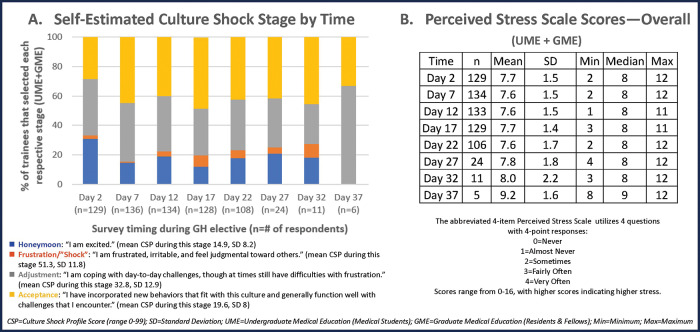
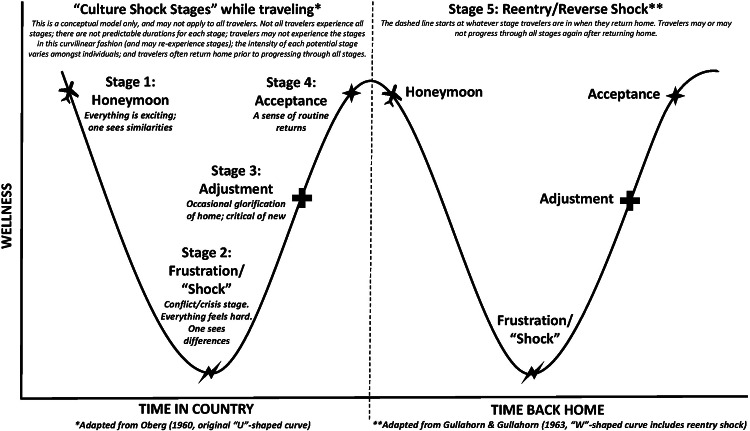
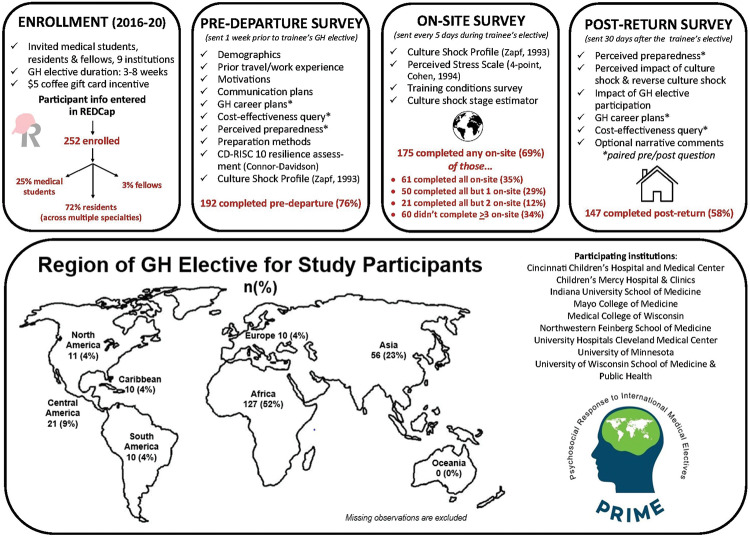
Background: Participation in global health (GH) training experiences is common for US medical trainees (students, residents, and fellows). However, little is known about their experience of "culture shock" (CS), which frequently occurs during these transformative cross‑cultural immersions. Objectives: The objectives of this study include: (1) quantitatively measure medical trainee psychosocial responses to short‑term GH electives, (2) identify factors that influence their CS experiences, and (3) determine if the stage‑based CS conceptual framework applies to medical trainees. Methods: Undergraduate and graduate medical education trainees (UME and GME) who participated in short‑term GH electives between 2016 and 2020 were recruited across nine US institutions. Using a longitudinal survey method, we gathered data predeparture (demographics, resilience, perceived stress (PS), and CS assessments), every 5 days during the elective (CS, PS assessments, and training site conditions), and 30 days postreturn (perceptions of CS experiences). Analyses included summary statistics, linear regressions, and a linear mixed effects model (LMM). Findings: 252 trainees were enrolled, with 140 (56%) included in the LMM. The primary outcome was a culture shock profile (CSP) score, with 96% reporting CS. The only trainee‑specific factor that significantly increased CSP score was trainee type (UME > GME (+22%)). Several GH elective site‑specific factors significantly influenced CSP score (e.g., support network [-10%], role clarity [-11%], and overwhelmed by medical needs [+10%]). CS experiences were variable and did not progress in predictable, stage‑based fashions, which is discordant from common CS descriptions. Conclusions: Culture shock was a near‑universal, diverse experience during GH electives. On‑site training conditions and elective site host factors influenced CS more than trainee factors in this prepandemic cohort. Further research is required to (1) determine the optimal CS "balance" (i.e., promoting transformative learning while mitigating negative professional and personal impacts), (2) offer insight into harmful CS thresholds, (3) identify host perspectives, and (4) inform best practices for GH electives and global partnerships.
期刊介绍:
ANNALS OF GLOBAL HEALTH is a peer-reviewed, open access journal focused on global health. The journal’s mission is to advance and disseminate knowledge of global health. Its goals are improve the health and well-being of all people, advance health equity and promote wise stewardship of the earth’s environment.
The journal is published by the Boston College Global Public Health Program. It was founded in 1934 by the Icahn School of Medicine at Mount Sinai as the Mount Sinai Journal of Medicine. It is a partner journal of the Consortium of Universities for Global Health.




 京公网安备 11010802042870号
京ICP备2023020795号-1
京公网安备 11010802042870号
京ICP备2023020795号-1

 分享
分享
 求助内容:
求助内容: 应助结果提醒方式:
 扫码关注我们
