{"title":"三维水凝胶-纸支架电化学β-内酰胺酶免疫条传感器用于耐药血流感染的快速检测和抗生素治疗后监测","authors":"Malvika Shukla , Dhruvesh Maiya , Rimpal Malaviya , Mruga Raval , Dolatsinh Zala , Vaibhav Bhatt , Shubhita Tripathi , Alok Pandya","doi":"10.1016/j.aca.2025.343953","DOIUrl":null,"url":null,"abstract":"<div><h3>Background</h3><div>The increasing prevalence of drug-resistant bacterial bloodstream infections, particularly those caused by Methicillin-resistant Staphylococcus aureus (MRSA), presents a critical global healthcare challenge. Current diagnostic methods often lack the speed and sensitivity necessary for timely antibiotic interventions, leading to poor patient outcomes and increased resistance due to misuse of broad-spectrum antibiotics. Existing platforms rarely combine rapid detection, low detection limits, and real-time therapy monitoring, leaving a crucial gap in effective infection management.</div></div><div><h3>Results</h3><div>This study introduces an electrochemical immunostrip sensor for the rapid detection of β-lactamase (BL), an enzyme associated with drug resistance. Using a novel 3D hydrogel-paper scaffold, the sensor achieves a detection limit of 0.146 mU/ml and accurately detects BL-producing pathogens, including MRSA, from clinical samples with bacterial loads as low as 10<sup>2</sup> CFU/ml. The platform provides post culture detection results within 1 h, post antibiotic therapy monitoring within 4 h and demonstrates high specificity (∼100 %) by differentiating BL-producing strains from non-producing isolates.</div></div><div><h3>Significance and novelty</h3><div>This study introduces a new electrochemical smart immunostrip sensor integrated with a 3D hydrogel-paper scaffold for β-lactamase detection, which offers high sensitivity and specificity. Unlike conventional diagnostics, it enables user-friendly, rapid, cost-effective detection within 1 h post-blood culture and real-time antibiotic therapy monitoring in just 4 h, transforming clinically actionable point-of-care (POC) management of drug-resistant bloodstream infections.</div></div>","PeriodicalId":240,"journal":{"name":"Analytica Chimica Acta","volume":"1353 ","pages":"Article 343953"},"PeriodicalIF":6.1000,"publicationDate":"2025-06-01","publicationTypes":"Journal Article","fieldsOfStudy":null,"isOpenAccess":false,"openAccessPdf":"","citationCount":"0","resultStr":"{\"title\":\"Electrochemical β-lactamase immunostrip sensor with 3D hydrogel-paper scaffold for rapid detection & post-antibiotic therapy monitoring in drug-resistant bloodstream infections\",\"authors\":\"Malvika Shukla , Dhruvesh Maiya , Rimpal Malaviya , Mruga Raval , Dolatsinh Zala , Vaibhav Bhatt , Shubhita Tripathi , Alok Pandya\",\"doi\":\"10.1016/j.aca.2025.343953\",\"DOIUrl\":null,\"url\":null,\"abstract\":\"<div><h3>Background</h3><div>The increasing prevalence of drug-resistant bacterial bloodstream infections, particularly those caused by Methicillin-resistant Staphylococcus aureus (MRSA), presents a critical global healthcare challenge. Current diagnostic methods often lack the speed and sensitivity necessary for timely antibiotic interventions, leading to poor patient outcomes and increased resistance due to misuse of broad-spectrum antibiotics. Existing platforms rarely combine rapid detection, low detection limits, and real-time therapy monitoring, leaving a crucial gap in effective infection management.</div></div><div><h3>Results</h3><div>This study introduces an electrochemical immunostrip sensor for the rapid detection of β-lactamase (BL), an enzyme associated with drug resistance. Using a novel 3D hydrogel-paper scaffold, the sensor achieves a detection limit of 0.146 mU/ml and accurately detects BL-producing pathogens, including MRSA, from clinical samples with bacterial loads as low as 10<sup>2</sup> CFU/ml. The platform provides post culture detection results within 1 h, post antibiotic therapy monitoring within 4 h and demonstrates high specificity (∼100 %) by differentiating BL-producing strains from non-producing isolates.</div></div><div><h3>Significance and novelty</h3><div>This study introduces a new electrochemical smart immunostrip sensor integrated with a 3D hydrogel-paper scaffold for β-lactamase detection, which offers high sensitivity and specificity. Unlike conventional diagnostics, it enables user-friendly, rapid, cost-effective detection within 1 h post-blood culture and real-time antibiotic therapy monitoring in just 4 h, transforming clinically actionable point-of-care (POC) management of drug-resistant bloodstream infections.</div></div>\",\"PeriodicalId\":240,\"journal\":{\"name\":\"Analytica Chimica Acta\",\"volume\":\"1353 \",\"pages\":\"Article 343953\"},\"PeriodicalIF\":6.1000,\"publicationDate\":\"2025-06-01\",\"publicationTypes\":\"Journal Article\",\"fieldsOfStudy\":null,\"isOpenAccess\":false,\"openAccessPdf\":\"\",\"citationCount\":\"0\",\"resultStr\":null,\"platform\":\"Semanticscholar\",\"paperid\":null,\"PeriodicalName\":\"Analytica Chimica Acta\",\"FirstCategoryId\":\"92\",\"ListUrlMain\":\"https://www.sciencedirect.com/science/article/pii/S0003267025003472\",\"RegionNum\":2,\"RegionCategory\":\"化学\",\"ArticlePicture\":[],\"TitleCN\":null,\"AbstractTextCN\":null,\"PMCID\":null,\"EPubDate\":\"2025/3/18 0:00:00\",\"PubModel\":\"Epub\",\"JCR\":\"Q1\",\"JCRName\":\"CHEMISTRY, ANALYTICAL\",\"Score\":null,\"Total\":0}","platform":"Semanticscholar","paperid":null,"PeriodicalName":"Analytica Chimica Acta","FirstCategoryId":"92","ListUrlMain":"https://www.sciencedirect.com/science/article/pii/S0003267025003472","RegionNum":2,"RegionCategory":"化学","ArticlePicture":[],"TitleCN":null,"AbstractTextCN":null,"PMCID":null,"EPubDate":"2025/3/18 0:00:00","PubModel":"Epub","JCR":"Q1","JCRName":"CHEMISTRY, ANALYTICAL","Score":null,"Total":0}
Electrochemical β-lactamase immunostrip sensor with 3D hydrogel-paper scaffold for rapid detection & post-antibiotic therapy monitoring in drug-resistant bloodstream infections
Background
The increasing prevalence of drug-resistant bacterial bloodstream infections, particularly those caused by Methicillin-resistant Staphylococcus aureus (MRSA), presents a critical global healthcare challenge. Current diagnostic methods often lack the speed and sensitivity necessary for timely antibiotic interventions, leading to poor patient outcomes and increased resistance due to misuse of broad-spectrum antibiotics. Existing platforms rarely combine rapid detection, low detection limits, and real-time therapy monitoring, leaving a crucial gap in effective infection management.
Results
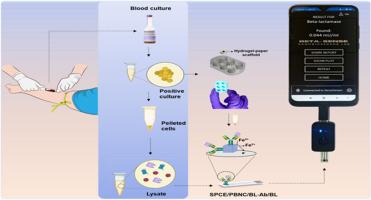
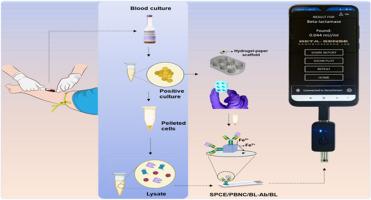
This study introduces an electrochemical immunostrip sensor for the rapid detection of β-lactamase (BL), an enzyme associated with drug resistance. Using a novel 3D hydrogel-paper scaffold, the sensor achieves a detection limit of 0.146 mU/ml and accurately detects BL-producing pathogens, including MRSA, from clinical samples with bacterial loads as low as 102 CFU/ml. The platform provides post culture detection results within 1 h, post antibiotic therapy monitoring within 4 h and demonstrates high specificity (∼100 %) by differentiating BL-producing strains from non-producing isolates.
Significance and novelty
This study introduces a new electrochemical smart immunostrip sensor integrated with a 3D hydrogel-paper scaffold for β-lactamase detection, which offers high sensitivity and specificity. Unlike conventional diagnostics, it enables user-friendly, rapid, cost-effective detection within 1 h post-blood culture and real-time antibiotic therapy monitoring in just 4 h, transforming clinically actionable point-of-care (POC) management of drug-resistant bloodstream infections.
期刊介绍:
Analytica Chimica Acta has an open access mirror journal Analytica Chimica Acta: X, sharing the same aims and scope, editorial team, submission system and rigorous peer review.
Analytica Chimica Acta provides a forum for the rapid publication of original research, and critical, comprehensive reviews dealing with all aspects of fundamental and applied modern analytical chemistry. The journal welcomes the submission of research papers which report studies concerning the development of new and significant analytical methodologies. In determining the suitability of submitted articles for publication, particular scrutiny will be placed on the degree of novelty and impact of the research and the extent to which it adds to the existing body of knowledge in analytical chemistry.




 京公网安备 11010802042870号
京ICP备2023020795号-1
京公网安备 11010802042870号
京ICP备2023020795号-1

 分享
分享
 求助内容:
求助内容: 应助结果提醒方式:
 扫码关注我们
