Steffen Amann, Falk Wagemann, Sebastian Buchinger, Christian Dietrich, Arne Wick, Amir Rahimi, Frank Schmidt-Döhl, Thomas A. Ternes
{"title":"硫酸盐对硬化水泥浆中基因毒性金属释放的影响","authors":"Steffen Amann, Falk Wagemann, Sebastian Buchinger, Christian Dietrich, Arne Wick, Amir Rahimi, Frank Schmidt-Döhl, Thomas A. Ternes","doi":"10.1016/j.jhazmat.2025.137990","DOIUrl":null,"url":null,"abstract":"We investigated the effects of environmentally relevant sulfate concentrations on the leaching behavior of certain metalloids in hardened cement pastes. In our study, different cement pastes made of Portland cement (CEM I), blast furnace slag cement (CEM III/A) and a sulfate-resistant cement (CEM I SR0) were cured for 28 days and leached with ultrapure water and with sulfate-containing water. The released concentrations of the most metals and metalloids were independent of the presence of environmentally relevant sulfate concentrations below 1<!-- --> <!-- -->µg/L or even below the limit of quantification (LOQ). However, the contact to sulfate-containing water led to an increased chromium release from CEM I, compared to leaching in ultrapure water. Under the same conditions an increased release of vanadium was observed from CEM III/A. A micronucleus test of the selected eluates revealed genotoxic effects which can be very likely attributed to the presence of vanadate. We were further able to connect the different leaching behavior of cement in sulfate-containing water compared to ultrapure water to changes of the specific surface area of the hardened cement pastes.","PeriodicalId":361,"journal":{"name":"Journal of Hazardous Materials","volume":"43 1","pages":""},"PeriodicalIF":10.6000,"publicationDate":"2025-03-18","publicationTypes":"Journal Article","fieldsOfStudy":null,"isOpenAccess":false,"openAccessPdf":"","citationCount":"0","resultStr":"{\"title\":\"Impact of sulfate on the release of genotoxic metals from hardened cement pastes\",\"authors\":\"Steffen Amann, Falk Wagemann, Sebastian Buchinger, Christian Dietrich, Arne Wick, Amir Rahimi, Frank Schmidt-Döhl, Thomas A. Ternes\",\"doi\":\"10.1016/j.jhazmat.2025.137990\",\"DOIUrl\":null,\"url\":null,\"abstract\":\"We investigated the effects of environmentally relevant sulfate concentrations on the leaching behavior of certain metalloids in hardened cement pastes. In our study, different cement pastes made of Portland cement (CEM I), blast furnace slag cement (CEM III/A) and a sulfate-resistant cement (CEM I SR0) were cured for 28 days and leached with ultrapure water and with sulfate-containing water. The released concentrations of the most metals and metalloids were independent of the presence of environmentally relevant sulfate concentrations below 1<!-- --> <!-- -->µg/L or even below the limit of quantification (LOQ). However, the contact to sulfate-containing water led to an increased chromium release from CEM I, compared to leaching in ultrapure water. Under the same conditions an increased release of vanadium was observed from CEM III/A. A micronucleus test of the selected eluates revealed genotoxic effects which can be very likely attributed to the presence of vanadate. We were further able to connect the different leaching behavior of cement in sulfate-containing water compared to ultrapure water to changes of the specific surface area of the hardened cement pastes.\",\"PeriodicalId\":361,\"journal\":{\"name\":\"Journal of Hazardous Materials\",\"volume\":\"43 1\",\"pages\":\"\"},\"PeriodicalIF\":10.6000,\"publicationDate\":\"2025-03-18\",\"publicationTypes\":\"Journal Article\",\"fieldsOfStudy\":null,\"isOpenAccess\":false,\"openAccessPdf\":\"\",\"citationCount\":\"0\",\"resultStr\":null,\"platform\":\"Semanticscholar\",\"paperid\":null,\"PeriodicalName\":\"Journal of Hazardous Materials\",\"FirstCategoryId\":\"93\",\"ListUrlMain\":\"https://doi.org/10.1016/j.jhazmat.2025.137990\",\"RegionNum\":1,\"RegionCategory\":\"环境科学与生态学\",\"ArticlePicture\":[],\"TitleCN\":null,\"AbstractTextCN\":null,\"PMCID\":null,\"EPubDate\":\"\",\"PubModel\":\"\",\"JCR\":\"Q1\",\"JCRName\":\"ENGINEERING, ENVIRONMENTAL\",\"Score\":null,\"Total\":0}","platform":"Semanticscholar","paperid":null,"PeriodicalName":"Journal of Hazardous Materials","FirstCategoryId":"93","ListUrlMain":"https://doi.org/10.1016/j.jhazmat.2025.137990","RegionNum":1,"RegionCategory":"环境科学与生态学","ArticlePicture":[],"TitleCN":null,"AbstractTextCN":null,"PMCID":null,"EPubDate":"","PubModel":"","JCR":"Q1","JCRName":"ENGINEERING, ENVIRONMENTAL","Score":null,"Total":0}
引用次数: 0
摘要
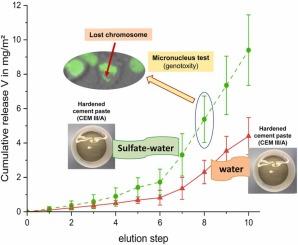
我们研究了环境相关硫酸盐浓度对硬化水泥浆中某些类金属浸出行为的影响。在我们的研究中,由波特兰水泥(CEM I)、高炉矿渣水泥(CEM III/A)和抗硫酸盐水泥(CEM I SR0)制成的不同水泥浆固化28天,用超纯水和含硫酸盐水浸出。大多数金属和类金属的释放浓度与环境相关硫酸盐浓度的存在无关,低于1µg/L甚至低于定量限(LOQ)。然而,与在超纯水中浸出相比,与含硫酸盐的水接触导致CEM I中铬的释放增加。在相同条件下,CEM III/A中钒的释放量增加。选定的洗脱液的微核试验显示遗传毒性作用,这可以很可能归因于钒酸盐的存在。我们进一步将水泥在含硫酸盐水中与超纯水中的不同浸出行为与硬化水泥浆比表面积的变化联系起来。
Impact of sulfate on the release of genotoxic metals from hardened cement pastes
We investigated the effects of environmentally relevant sulfate concentrations on the leaching behavior of certain metalloids in hardened cement pastes. In our study, different cement pastes made of Portland cement (CEM I), blast furnace slag cement (CEM III/A) and a sulfate-resistant cement (CEM I SR0) were cured for 28 days and leached with ultrapure water and with sulfate-containing water. The released concentrations of the most metals and metalloids were independent of the presence of environmentally relevant sulfate concentrations below 1 µg/L or even below the limit of quantification (LOQ). However, the contact to sulfate-containing water led to an increased chromium release from CEM I, compared to leaching in ultrapure water. Under the same conditions an increased release of vanadium was observed from CEM III/A. A micronucleus test of the selected eluates revealed genotoxic effects which can be very likely attributed to the presence of vanadate. We were further able to connect the different leaching behavior of cement in sulfate-containing water compared to ultrapure water to changes of the specific surface area of the hardened cement pastes.
期刊介绍:
The Journal of Hazardous Materials serves as a global platform for promoting cutting-edge research in the field of Environmental Science and Engineering. Our publication features a wide range of articles, including full-length research papers, review articles, and perspectives, with the aim of enhancing our understanding of the dangers and risks associated with various materials concerning public health and the environment. It is important to note that the term "environmental contaminants" refers specifically to substances that pose hazardous effects through contamination, while excluding those that do not have such impacts on the environment or human health. Moreover, we emphasize the distinction between wastes and hazardous materials in order to provide further clarity on the scope of the journal. We have a keen interest in exploring specific compounds and microbial agents that have adverse effects on the environment.




 京公网安备 11010802042870号
京ICP备2023020795号-1
京公网安备 11010802042870号
京ICP备2023020795号-1

 分享
分享
 求助内容:
求助内容: 应助结果提醒方式:
 扫码关注我们
