Bo Liu , Xujie Guo , Peng Hao , Linfei Qiu , Pengfei Zhang , Peng Li
{"title":"巴音壁盆地本八图铀矿床地质特征、成矿机制及成矿模式","authors":"Bo Liu , Xujie Guo , Peng Hao , Linfei Qiu , Pengfei Zhang , Peng Li","doi":"10.1016/j.oregeorev.2025.106552","DOIUrl":null,"url":null,"abstract":"<div><div>The Benbatu sandstone-type uranium deposit is in the southeast part of the Bayingobi basin. This study examines the geological characteristics, geochemistry, C-O isotopes, micro area scanning, and fluid inclusions in the ore-bearing sandstones of the Benbatu uranium deposit. It classifies the alteration mineral combination, defines the stage of uranium mineralization and establishes both the mineralization laws and the uranium mineralization model. The favorable stratigraphic structure of the Lower Cretaceous lower member of the Bayingobi Formation (falling stage system tract), 1st and 2nd members of the upper Bayingobi Formation (lowstand + transgressive system tract) laid a foundation for migrating the ore-forming fluids along faults and the inflation of supergene fluids into the basin. The uranium mineralization period can be divided into two stages. The early alteration mineral combinations primarily include hematite, calcite, automorphic dolomite, automorphic fluorapatite, and pyrite. The late stage of mineralization includes limonite, fine-grained dolomite, fine-grained fluorapatite, pyrite, calcite, and illite. The early ore-forming fluids with the faults mainly originated from the deep part of the basin, with temperatures of 105–165 ℃ and salinity levels of 5 %–9%. In<!--> <!-->the late stage of<!--> <!-->mineralization,<!--> <!-->the ore-forming fluid is<!--> <!-->primarily<!--> <!-->epigenetic fluid, with a temperature of 60–105 °C<!--> <!-->and a salinity of 1.5 %–5%.<!--> <!-->The temperature and salinity of the ore-forming fluids have the characteristic of gradually evolving from high to low from the early to late stages of mineralization. The ore has undergone significant water and rock interaction, where uranium, lithophile, chalcophile, and rare earth elements were substitute the elements in the fine crystalline fluorapatite or adsorbed on its surface by fine-crystalline fluorapatite during the mineralization process. The U content of ore is negatively correlated with SiO<sub>2</sub>, Al<sub>2</sub>O<sub>3</sub>, K<sub>2</sub>O, and NaO content and positively correlated with other elements (P, Sr, Ca, and Fe<sup>2+</sup>).</div></div>","PeriodicalId":19644,"journal":{"name":"Ore Geology Reviews","volume":"180 ","pages":"Article 106552"},"PeriodicalIF":4.3000,"publicationDate":"2025-05-01","publicationTypes":"Journal Article","fieldsOfStudy":null,"isOpenAccess":false,"openAccessPdf":"","citationCount":"0","resultStr":"{\"title\":\"Geological characteristics, mechanism, and metallogenic model of the Benbatu uranium deposit, Bayingobi basin, North China\",\"authors\":\"Bo Liu , Xujie Guo , Peng Hao , Linfei Qiu , Pengfei Zhang , Peng Li\",\"doi\":\"10.1016/j.oregeorev.2025.106552\",\"DOIUrl\":null,\"url\":null,\"abstract\":\"<div><div>The Benbatu sandstone-type uranium deposit is in the southeast part of the Bayingobi basin. This study examines the geological characteristics, geochemistry, C-O isotopes, micro area scanning, and fluid inclusions in the ore-bearing sandstones of the Benbatu uranium deposit. It classifies the alteration mineral combination, defines the stage of uranium mineralization and establishes both the mineralization laws and the uranium mineralization model. The favorable stratigraphic structure of the Lower Cretaceous lower member of the Bayingobi Formation (falling stage system tract), 1st and 2nd members of the upper Bayingobi Formation (lowstand + transgressive system tract) laid a foundation for migrating the ore-forming fluids along faults and the inflation of supergene fluids into the basin. The uranium mineralization period can be divided into two stages. The early alteration mineral combinations primarily include hematite, calcite, automorphic dolomite, automorphic fluorapatite, and pyrite. The late stage of mineralization includes limonite, fine-grained dolomite, fine-grained fluorapatite, pyrite, calcite, and illite. The early ore-forming fluids with the faults mainly originated from the deep part of the basin, with temperatures of 105–165 ℃ and salinity levels of 5 %–9%. In<!--> <!-->the late stage of<!--> <!-->mineralization,<!--> <!-->the ore-forming fluid is<!--> <!-->primarily<!--> <!-->epigenetic fluid, with a temperature of 60–105 °C<!--> <!-->and a salinity of 1.5 %–5%.<!--> <!-->The temperature and salinity of the ore-forming fluids have the characteristic of gradually evolving from high to low from the early to late stages of mineralization. The ore has undergone significant water and rock interaction, where uranium, lithophile, chalcophile, and rare earth elements were substitute the elements in the fine crystalline fluorapatite or adsorbed on its surface by fine-crystalline fluorapatite during the mineralization process. The U content of ore is negatively correlated with SiO<sub>2</sub>, Al<sub>2</sub>O<sub>3</sub>, K<sub>2</sub>O, and NaO content and positively correlated with other elements (P, Sr, Ca, and Fe<sup>2+</sup>).</div></div>\",\"PeriodicalId\":19644,\"journal\":{\"name\":\"Ore Geology Reviews\",\"volume\":\"180 \",\"pages\":\"Article 106552\"},\"PeriodicalIF\":4.3000,\"publicationDate\":\"2025-05-01\",\"publicationTypes\":\"Journal Article\",\"fieldsOfStudy\":null,\"isOpenAccess\":false,\"openAccessPdf\":\"\",\"citationCount\":\"0\",\"resultStr\":null,\"platform\":\"Semanticscholar\",\"paperid\":null,\"PeriodicalName\":\"Ore Geology Reviews\",\"FirstCategoryId\":\"89\",\"ListUrlMain\":\"https://www.sciencedirect.com/science/article/pii/S016913682500112X\",\"RegionNum\":2,\"RegionCategory\":\"地球科学\",\"ArticlePicture\":[],\"TitleCN\":null,\"AbstractTextCN\":null,\"PMCID\":null,\"EPubDate\":\"2025/3/13 0:00:00\",\"PubModel\":\"Epub\",\"JCR\":\"Q1\",\"JCRName\":\"GEOLOGY\",\"Score\":null,\"Total\":0}","platform":"Semanticscholar","paperid":null,"PeriodicalName":"Ore Geology Reviews","FirstCategoryId":"89","ListUrlMain":"https://www.sciencedirect.com/science/article/pii/S016913682500112X","RegionNum":2,"RegionCategory":"地球科学","ArticlePicture":[],"TitleCN":null,"AbstractTextCN":null,"PMCID":null,"EPubDate":"2025/3/13 0:00:00","PubModel":"Epub","JCR":"Q1","JCRName":"GEOLOGY","Score":null,"Total":0}
Geological characteristics, mechanism, and metallogenic model of the Benbatu uranium deposit, Bayingobi basin, North China
The Benbatu sandstone-type uranium deposit is in the southeast part of the Bayingobi basin. This study examines the geological characteristics, geochemistry, C-O isotopes, micro area scanning, and fluid inclusions in the ore-bearing sandstones of the Benbatu uranium deposit. It classifies the alteration mineral combination, defines the stage of uranium mineralization and establishes both the mineralization laws and the uranium mineralization model. The favorable stratigraphic structure of the Lower Cretaceous lower member of the Bayingobi Formation (falling stage system tract), 1st and 2nd members of the upper Bayingobi Formation (lowstand + transgressive system tract) laid a foundation for migrating the ore-forming fluids along faults and the inflation of supergene fluids into the basin. The uranium mineralization period can be divided into two stages. The early alteration mineral combinations primarily include hematite, calcite, automorphic dolomite, automorphic fluorapatite, and pyrite. The late stage of mineralization includes limonite, fine-grained dolomite, fine-grained fluorapatite, pyrite, calcite, and illite. The early ore-forming fluids with the faults mainly originated from the deep part of the basin, with temperatures of 105–165 ℃ and salinity levels of 5 %–9%. In the late stage of mineralization, the ore-forming fluid is primarily epigenetic fluid, with a temperature of 60–105 °C and a salinity of 1.5 %–5%. The temperature and salinity of the ore-forming fluids have the characteristic of gradually evolving from high to low from the early to late stages of mineralization. The ore has undergone significant water and rock interaction, where uranium, lithophile, chalcophile, and rare earth elements were substitute the elements in the fine crystalline fluorapatite or adsorbed on its surface by fine-crystalline fluorapatite during the mineralization process. The U content of ore is negatively correlated with SiO2, Al2O3, K2O, and NaO content and positively correlated with other elements (P, Sr, Ca, and Fe2+).
期刊介绍:
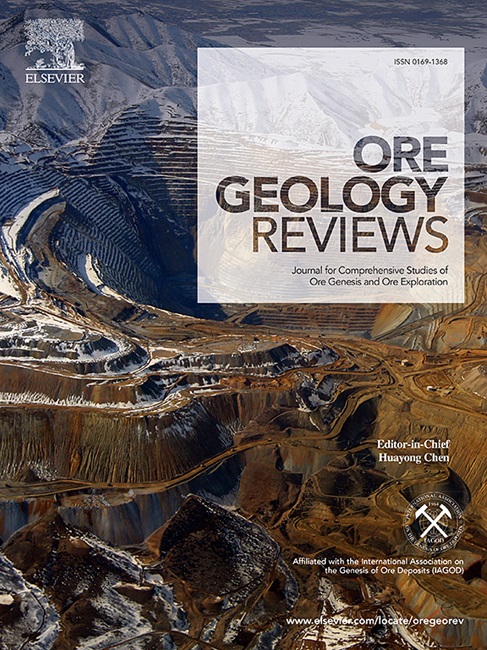
Ore Geology Reviews aims to familiarize all earth scientists with recent advances in a number of interconnected disciplines related to the study of, and search for, ore deposits. The reviews range from brief to longer contributions, but the journal preferentially publishes manuscripts that fill the niche between the commonly shorter journal articles and the comprehensive book coverages, and thus has a special appeal to many authors and readers.





 京公网安备 11010802042870号
京ICP备2023020795号-1
京公网安备 11010802042870号
京ICP备2023020795号-1

 分享
分享
 求助内容:
求助内容: 应助结果提醒方式:
 扫码关注我们
