{"title":"采用氧化铜纳米泡修饰玻碳电极的高灵敏度非酶电化学尿酸检测传感器","authors":"Arun Kumar Gunasekaran , Noel Nesakumar , Balu Mahendran Gunasekaran , Arockia Jayalatha Kulandaisamy , John Bosco Balaguru Rayappan","doi":"10.1016/j.apsusc.2025.162956","DOIUrl":null,"url":null,"abstract":"<div><div>A highly sensitive mediator-dependent electrochemical non-enzymatic biosensor for uric acid sensing was developed using copper oxide nanopebbles as an effective electrochemical sensing platform. For this purpose, CuO nanopebbles were prepared using a simple wet chemical route and employed to fabricate CuO-modified glass carbon (GC) electrode with chitosan as a binder to form GC/CuO/Chitosan. The electrochemical oxidation and reduction of uric acid at the electrode–electrolyte interface were facilitated by the electrocatalytic behaviour of CuO nanopebbles. Upon employing differential pulse voltammetry, the fabricated electrode detected uric acid over a broad linear range of 0.1–1.2 mM with a high sensitivity of 0.020 µA µM<sup>−1</sup> and a low limit of detection of 28.2 nM. The developed electrode offers high stability over a period of 14 days with good repeatability (1.61 % RSD) and reproducibility (2.27 % RSD). Finally, the fabricated electrode was tested to quantify the spiked uric acid concentrations in synthetic urine samples to analyse the practical ability of the electrode in real-world analysis, and the recovery results (99.4–100.7 %) were satisfactory. Taken together, the fabricated CuO nanopebble-based GC electrode could be used as a promising candidate for sensing and quantifying ultra-low levels of uric acid in urine samples.</div></div>","PeriodicalId":247,"journal":{"name":"Applied Surface Science","volume":"697 ","pages":"Article 162956"},"PeriodicalIF":6.9000,"publicationDate":"2025-07-15","publicationTypes":"Journal Article","fieldsOfStudy":null,"isOpenAccess":false,"openAccessPdf":"","citationCount":"0","resultStr":"{\"title\":\"Highly sensitive non-enzymatic electrochemical sensor for uric acid detection using copper oxide nanopebbles-modified glassy carbon electrode\",\"authors\":\"Arun Kumar Gunasekaran , Noel Nesakumar , Balu Mahendran Gunasekaran , Arockia Jayalatha Kulandaisamy , John Bosco Balaguru Rayappan\",\"doi\":\"10.1016/j.apsusc.2025.162956\",\"DOIUrl\":null,\"url\":null,\"abstract\":\"<div><div>A highly sensitive mediator-dependent electrochemical non-enzymatic biosensor for uric acid sensing was developed using copper oxide nanopebbles as an effective electrochemical sensing platform. For this purpose, CuO nanopebbles were prepared using a simple wet chemical route and employed to fabricate CuO-modified glass carbon (GC) electrode with chitosan as a binder to form GC/CuO/Chitosan. The electrochemical oxidation and reduction of uric acid at the electrode–electrolyte interface were facilitated by the electrocatalytic behaviour of CuO nanopebbles. Upon employing differential pulse voltammetry, the fabricated electrode detected uric acid over a broad linear range of 0.1–1.2 mM with a high sensitivity of 0.020 µA µM<sup>−1</sup> and a low limit of detection of 28.2 nM. The developed electrode offers high stability over a period of 14 days with good repeatability (1.61 % RSD) and reproducibility (2.27 % RSD). Finally, the fabricated electrode was tested to quantify the spiked uric acid concentrations in synthetic urine samples to analyse the practical ability of the electrode in real-world analysis, and the recovery results (99.4–100.7 %) were satisfactory. Taken together, the fabricated CuO nanopebble-based GC electrode could be used as a promising candidate for sensing and quantifying ultra-low levels of uric acid in urine samples.</div></div>\",\"PeriodicalId\":247,\"journal\":{\"name\":\"Applied Surface Science\",\"volume\":\"697 \",\"pages\":\"Article 162956\"},\"PeriodicalIF\":6.9000,\"publicationDate\":\"2025-07-15\",\"publicationTypes\":\"Journal Article\",\"fieldsOfStudy\":null,\"isOpenAccess\":false,\"openAccessPdf\":\"\",\"citationCount\":\"0\",\"resultStr\":null,\"platform\":\"Semanticscholar\",\"paperid\":null,\"PeriodicalName\":\"Applied Surface Science\",\"FirstCategoryId\":\"88\",\"ListUrlMain\":\"https://www.sciencedirect.com/science/article/pii/S0169433225006701\",\"RegionNum\":2,\"RegionCategory\":\"材料科学\",\"ArticlePicture\":[],\"TitleCN\":null,\"AbstractTextCN\":null,\"PMCID\":null,\"EPubDate\":\"2025/3/19 0:00:00\",\"PubModel\":\"Epub\",\"JCR\":\"Q2\",\"JCRName\":\"CHEMISTRY, PHYSICAL\",\"Score\":null,\"Total\":0}","platform":"Semanticscholar","paperid":null,"PeriodicalName":"Applied Surface Science","FirstCategoryId":"88","ListUrlMain":"https://www.sciencedirect.com/science/article/pii/S0169433225006701","RegionNum":2,"RegionCategory":"材料科学","ArticlePicture":[],"TitleCN":null,"AbstractTextCN":null,"PMCID":null,"EPubDate":"2025/3/19 0:00:00","PubModel":"Epub","JCR":"Q2","JCRName":"CHEMISTRY, PHYSICAL","Score":null,"Total":0}
Highly sensitive non-enzymatic electrochemical sensor for uric acid detection using copper oxide nanopebbles-modified glassy carbon electrode
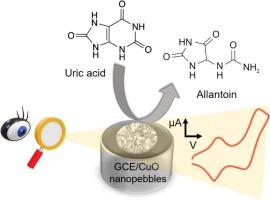
A highly sensitive mediator-dependent electrochemical non-enzymatic biosensor for uric acid sensing was developed using copper oxide nanopebbles as an effective electrochemical sensing platform. For this purpose, CuO nanopebbles were prepared using a simple wet chemical route and employed to fabricate CuO-modified glass carbon (GC) electrode with chitosan as a binder to form GC/CuO/Chitosan. The electrochemical oxidation and reduction of uric acid at the electrode–electrolyte interface were facilitated by the electrocatalytic behaviour of CuO nanopebbles. Upon employing differential pulse voltammetry, the fabricated electrode detected uric acid over a broad linear range of 0.1–1.2 mM with a high sensitivity of 0.020 µA µM−1 and a low limit of detection of 28.2 nM. The developed electrode offers high stability over a period of 14 days with good repeatability (1.61 % RSD) and reproducibility (2.27 % RSD). Finally, the fabricated electrode was tested to quantify the spiked uric acid concentrations in synthetic urine samples to analyse the practical ability of the electrode in real-world analysis, and the recovery results (99.4–100.7 %) were satisfactory. Taken together, the fabricated CuO nanopebble-based GC electrode could be used as a promising candidate for sensing and quantifying ultra-low levels of uric acid in urine samples.
期刊介绍:
Applied Surface Science covers topics contributing to a better understanding of surfaces, interfaces, nanostructures and their applications. The journal is concerned with scientific research on the atomic and molecular level of material properties determined with specific surface analytical techniques and/or computational methods, as well as the processing of such structures.





 京公网安备 11010802042870号
京ICP备2023020795号-1
京公网安备 11010802042870号
京ICP备2023020795号-1

 分享
分享
 求助内容:
求助内容: 应助结果提醒方式:
 扫码关注我们
