Tiancheng Xu, Yongmei Li, Xing Liu, Xue Yang, Zhejun Huang, Jianfeng Xing, Cuili Liang, Junyi Li, Yingchao Tan, Shengmin Zhang, Jiyan Qi, De Ye, Zhonghua Li, Jie Cao, Chaorong Tang, Kaiye Liu
{"title":"橡胶生物合成驱动橡胶颗粒的生物发生和发育,橡胶颗粒是橡胶生产细胞器","authors":"Tiancheng Xu, Yongmei Li, Xing Liu, Xue Yang, Zhejun Huang, Jianfeng Xing, Cuili Liang, Junyi Li, Yingchao Tan, Shengmin Zhang, Jiyan Qi, De Ye, Zhonghua Li, Jie Cao, Chaorong Tang, Kaiye Liu","doi":"10.1111/pbi.70052","DOIUrl":null,"url":null,"abstract":"<p>Rubber particles (RPs) are specialized organelles for the biosynthesis and storage of natural rubber in rubber-producing plants. However, the mechanisms underlying the biogenesis and development of RPs remain unclear. In this study, two latex-specific <i>cis</i>-prenyltransferases (CPTs), TkCPT1 and TkCPT2, were identified in <i>Taraxacum kok-saghyz</i>, with almost identical orthologues retained across other <i>Taraxacum</i> species. For the first time, <i>Tkcpt1</i> single and <i>Tkcpt1/2</i> double mutants were successfully generated using the CRISPR/Cas9 system. Rubber biosynthesis was significantly depressed in <i>Tkcpt1</i> mutants and completely blocked in <i>Tkcpt1/2</i> mutants. The absence of RPs in the <i>Tkcpt1/2</i> was confirmed using oil red O and Nile red staining, high-speed centrifugal stratification, cryo-SEM and TEM on fresh latex or laticifer cells. Transcriptomic and proteomic analyses revealed that, in the latex of <i>Tkcpt1/</i>2, rubber biosynthesis was blocked at the protein level, while metabolomic profiling indicated an enrichment of lipids and terpenoids. Furthermore, knockout of <i>TkCPTL1</i>, a latex-specific <i>CPT-like</i> gene that encodes a rubber transferase activator, resulted in outright disruption of rubber biosynthesis and RP ontogeny, a phenotype similar to that of <i>Tkcpt1/2</i> mutants. These findings indicate that rubber biosynthesis is a driving force for the biogenesis and development of RPs, providing new insights into rubber production mechanisms.</p>","PeriodicalId":221,"journal":{"name":"Plant Biotechnology Journal","volume":"23 6","pages":"2303-2316"},"PeriodicalIF":10.5000,"publicationDate":"2025-03-20","publicationTypes":"Journal Article","fieldsOfStudy":null,"isOpenAccess":false,"openAccessPdf":"https://onlinelibrary.wiley.com/doi/epdf/10.1111/pbi.70052","citationCount":"0","resultStr":"{\"title\":\"Rubber biosynthesis drives the biogenesis and development of rubber particles, the rubber-producing organelles\",\"authors\":\"Tiancheng Xu, Yongmei Li, Xing Liu, Xue Yang, Zhejun Huang, Jianfeng Xing, Cuili Liang, Junyi Li, Yingchao Tan, Shengmin Zhang, Jiyan Qi, De Ye, Zhonghua Li, Jie Cao, Chaorong Tang, Kaiye Liu\",\"doi\":\"10.1111/pbi.70052\",\"DOIUrl\":null,\"url\":null,\"abstract\":\"<p>Rubber particles (RPs) are specialized organelles for the biosynthesis and storage of natural rubber in rubber-producing plants. However, the mechanisms underlying the biogenesis and development of RPs remain unclear. In this study, two latex-specific <i>cis</i>-prenyltransferases (CPTs), TkCPT1 and TkCPT2, were identified in <i>Taraxacum kok-saghyz</i>, with almost identical orthologues retained across other <i>Taraxacum</i> species. For the first time, <i>Tkcpt1</i> single and <i>Tkcpt1/2</i> double mutants were successfully generated using the CRISPR/Cas9 system. Rubber biosynthesis was significantly depressed in <i>Tkcpt1</i> mutants and completely blocked in <i>Tkcpt1/2</i> mutants. The absence of RPs in the <i>Tkcpt1/2</i> was confirmed using oil red O and Nile red staining, high-speed centrifugal stratification, cryo-SEM and TEM on fresh latex or laticifer cells. Transcriptomic and proteomic analyses revealed that, in the latex of <i>Tkcpt1/</i>2, rubber biosynthesis was blocked at the protein level, while metabolomic profiling indicated an enrichment of lipids and terpenoids. Furthermore, knockout of <i>TkCPTL1</i>, a latex-specific <i>CPT-like</i> gene that encodes a rubber transferase activator, resulted in outright disruption of rubber biosynthesis and RP ontogeny, a phenotype similar to that of <i>Tkcpt1/2</i> mutants. These findings indicate that rubber biosynthesis is a driving force for the biogenesis and development of RPs, providing new insights into rubber production mechanisms.</p>\",\"PeriodicalId\":221,\"journal\":{\"name\":\"Plant Biotechnology Journal\",\"volume\":\"23 6\",\"pages\":\"2303-2316\"},\"PeriodicalIF\":10.5000,\"publicationDate\":\"2025-03-20\",\"publicationTypes\":\"Journal Article\",\"fieldsOfStudy\":null,\"isOpenAccess\":false,\"openAccessPdf\":\"https://onlinelibrary.wiley.com/doi/epdf/10.1111/pbi.70052\",\"citationCount\":\"0\",\"resultStr\":null,\"platform\":\"Semanticscholar\",\"paperid\":null,\"PeriodicalName\":\"Plant Biotechnology Journal\",\"FirstCategoryId\":\"5\",\"ListUrlMain\":\"https://onlinelibrary.wiley.com/doi/10.1111/pbi.70052\",\"RegionNum\":1,\"RegionCategory\":\"生物学\",\"ArticlePicture\":[],\"TitleCN\":null,\"AbstractTextCN\":null,\"PMCID\":null,\"EPubDate\":\"\",\"PubModel\":\"\",\"JCR\":\"Q1\",\"JCRName\":\"BIOTECHNOLOGY & APPLIED MICROBIOLOGY\",\"Score\":null,\"Total\":0}","platform":"Semanticscholar","paperid":null,"PeriodicalName":"Plant Biotechnology Journal","FirstCategoryId":"5","ListUrlMain":"https://onlinelibrary.wiley.com/doi/10.1111/pbi.70052","RegionNum":1,"RegionCategory":"生物学","ArticlePicture":[],"TitleCN":null,"AbstractTextCN":null,"PMCID":null,"EPubDate":"","PubModel":"","JCR":"Q1","JCRName":"BIOTECHNOLOGY & APPLIED MICROBIOLOGY","Score":null,"Total":0}
引用次数: 0
摘要
橡胶颗粒(RPs)是橡胶生产植物中用于天然橡胶生物合成和储存的专门细胞器。然而,RPs的生物发生和发展机制尚不清楚。在本研究中,在Taraxacum kk -saghyz中鉴定出两种乳胶特异性顺戊烯基转移酶(TkCPT1和TkCPT2),在其他Taraxacum物种中保留了几乎相同的同源物。首次使用CRISPR/Cas9系统成功生成Tkcpt1单突变体和Tkcpt1/2双突变体。橡胶生物合成在Tkcpt1突变体中被显著抑制,在Tkcpt1/2突变体中被完全阻断。利用油红O和尼罗红染色、高速离心分层、冷冻扫描电镜和透射电镜对新鲜乳胶细胞或乳汁管细胞进行分析,证实Tkcpt1/2中不存在RPs。转录组学和蛋白质组学分析显示,在Tkcpt1/2的乳胶中,橡胶的生物合成在蛋白质水平上被阻断,而代谢组学分析表明脂质和萜类物质富集。此外,敲除TkCPTL1(一种编码橡胶转移酶激活因子的乳胶特异性cpt样基因)会导致橡胶生物合成和RP个体发育完全中断,其表型与Tkcpt1/2突变体相似。这些发现表明,橡胶生物合成是RPs生物发生和发育的驱动力,为橡胶生产机制的研究提供了新的见解。
Rubber biosynthesis drives the biogenesis and development of rubber particles, the rubber-producing organelles
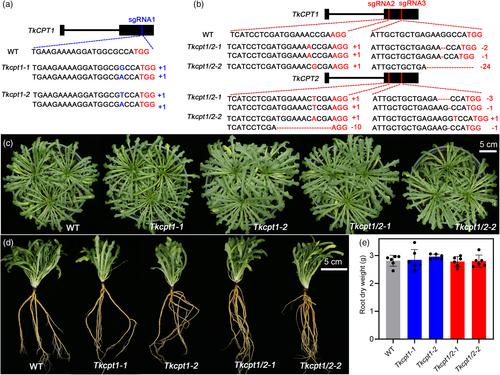
Rubber particles (RPs) are specialized organelles for the biosynthesis and storage of natural rubber in rubber-producing plants. However, the mechanisms underlying the biogenesis and development of RPs remain unclear. In this study, two latex-specific cis-prenyltransferases (CPTs), TkCPT1 and TkCPT2, were identified in Taraxacum kok-saghyz, with almost identical orthologues retained across other Taraxacum species. For the first time, Tkcpt1 single and Tkcpt1/2 double mutants were successfully generated using the CRISPR/Cas9 system. Rubber biosynthesis was significantly depressed in Tkcpt1 mutants and completely blocked in Tkcpt1/2 mutants. The absence of RPs in the Tkcpt1/2 was confirmed using oil red O and Nile red staining, high-speed centrifugal stratification, cryo-SEM and TEM on fresh latex or laticifer cells. Transcriptomic and proteomic analyses revealed that, in the latex of Tkcpt1/2, rubber biosynthesis was blocked at the protein level, while metabolomic profiling indicated an enrichment of lipids and terpenoids. Furthermore, knockout of TkCPTL1, a latex-specific CPT-like gene that encodes a rubber transferase activator, resulted in outright disruption of rubber biosynthesis and RP ontogeny, a phenotype similar to that of Tkcpt1/2 mutants. These findings indicate that rubber biosynthesis is a driving force for the biogenesis and development of RPs, providing new insights into rubber production mechanisms.
期刊介绍:
Plant Biotechnology Journal aspires to publish original research and insightful reviews of high impact, authored by prominent researchers in applied plant science. The journal places a special emphasis on molecular plant sciences and their practical applications through plant biotechnology. Our goal is to establish a platform for showcasing significant advances in the field, encompassing curiosity-driven studies with potential applications, strategic research in plant biotechnology, scientific analysis of crucial issues for the beneficial utilization of plant sciences, and assessments of the performance of plant biotechnology products in practical applications.




 京公网安备 11010802042870号
京ICP备2023020795号-1
京公网安备 11010802042870号
京ICP备2023020795号-1

 分享
分享
 求助内容:
求助内容: 应助结果提醒方式:
 扫码关注我们
