Xinxing Wan, Linghao Wang, Md Asaduzzaman Khan, Lin Peng, Xiaoying Sun, Xuan Yi, Zhouqi Wang, Ke Chen
{"title":"NAT10 介导的 KLF9 mRNA 中的 N4-乙酰胞嘧啶修饰可促进脂肪生成","authors":"Xinxing Wan, Linghao Wang, Md Asaduzzaman Khan, Lin Peng, Xiaoying Sun, Xuan Yi, Zhouqi Wang, Ke Chen","doi":"10.1038/s41418-025-01483-x","DOIUrl":null,"url":null,"abstract":"Dysfunctional adipogenesis is a major contributor of obesity. N-acetyltransferase 10 (NAT10) plays a crucial role in regulating N4-acetylcysteine (ac4C) modification in tRNA, 18SrRNA, and mRNA. As the sole “writer” in the ac4C modification process, NAT10 enhances mRNA stability and translation efficiency. There are few reports on the relationship between NAT10 and adipogenesis, as well as obesity. Our study revealed a significant upregulation of NAT10 in adipose tissues of obese individuals and high-fat diet-fed mice. Furthermore, our findings revealed that the overexpression of NAT10 promotes adipogenesis, while its silencing inhibits adipogenesis in both human adipose tissue-derived stem cells (hADSCs) and 3T3-L1 cells. These results indicate the intimate relationship between NAT10 and obesity. After silencing mouse NAT10 (mNAT10), we identified 30 genes that exhibited both hypo-ac4C modification and downregulation in their expression, utilizing a combined approach of acRIP-sequencing (acRIP-seq) and RNA-sequencing (RNA-seq). Among these genes, we validated KLF9 as a target of NAT10 through acRIP-PCR. KLF9, a pivotal transcription factor that positively regulates adipogenesis. Our findings showed that NAT10 enhances the stability of KLF9 mRNA and further activates the CEBPA/B-PPARG pathway. Furthermore, a dual-luciferase reporter assay demonstrated that NAT10 can bind to three motifs of mouse KLF9 and one motif of human KLF9. In vivo studies revealed that adipose tissue-targeted mouse AAV-NAT10 (AAV-shRNA-mNAT10) inhibits adipose tissue expansion in mice. Additionally, Remodelin, a specific NAT10 inhibitor, significantly reduced body weight, adipocyte size, and adipose tissue expansion in high-fat diet-fed mice by inhibiting KLF9 mRNA ac4C modification. These findings provide novel insights and experimental evidence of the prevention and treatment of obesity, highlighting NAT10 and its downstream targets as potential therapeutic targets.","PeriodicalId":9731,"journal":{"name":"Cell Death and Differentiation","volume":"32 9","pages":"1613-1629"},"PeriodicalIF":13.6000,"publicationDate":"2025-03-23","publicationTypes":"Journal Article","fieldsOfStudy":null,"isOpenAccess":false,"openAccessPdf":"https://www.nature.comhttps://www.nature.com/articles/s41418-025-01483-x.pdf","citationCount":"0","resultStr":"{\"title\":\"NAT10-mediated N4-acetylcytidine modification in KLF9 mRNA promotes adipogenesis\",\"authors\":\"Xinxing Wan, Linghao Wang, Md Asaduzzaman Khan, Lin Peng, Xiaoying Sun, Xuan Yi, Zhouqi Wang, Ke Chen\",\"doi\":\"10.1038/s41418-025-01483-x\",\"DOIUrl\":null,\"url\":null,\"abstract\":\"Dysfunctional adipogenesis is a major contributor of obesity. N-acetyltransferase 10 (NAT10) plays a crucial role in regulating N4-acetylcysteine (ac4C) modification in tRNA, 18SrRNA, and mRNA. As the sole “writer” in the ac4C modification process, NAT10 enhances mRNA stability and translation efficiency. There are few reports on the relationship between NAT10 and adipogenesis, as well as obesity. Our study revealed a significant upregulation of NAT10 in adipose tissues of obese individuals and high-fat diet-fed mice. Furthermore, our findings revealed that the overexpression of NAT10 promotes adipogenesis, while its silencing inhibits adipogenesis in both human adipose tissue-derived stem cells (hADSCs) and 3T3-L1 cells. These results indicate the intimate relationship between NAT10 and obesity. After silencing mouse NAT10 (mNAT10), we identified 30 genes that exhibited both hypo-ac4C modification and downregulation in their expression, utilizing a combined approach of acRIP-sequencing (acRIP-seq) and RNA-sequencing (RNA-seq). Among these genes, we validated KLF9 as a target of NAT10 through acRIP-PCR. KLF9, a pivotal transcription factor that positively regulates adipogenesis. Our findings showed that NAT10 enhances the stability of KLF9 mRNA and further activates the CEBPA/B-PPARG pathway. Furthermore, a dual-luciferase reporter assay demonstrated that NAT10 can bind to three motifs of mouse KLF9 and one motif of human KLF9. In vivo studies revealed that adipose tissue-targeted mouse AAV-NAT10 (AAV-shRNA-mNAT10) inhibits adipose tissue expansion in mice. Additionally, Remodelin, a specific NAT10 inhibitor, significantly reduced body weight, adipocyte size, and adipose tissue expansion in high-fat diet-fed mice by inhibiting KLF9 mRNA ac4C modification. These findings provide novel insights and experimental evidence of the prevention and treatment of obesity, highlighting NAT10 and its downstream targets as potential therapeutic targets.\",\"PeriodicalId\":9731,\"journal\":{\"name\":\"Cell Death and Differentiation\",\"volume\":\"32 9\",\"pages\":\"1613-1629\"},\"PeriodicalIF\":13.6000,\"publicationDate\":\"2025-03-23\",\"publicationTypes\":\"Journal Article\",\"fieldsOfStudy\":null,\"isOpenAccess\":false,\"openAccessPdf\":\"https://www.nature.comhttps://www.nature.com/articles/s41418-025-01483-x.pdf\",\"citationCount\":\"0\",\"resultStr\":null,\"platform\":\"Semanticscholar\",\"paperid\":null,\"PeriodicalName\":\"Cell Death and Differentiation\",\"FirstCategoryId\":\"99\",\"ListUrlMain\":\"https://www.nature.com/articles/s41418-025-01483-x\",\"RegionNum\":1,\"RegionCategory\":\"生物学\",\"ArticlePicture\":[],\"TitleCN\":null,\"AbstractTextCN\":null,\"PMCID\":null,\"EPubDate\":\"\",\"PubModel\":\"\",\"JCR\":\"Q1\",\"JCRName\":\"BIOCHEMISTRY & MOLECULAR BIOLOGY\",\"Score\":null,\"Total\":0}","platform":"Semanticscholar","paperid":null,"PeriodicalName":"Cell Death and Differentiation","FirstCategoryId":"99","ListUrlMain":"https://www.nature.com/articles/s41418-025-01483-x","RegionNum":1,"RegionCategory":"生物学","ArticlePicture":[],"TitleCN":null,"AbstractTextCN":null,"PMCID":null,"EPubDate":"","PubModel":"","JCR":"Q1","JCRName":"BIOCHEMISTRY & MOLECULAR BIOLOGY","Score":null,"Total":0}
NAT10-mediated N4-acetylcytidine modification in KLF9 mRNA promotes adipogenesis
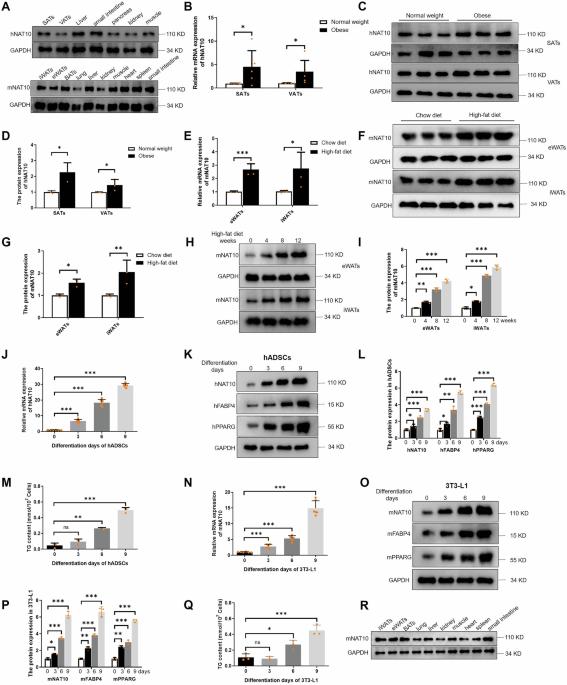
Dysfunctional adipogenesis is a major contributor of obesity. N-acetyltransferase 10 (NAT10) plays a crucial role in regulating N4-acetylcysteine (ac4C) modification in tRNA, 18SrRNA, and mRNA. As the sole “writer” in the ac4C modification process, NAT10 enhances mRNA stability and translation efficiency. There are few reports on the relationship between NAT10 and adipogenesis, as well as obesity. Our study revealed a significant upregulation of NAT10 in adipose tissues of obese individuals and high-fat diet-fed mice. Furthermore, our findings revealed that the overexpression of NAT10 promotes adipogenesis, while its silencing inhibits adipogenesis in both human adipose tissue-derived stem cells (hADSCs) and 3T3-L1 cells. These results indicate the intimate relationship between NAT10 and obesity. After silencing mouse NAT10 (mNAT10), we identified 30 genes that exhibited both hypo-ac4C modification and downregulation in their expression, utilizing a combined approach of acRIP-sequencing (acRIP-seq) and RNA-sequencing (RNA-seq). Among these genes, we validated KLF9 as a target of NAT10 through acRIP-PCR. KLF9, a pivotal transcription factor that positively regulates adipogenesis. Our findings showed that NAT10 enhances the stability of KLF9 mRNA and further activates the CEBPA/B-PPARG pathway. Furthermore, a dual-luciferase reporter assay demonstrated that NAT10 can bind to three motifs of mouse KLF9 and one motif of human KLF9. In vivo studies revealed that adipose tissue-targeted mouse AAV-NAT10 (AAV-shRNA-mNAT10) inhibits adipose tissue expansion in mice. Additionally, Remodelin, a specific NAT10 inhibitor, significantly reduced body weight, adipocyte size, and adipose tissue expansion in high-fat diet-fed mice by inhibiting KLF9 mRNA ac4C modification. These findings provide novel insights and experimental evidence of the prevention and treatment of obesity, highlighting NAT10 and its downstream targets as potential therapeutic targets.
期刊介绍:
Mission, vision and values of Cell Death & Differentiation:
To devote itself to scientific excellence in the field of cell biology, molecular biology, and biochemistry of cell death and disease.
To provide a unified forum for scientists and clinical researchers
It is committed to the rapid publication of high quality original papers relating to these subjects, together with topical, usually solicited, reviews, meeting reports, editorial correspondence and occasional commentaries on controversial and scientifically informative issues.





 京公网安备 11010802042870号
京ICP备2023020795号-1
京公网安备 11010802042870号
京ICP备2023020795号-1

 分享
分享
 求助内容:
求助内容: 应助结果提醒方式:
 扫码关注我们
