{"title":"通过糖的棱镜展示的多方面营养科学:儿童和青少年糖摄入量及其与生活质量的关系的范围审查。","authors":"Stefania Noerman, Ute Nöthlings, Danijela Ristić-Medić, Bryndís Eva Birgisdóttir, Inge Tetens, Marjukka Kolehmainen","doi":"10.1007/s00394-025-03648-3","DOIUrl":null,"url":null,"abstract":"<p><strong>Background: </strong>To strengthen the scientific evidence linking dietary sugar consumption with health outcomes, it's essential to look beyond the usual focus on non-communicable diseases (NCDs) and tooth decay. We thus hypothesize that considering other dimensions of health beyond physical health will meaningfully complement the evidence and expand our understanding of the relationship between nutrition and health.</p><p><strong>Purpose: </strong>The aim of this scoping review was to explore the scientific evidence of an association between dietary sugar intake and quality of life (QoL) among healthy children and adolescents.</p><p><strong>Methods: </strong>We performed a literature search in three databases (i.e., PubMed, Scopus, and Web of Science). The search included all types of studies assessing dietary sugar intake in association with QoL, in children and adolescents published in English between January 2001 and January 2023.</p><p><strong>Results: </strong>Twenty-one full-text eligible papers were included in this review: one intervention, two prospective cohort studies, and 18 cross-sectional studies. The number of participants ranged from 25 to 65,000 and age of the participants ranged from 4 to 19 years. The studies differed considerably in exposure and outcome measures. For further qualitative analyses, the studies were categorized into studies related to different dimensions of QoL: food security (n = 4), sleep-related outcomes (n = 5), oral (n = 3) and (mental) health-related QoL (n = 9). Altogether, one study reported a null while the remaining 20 studies found adverse associations between intake of sugar, sugar-sweetened beverages (SSB), or sweets and outcome measures of QoL.</p><p><strong>Conclusion: </strong>Through this scoping review, a number of scientific studies have revealed an association between sugar intake among children and adolescents and health-related QoL. The findings underscore a negative association. Our review emphasizes the crucial imperative of embracing a broader spectrum of health dimensions to gain a more wholistic understanding of nutrition, especially in collecting science-based evidence for the development of health policies, including dietary guidelines.</p>","PeriodicalId":12030,"journal":{"name":"European Journal of Nutrition","volume":"64 3","pages":"137"},"PeriodicalIF":4.3000,"publicationDate":"2025-03-24","publicationTypes":"Journal Article","fieldsOfStudy":null,"isOpenAccess":false,"openAccessPdf":"https://www.ncbi.nlm.nih.gov/pmc/articles/PMC11933232/pdf/","citationCount":"0","resultStr":"{\"title\":\"Multi-faceted nutritional science demonstrated through the prism of sugar: a scoping review on sugar intake and association with quality of life in children and adolescents.\",\"authors\":\"Stefania Noerman, Ute Nöthlings, Danijela Ristić-Medić, Bryndís Eva Birgisdóttir, Inge Tetens, Marjukka Kolehmainen\",\"doi\":\"10.1007/s00394-025-03648-3\",\"DOIUrl\":null,\"url\":null,\"abstract\":\"<p><strong>Background: </strong>To strengthen the scientific evidence linking dietary sugar consumption with health outcomes, it's essential to look beyond the usual focus on non-communicable diseases (NCDs) and tooth decay. We thus hypothesize that considering other dimensions of health beyond physical health will meaningfully complement the evidence and expand our understanding of the relationship between nutrition and health.</p><p><strong>Purpose: </strong>The aim of this scoping review was to explore the scientific evidence of an association between dietary sugar intake and quality of life (QoL) among healthy children and adolescents.</p><p><strong>Methods: </strong>We performed a literature search in three databases (i.e., PubMed, Scopus, and Web of Science). The search included all types of studies assessing dietary sugar intake in association with QoL, in children and adolescents published in English between January 2001 and January 2023.</p><p><strong>Results: </strong>Twenty-one full-text eligible papers were included in this review: one intervention, two prospective cohort studies, and 18 cross-sectional studies. The number of participants ranged from 25 to 65,000 and age of the participants ranged from 4 to 19 years. The studies differed considerably in exposure and outcome measures. For further qualitative analyses, the studies were categorized into studies related to different dimensions of QoL: food security (n = 4), sleep-related outcomes (n = 5), oral (n = 3) and (mental) health-related QoL (n = 9). Altogether, one study reported a null while the remaining 20 studies found adverse associations between intake of sugar, sugar-sweetened beverages (SSB), or sweets and outcome measures of QoL.</p><p><strong>Conclusion: </strong>Through this scoping review, a number of scientific studies have revealed an association between sugar intake among children and adolescents and health-related QoL. The findings underscore a negative association. Our review emphasizes the crucial imperative of embracing a broader spectrum of health dimensions to gain a more wholistic understanding of nutrition, especially in collecting science-based evidence for the development of health policies, including dietary guidelines.</p>\",\"PeriodicalId\":12030,\"journal\":{\"name\":\"European Journal of Nutrition\",\"volume\":\"64 3\",\"pages\":\"137\"},\"PeriodicalIF\":4.3000,\"publicationDate\":\"2025-03-24\",\"publicationTypes\":\"Journal Article\",\"fieldsOfStudy\":null,\"isOpenAccess\":false,\"openAccessPdf\":\"https://www.ncbi.nlm.nih.gov/pmc/articles/PMC11933232/pdf/\",\"citationCount\":\"0\",\"resultStr\":null,\"platform\":\"Semanticscholar\",\"paperid\":null,\"PeriodicalName\":\"European Journal of Nutrition\",\"FirstCategoryId\":\"3\",\"ListUrlMain\":\"https://doi.org/10.1007/s00394-025-03648-3\",\"RegionNum\":2,\"RegionCategory\":\"医学\",\"ArticlePicture\":[],\"TitleCN\":null,\"AbstractTextCN\":null,\"PMCID\":null,\"EPubDate\":\"\",\"PubModel\":\"\",\"JCR\":\"Q2\",\"JCRName\":\"NUTRITION & DIETETICS\",\"Score\":null,\"Total\":0}","platform":"Semanticscholar","paperid":null,"PeriodicalName":"European Journal of Nutrition","FirstCategoryId":"3","ListUrlMain":"https://doi.org/10.1007/s00394-025-03648-3","RegionNum":2,"RegionCategory":"医学","ArticlePicture":[],"TitleCN":null,"AbstractTextCN":null,"PMCID":null,"EPubDate":"","PubModel":"","JCR":"Q2","JCRName":"NUTRITION & DIETETICS","Score":null,"Total":0}
Multi-faceted nutritional science demonstrated through the prism of sugar: a scoping review on sugar intake and association with quality of life in children and adolescents.
Background: To strengthen the scientific evidence linking dietary sugar consumption with health outcomes, it's essential to look beyond the usual focus on non-communicable diseases (NCDs) and tooth decay. We thus hypothesize that considering other dimensions of health beyond physical health will meaningfully complement the evidence and expand our understanding of the relationship between nutrition and health.
Purpose: The aim of this scoping review was to explore the scientific evidence of an association between dietary sugar intake and quality of life (QoL) among healthy children and adolescents.
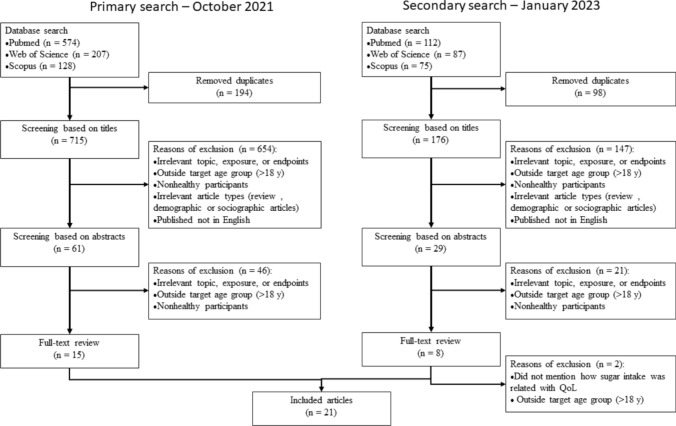
Methods: We performed a literature search in three databases (i.e., PubMed, Scopus, and Web of Science). The search included all types of studies assessing dietary sugar intake in association with QoL, in children and adolescents published in English between January 2001 and January 2023.
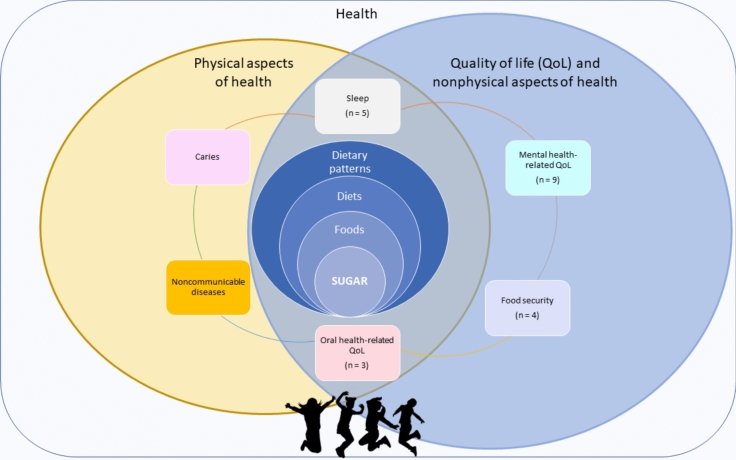
Results: Twenty-one full-text eligible papers were included in this review: one intervention, two prospective cohort studies, and 18 cross-sectional studies. The number of participants ranged from 25 to 65,000 and age of the participants ranged from 4 to 19 years. The studies differed considerably in exposure and outcome measures. For further qualitative analyses, the studies were categorized into studies related to different dimensions of QoL: food security (n = 4), sleep-related outcomes (n = 5), oral (n = 3) and (mental) health-related QoL (n = 9). Altogether, one study reported a null while the remaining 20 studies found adverse associations between intake of sugar, sugar-sweetened beverages (SSB), or sweets and outcome measures of QoL.
Conclusion: Through this scoping review, a number of scientific studies have revealed an association between sugar intake among children and adolescents and health-related QoL. The findings underscore a negative association. Our review emphasizes the crucial imperative of embracing a broader spectrum of health dimensions to gain a more wholistic understanding of nutrition, especially in collecting science-based evidence for the development of health policies, including dietary guidelines.
期刊介绍:
The European Journal of Nutrition publishes original papers, reviews, and short communications in the nutritional sciences. The manuscripts submitted to the European Journal of Nutrition should have their major focus on the impact of nutrients and non-nutrients on
immunology and inflammation,
gene expression,
metabolism,
chronic diseases, or
carcinogenesis,
or a major focus on
epidemiology, including intervention studies with healthy subjects and with patients,
biofunctionality of food and food components, or
the impact of diet on the environment.




 京公网安备 11010802042870号
京ICP备2023020795号-1
京公网安备 11010802042870号
京ICP备2023020795号-1

 分享
分享
 求助内容:
求助内容: 应助结果提醒方式:
 扫码关注我们
