Ryan T Demmer, Chaoqi Wu, John S Kim, Yifei Sun, Pallavi Balte, Mary Cushman, Rebekah Boyle, Russell P Tracy, Linda M Styer, Taison D Bell, Michaela R Anderson, Norrina B Allen, Pamela J Schreiner, Russell Bowler, David A Schwartz, Joyce S Lee, Vanessa Xanthakis, Jean M Rock, Rachel Bievenue, Amber Pirzada, Margaret Doyle, Elizabeth A Regan, Barry J Make, Alka M Kanaya, Namratha R Kandula, Sally E Wenzel, Josef Coresh, Carmen R Isasi, Laura M Raffield, Mitchell S V Elkind, Virginia J Howard, Victor E Ortega, Prescott Woodruff, Shelley A Cole, Joel M Henderson, Nicholas J Mantis, Elizabeth C Oelsner
{"title":"先前感染的美国成年人中与SARS-CoV-2抗核衣壳抗体反应相关的人口统计学和临床因素:C4R研究","authors":"Ryan T Demmer, Chaoqi Wu, John S Kim, Yifei Sun, Pallavi Balte, Mary Cushman, Rebekah Boyle, Russell P Tracy, Linda M Styer, Taison D Bell, Michaela R Anderson, Norrina B Allen, Pamela J Schreiner, Russell Bowler, David A Schwartz, Joyce S Lee, Vanessa Xanthakis, Jean M Rock, Rachel Bievenue, Amber Pirzada, Margaret Doyle, Elizabeth A Regan, Barry J Make, Alka M Kanaya, Namratha R Kandula, Sally E Wenzel, Josef Coresh, Carmen R Isasi, Laura M Raffield, Mitchell S V Elkind, Virginia J Howard, Victor E Ortega, Prescott Woodruff, Shelley A Cole, Joel M Henderson, Nicholas J Mantis, Elizabeth C Oelsner","doi":"10.1093/ofid/ofaf123","DOIUrl":null,"url":null,"abstract":"<p><p>Despite the availability of effective vaccines and a recent decrease in annual deaths, COVID-19 remains a leading cause of death. Serological studies provide insights into host immunobiology of adaptive immune response to infection, which holds promise for identifying high-risk individuals for adverse COVID-19 outcomes. We investigated correlates of anti-nucleocapsid antibody responses following SARS-CoV-2 infection in a US population-based meta-cohort of adults participating in longstanding National Institutes of Health-funded cohort studies. Anti-nucleocapsid antibodies were measured from dried blood spots collected between February 2021 and February 2023. Among 1419 Collaborative Cohort of Cohorts for COVID-19 Research participants with prior SARS-CoV-2 infection, the mean age (standard deviation) was 65.8 (12.1), 61% were women, and 42.8% self-reported membership in a race/ethnicity minority group. The proportion of participants reactive to nucleocapsid peaked at 69% by 4 months after infection and waned to only 44% ≥12 months after infection. Higher anti-nucleocapsid antibody response was associated with older age, Hispanic or American Indian Alaskan Native (vs White) race/ethnicity, lower income, lower education, former smoking, and higher anti-spike antibody levels. Asian race (vs White) and vaccination (even after infection) were associated with lower nucleocapsid reactivity. Neither vaccine manufacturer nor common cardiometabolic comorbidities were not associated with anti-nucleocapsid response. These findings inform the underlying immunobiology of adaptive immune response to infection, as well as the potential utility of anti-nucleocapsid antibody response for clinical practice and COVID-19 serosurveillance.</p>","PeriodicalId":19517,"journal":{"name":"Open Forum Infectious Diseases","volume":"12 3","pages":"ofaf123"},"PeriodicalIF":3.8000,"publicationDate":"2025-03-20","publicationTypes":"Journal Article","fieldsOfStudy":null,"isOpenAccess":false,"openAccessPdf":"https://www.ncbi.nlm.nih.gov/pmc/articles/PMC11927777/pdf/","citationCount":"0","resultStr":"{\"title\":\"Demographic and Clinical Factors Associated With SARS-CoV-2 Anti-Nucleocapsid Antibody Response Among Previously Infected US Adults: The C4R Study.\",\"authors\":\"Ryan T Demmer, Chaoqi Wu, John S Kim, Yifei Sun, Pallavi Balte, Mary Cushman, Rebekah Boyle, Russell P Tracy, Linda M Styer, Taison D Bell, Michaela R Anderson, Norrina B Allen, Pamela J Schreiner, Russell Bowler, David A Schwartz, Joyce S Lee, Vanessa Xanthakis, Jean M Rock, Rachel Bievenue, Amber Pirzada, Margaret Doyle, Elizabeth A Regan, Barry J Make, Alka M Kanaya, Namratha R Kandula, Sally E Wenzel, Josef Coresh, Carmen R Isasi, Laura M Raffield, Mitchell S V Elkind, Virginia J Howard, Victor E Ortega, Prescott Woodruff, Shelley A Cole, Joel M Henderson, Nicholas J Mantis, Elizabeth C Oelsner\",\"doi\":\"10.1093/ofid/ofaf123\",\"DOIUrl\":null,\"url\":null,\"abstract\":\"<p><p>Despite the availability of effective vaccines and a recent decrease in annual deaths, COVID-19 remains a leading cause of death. Serological studies provide insights into host immunobiology of adaptive immune response to infection, which holds promise for identifying high-risk individuals for adverse COVID-19 outcomes. We investigated correlates of anti-nucleocapsid antibody responses following SARS-CoV-2 infection in a US population-based meta-cohort of adults participating in longstanding National Institutes of Health-funded cohort studies. Anti-nucleocapsid antibodies were measured from dried blood spots collected between February 2021 and February 2023. Among 1419 Collaborative Cohort of Cohorts for COVID-19 Research participants with prior SARS-CoV-2 infection, the mean age (standard deviation) was 65.8 (12.1), 61% were women, and 42.8% self-reported membership in a race/ethnicity minority group. The proportion of participants reactive to nucleocapsid peaked at 69% by 4 months after infection and waned to only 44% ≥12 months after infection. Higher anti-nucleocapsid antibody response was associated with older age, Hispanic or American Indian Alaskan Native (vs White) race/ethnicity, lower income, lower education, former smoking, and higher anti-spike antibody levels. Asian race (vs White) and vaccination (even after infection) were associated with lower nucleocapsid reactivity. Neither vaccine manufacturer nor common cardiometabolic comorbidities were not associated with anti-nucleocapsid response. These findings inform the underlying immunobiology of adaptive immune response to infection, as well as the potential utility of anti-nucleocapsid antibody response for clinical practice and COVID-19 serosurveillance.</p>\",\"PeriodicalId\":19517,\"journal\":{\"name\":\"Open Forum Infectious Diseases\",\"volume\":\"12 3\",\"pages\":\"ofaf123\"},\"PeriodicalIF\":3.8000,\"publicationDate\":\"2025-03-20\",\"publicationTypes\":\"Journal Article\",\"fieldsOfStudy\":null,\"isOpenAccess\":false,\"openAccessPdf\":\"https://www.ncbi.nlm.nih.gov/pmc/articles/PMC11927777/pdf/\",\"citationCount\":\"0\",\"resultStr\":null,\"platform\":\"Semanticscholar\",\"paperid\":null,\"PeriodicalName\":\"Open Forum Infectious Diseases\",\"FirstCategoryId\":\"3\",\"ListUrlMain\":\"https://doi.org/10.1093/ofid/ofaf123\",\"RegionNum\":4,\"RegionCategory\":\"医学\",\"ArticlePicture\":[],\"TitleCN\":null,\"AbstractTextCN\":null,\"PMCID\":null,\"EPubDate\":\"2025/3/1 0:00:00\",\"PubModel\":\"eCollection\",\"JCR\":\"Q2\",\"JCRName\":\"IMMUNOLOGY\",\"Score\":null,\"Total\":0}","platform":"Semanticscholar","paperid":null,"PeriodicalName":"Open Forum Infectious Diseases","FirstCategoryId":"3","ListUrlMain":"https://doi.org/10.1093/ofid/ofaf123","RegionNum":4,"RegionCategory":"医学","ArticlePicture":[],"TitleCN":null,"AbstractTextCN":null,"PMCID":null,"EPubDate":"2025/3/1 0:00:00","PubModel":"eCollection","JCR":"Q2","JCRName":"IMMUNOLOGY","Score":null,"Total":0}
Demographic and Clinical Factors Associated With SARS-CoV-2 Anti-Nucleocapsid Antibody Response Among Previously Infected US Adults: The C4R Study.
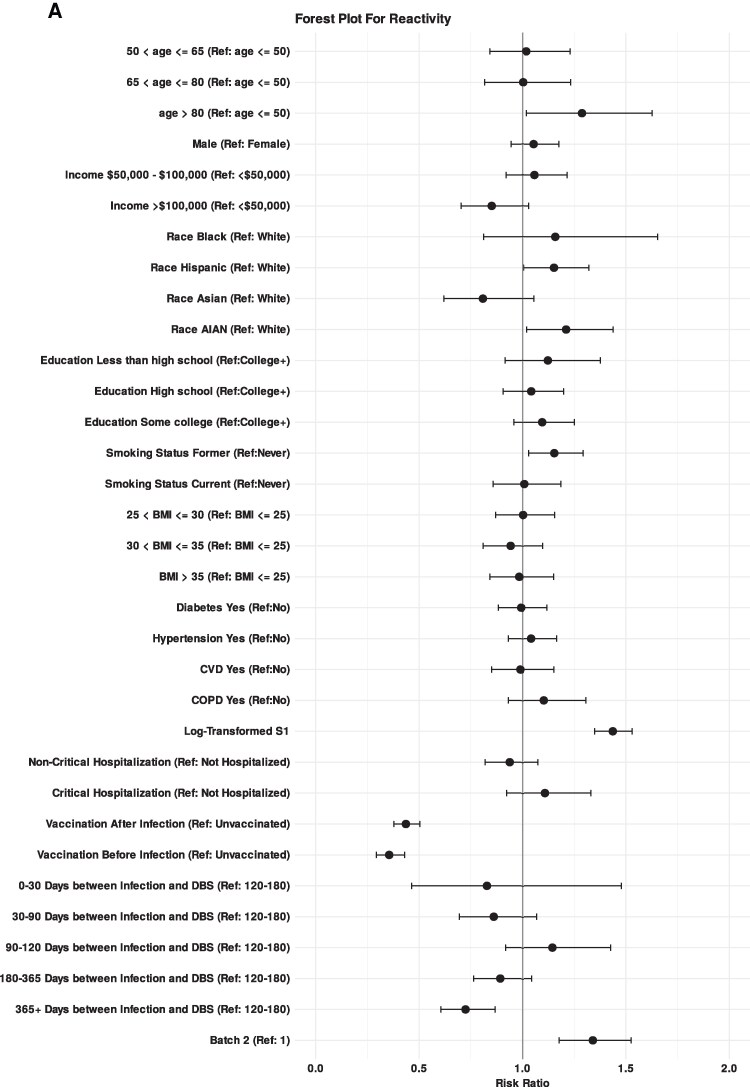
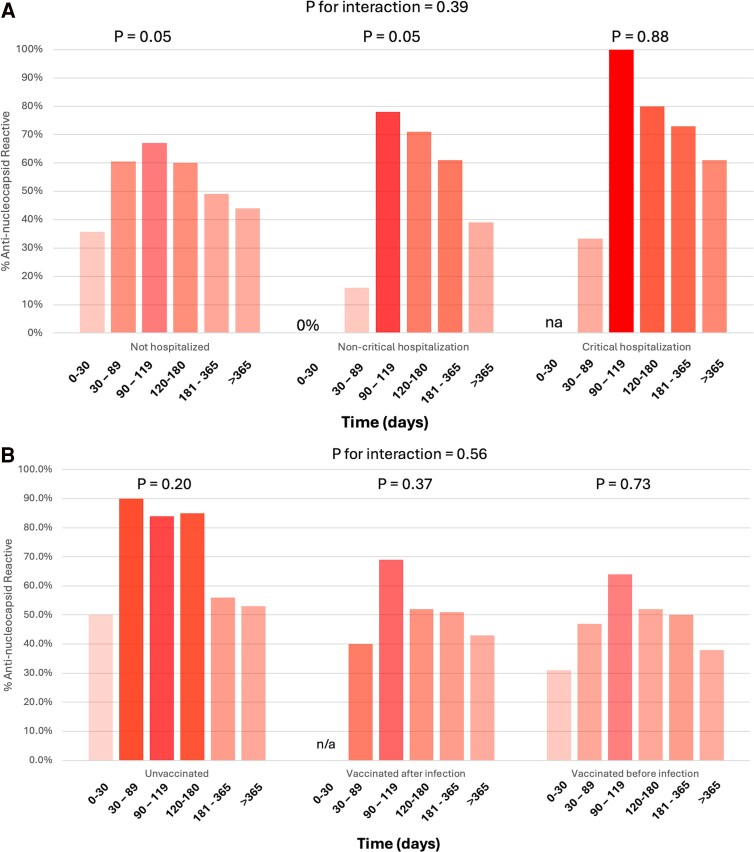
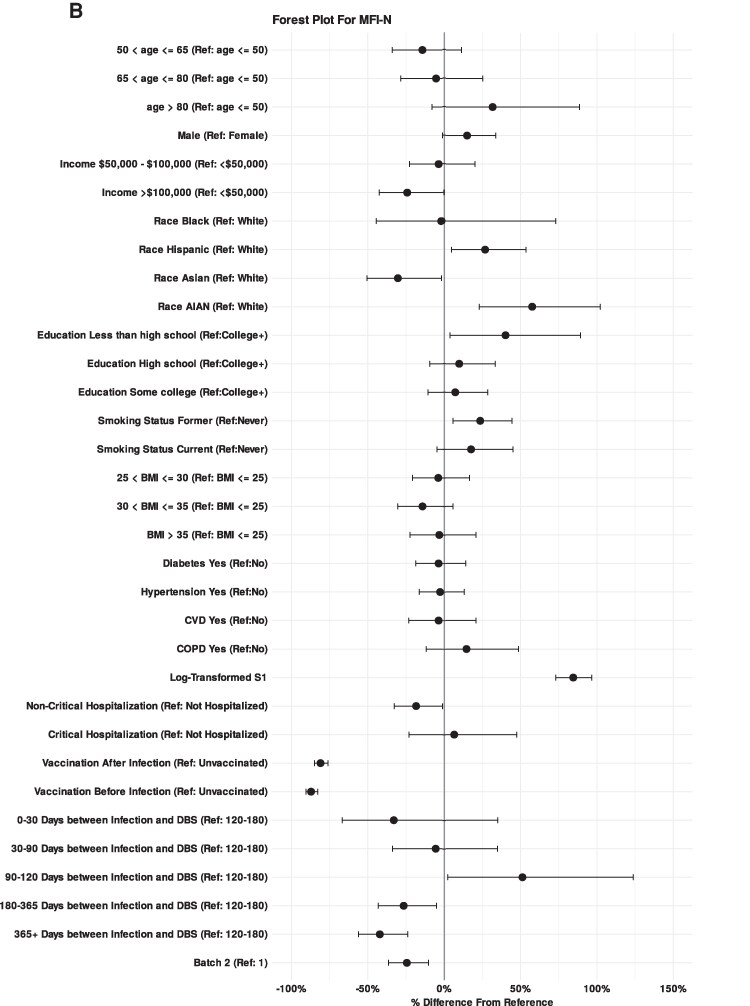
Despite the availability of effective vaccines and a recent decrease in annual deaths, COVID-19 remains a leading cause of death. Serological studies provide insights into host immunobiology of adaptive immune response to infection, which holds promise for identifying high-risk individuals for adverse COVID-19 outcomes. We investigated correlates of anti-nucleocapsid antibody responses following SARS-CoV-2 infection in a US population-based meta-cohort of adults participating in longstanding National Institutes of Health-funded cohort studies. Anti-nucleocapsid antibodies were measured from dried blood spots collected between February 2021 and February 2023. Among 1419 Collaborative Cohort of Cohorts for COVID-19 Research participants with prior SARS-CoV-2 infection, the mean age (standard deviation) was 65.8 (12.1), 61% were women, and 42.8% self-reported membership in a race/ethnicity minority group. The proportion of participants reactive to nucleocapsid peaked at 69% by 4 months after infection and waned to only 44% ≥12 months after infection. Higher anti-nucleocapsid antibody response was associated with older age, Hispanic or American Indian Alaskan Native (vs White) race/ethnicity, lower income, lower education, former smoking, and higher anti-spike antibody levels. Asian race (vs White) and vaccination (even after infection) were associated with lower nucleocapsid reactivity. Neither vaccine manufacturer nor common cardiometabolic comorbidities were not associated with anti-nucleocapsid response. These findings inform the underlying immunobiology of adaptive immune response to infection, as well as the potential utility of anti-nucleocapsid antibody response for clinical practice and COVID-19 serosurveillance.
期刊介绍:
Open Forum Infectious Diseases provides a global forum for the publication of clinical, translational, and basic research findings in a fully open access, online journal environment. The journal reflects the broad diversity of the field of infectious diseases, and focuses on the intersection of biomedical science and clinical practice, with a particular emphasis on knowledge that holds the potential to improve patient care in populations around the world. Fully peer-reviewed, OFID supports the international community of infectious diseases experts by providing a venue for articles that further the understanding of all aspects of infectious diseases.





 京公网安备 11010802042870号
京ICP备2023020795号-1
京公网安备 11010802042870号
京ICP备2023020795号-1

 分享
分享
 求助内容:
求助内容: 应助结果提醒方式:
 扫码关注我们
