Vladimir A. Baulin, Denver P. Linklater, Saulius Juodkazis, Elena P. Ivanova
{"title":"探索广谱抗菌纳米形貌:杀菌、抗真菌和杀病毒表面设计的意义","authors":"Vladimir A. Baulin, Denver P. Linklater, Saulius Juodkazis, Elena P. Ivanova","doi":"10.1021/acsnano.4c15671","DOIUrl":null,"url":null,"abstract":"Inspired by the natural defense strategies of insect wings and plant leaves, nanostructured surfaces have emerged as a promising tool in various fields, including engineering, biomedical sciences, and materials science, to combat bacterial contamination and disrupt biofilm formation. However, the development of effective antimicrobial surfaces against fungal and viral pathogens presents distinct challenges, necessitating tailored approaches. Here, we aimed to review the recent advancements of the use of nanostructured surfaces to combat microbial contamination, particularly focusing on their mechano-bactericidal and antifungal properties, as well as their potential in mitigating viral transmission. We comparatively analyzed the diverse geometries and nanoarchitectures of these surfaces and discussed their application in various biomedical contexts, such as dental and orthopedic implants, drug delivery systems, and tissue engineering. Our review highlights the importance of preventing microbial attachment and biofilm formation, especially in the context of rising antimicrobial resistance and the economic impact of biofilms. We also discussed the latest progress in materials science, particularly nanostructured surface engineering, as a promising strategy for reducing viral transmission through surfaces. Overall, our findings underscore the significance of innovative strategies to mitigate microbial attachment and surface-mediated transmission, while also emphasizing the need for further interdisciplinary research in this area to optimize antimicrobial efficacy and address emerging challenges.","PeriodicalId":21,"journal":{"name":"ACS Nano","volume":"93 1","pages":""},"PeriodicalIF":16.0000,"publicationDate":"2025-03-25","publicationTypes":"Journal Article","fieldsOfStudy":null,"isOpenAccess":false,"openAccessPdf":"","citationCount":"0","resultStr":"{\"title\":\"Exploring Broad-Spectrum Antimicrobial Nanotopographies: Implications for Bactericidal, Antifungal, and Virucidal Surface Design\",\"authors\":\"Vladimir A. Baulin, Denver P. Linklater, Saulius Juodkazis, Elena P. Ivanova\",\"doi\":\"10.1021/acsnano.4c15671\",\"DOIUrl\":null,\"url\":null,\"abstract\":\"Inspired by the natural defense strategies of insect wings and plant leaves, nanostructured surfaces have emerged as a promising tool in various fields, including engineering, biomedical sciences, and materials science, to combat bacterial contamination and disrupt biofilm formation. However, the development of effective antimicrobial surfaces against fungal and viral pathogens presents distinct challenges, necessitating tailored approaches. Here, we aimed to review the recent advancements of the use of nanostructured surfaces to combat microbial contamination, particularly focusing on their mechano-bactericidal and antifungal properties, as well as their potential in mitigating viral transmission. We comparatively analyzed the diverse geometries and nanoarchitectures of these surfaces and discussed their application in various biomedical contexts, such as dental and orthopedic implants, drug delivery systems, and tissue engineering. Our review highlights the importance of preventing microbial attachment and biofilm formation, especially in the context of rising antimicrobial resistance and the economic impact of biofilms. We also discussed the latest progress in materials science, particularly nanostructured surface engineering, as a promising strategy for reducing viral transmission through surfaces. Overall, our findings underscore the significance of innovative strategies to mitigate microbial attachment and surface-mediated transmission, while also emphasizing the need for further interdisciplinary research in this area to optimize antimicrobial efficacy and address emerging challenges.\",\"PeriodicalId\":21,\"journal\":{\"name\":\"ACS Nano\",\"volume\":\"93 1\",\"pages\":\"\"},\"PeriodicalIF\":16.0000,\"publicationDate\":\"2025-03-25\",\"publicationTypes\":\"Journal Article\",\"fieldsOfStudy\":null,\"isOpenAccess\":false,\"openAccessPdf\":\"\",\"citationCount\":\"0\",\"resultStr\":null,\"platform\":\"Semanticscholar\",\"paperid\":null,\"PeriodicalName\":\"ACS Nano\",\"FirstCategoryId\":\"88\",\"ListUrlMain\":\"https://doi.org/10.1021/acsnano.4c15671\",\"RegionNum\":1,\"RegionCategory\":\"材料科学\",\"ArticlePicture\":[],\"TitleCN\":null,\"AbstractTextCN\":null,\"PMCID\":null,\"EPubDate\":\"\",\"PubModel\":\"\",\"JCR\":\"Q1\",\"JCRName\":\"CHEMISTRY, MULTIDISCIPLINARY\",\"Score\":null,\"Total\":0}","platform":"Semanticscholar","paperid":null,"PeriodicalName":"ACS Nano","FirstCategoryId":"88","ListUrlMain":"https://doi.org/10.1021/acsnano.4c15671","RegionNum":1,"RegionCategory":"材料科学","ArticlePicture":[],"TitleCN":null,"AbstractTextCN":null,"PMCID":null,"EPubDate":"","PubModel":"","JCR":"Q1","JCRName":"CHEMISTRY, MULTIDISCIPLINARY","Score":null,"Total":0}
Exploring Broad-Spectrum Antimicrobial Nanotopographies: Implications for Bactericidal, Antifungal, and Virucidal Surface Design
Inspired by the natural defense strategies of insect wings and plant leaves, nanostructured surfaces have emerged as a promising tool in various fields, including engineering, biomedical sciences, and materials science, to combat bacterial contamination and disrupt biofilm formation. However, the development of effective antimicrobial surfaces against fungal and viral pathogens presents distinct challenges, necessitating tailored approaches. Here, we aimed to review the recent advancements of the use of nanostructured surfaces to combat microbial contamination, particularly focusing on their mechano-bactericidal and antifungal properties, as well as their potential in mitigating viral transmission. We comparatively analyzed the diverse geometries and nanoarchitectures of these surfaces and discussed their application in various biomedical contexts, such as dental and orthopedic implants, drug delivery systems, and tissue engineering. Our review highlights the importance of preventing microbial attachment and biofilm formation, especially in the context of rising antimicrobial resistance and the economic impact of biofilms. We also discussed the latest progress in materials science, particularly nanostructured surface engineering, as a promising strategy for reducing viral transmission through surfaces. Overall, our findings underscore the significance of innovative strategies to mitigate microbial attachment and surface-mediated transmission, while also emphasizing the need for further interdisciplinary research in this area to optimize antimicrobial efficacy and address emerging challenges.
期刊介绍:
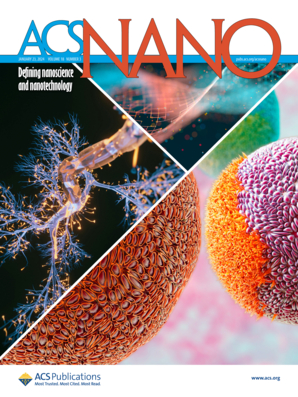
ACS Nano, published monthly, serves as an international forum for comprehensive articles on nanoscience and nanotechnology research at the intersections of chemistry, biology, materials science, physics, and engineering. The journal fosters communication among scientists in these communities, facilitating collaboration, new research opportunities, and advancements through discoveries. ACS Nano covers synthesis, assembly, characterization, theory, and simulation of nanostructures, nanobiotechnology, nanofabrication, methods and tools for nanoscience and nanotechnology, and self- and directed-assembly. Alongside original research articles, it offers thorough reviews, perspectives on cutting-edge research, and discussions envisioning the future of nanoscience and nanotechnology.





 京公网安备 11010802042870号
京ICP备2023020795号-1
京公网安备 11010802042870号
京ICP备2023020795号-1

 分享
分享
 求助内容:
求助内容: 应助结果提醒方式:
 扫码关注我们
