Patrick Frisinghelli , Angelika Zachl , Markus Buchmayr , Johann Gruber , Andrés Anca–Couce , Robert Scharler , Christoph Hochenauer
{"title":"通过增加反应堆高度,将分层下沉气化炉中燃料水含量的运行极限从15%提高到22%","authors":"Patrick Frisinghelli , Angelika Zachl , Markus Buchmayr , Johann Gruber , Andrés Anca–Couce , Robert Scharler , Christoph Hochenauer","doi":"10.1016/j.fuel.2025.135167","DOIUrl":null,"url":null,"abstract":"<div><div>Small-scale gasification of biomass combined with a gas engine and a generator (combined heat and power CHP) is an important technology, as it is one of the best ways to replace fossil fuels in electricity and heat generation. Small-scale gasification plants generally have strict fuel property requirements, which makes them economically unattractive.</div><div>In particular, the water content of the fuel is crucially important, as commercial plants usually only allow a water content of up to 15 m%. In this study, a simple approach was taken to extend the operational limit of a stratified downdraft gasifier by extending the reactor height. In turn, this extends the permissible range of fuel water content. In the experimental part of this study, the reactor with and without a reactor extension was fed with fuel with different water contents (8–24 m%). During operation, the bed temperatures are measured as a function of the reactor height. In addition, permanent gases (CO, CO<sub>2</sub>, H<sub>2</sub>, CH<sub>4</sub>) were measured, and an online tar measurement was ensured. An optimal temperature profile in the gasifier and extremely low tar values in the product gas were determined for all fuel water contents investigated.</div><div>By taking this simple approach, the operating limits for the permissible water content of the fuel could be extended from 15 m% to 22 m%, allowing cheaper fuel to be used without significantly reducing the gas quality. These results will help to make small-scale biomass gasification more attractive and economical.</div></div>","PeriodicalId":325,"journal":{"name":"Fuel","volume":"395 ","pages":"Article 135167"},"PeriodicalIF":7.5000,"publicationDate":"2025-09-01","publicationTypes":"Journal Article","fieldsOfStudy":null,"isOpenAccess":false,"openAccessPdf":"","citationCount":"0","resultStr":"{\"title\":\"Extending the operational limit for fuel water content in a stratified downdraft gasifier from 15 to 22 m% by increasing the reactor height\",\"authors\":\"Patrick Frisinghelli , Angelika Zachl , Markus Buchmayr , Johann Gruber , Andrés Anca–Couce , Robert Scharler , Christoph Hochenauer\",\"doi\":\"10.1016/j.fuel.2025.135167\",\"DOIUrl\":null,\"url\":null,\"abstract\":\"<div><div>Small-scale gasification of biomass combined with a gas engine and a generator (combined heat and power CHP) is an important technology, as it is one of the best ways to replace fossil fuels in electricity and heat generation. Small-scale gasification plants generally have strict fuel property requirements, which makes them economically unattractive.</div><div>In particular, the water content of the fuel is crucially important, as commercial plants usually only allow a water content of up to 15 m%. In this study, a simple approach was taken to extend the operational limit of a stratified downdraft gasifier by extending the reactor height. In turn, this extends the permissible range of fuel water content. In the experimental part of this study, the reactor with and without a reactor extension was fed with fuel with different water contents (8–24 m%). During operation, the bed temperatures are measured as a function of the reactor height. In addition, permanent gases (CO, CO<sub>2</sub>, H<sub>2</sub>, CH<sub>4</sub>) were measured, and an online tar measurement was ensured. An optimal temperature profile in the gasifier and extremely low tar values in the product gas were determined for all fuel water contents investigated.</div><div>By taking this simple approach, the operating limits for the permissible water content of the fuel could be extended from 15 m% to 22 m%, allowing cheaper fuel to be used without significantly reducing the gas quality. These results will help to make small-scale biomass gasification more attractive and economical.</div></div>\",\"PeriodicalId\":325,\"journal\":{\"name\":\"Fuel\",\"volume\":\"395 \",\"pages\":\"Article 135167\"},\"PeriodicalIF\":7.5000,\"publicationDate\":\"2025-09-01\",\"publicationTypes\":\"Journal Article\",\"fieldsOfStudy\":null,\"isOpenAccess\":false,\"openAccessPdf\":\"\",\"citationCount\":\"0\",\"resultStr\":null,\"platform\":\"Semanticscholar\",\"paperid\":null,\"PeriodicalName\":\"Fuel\",\"FirstCategoryId\":\"5\",\"ListUrlMain\":\"https://www.sciencedirect.com/science/article/pii/S0016236125008920\",\"RegionNum\":1,\"RegionCategory\":\"工程技术\",\"ArticlePicture\":[],\"TitleCN\":null,\"AbstractTextCN\":null,\"PMCID\":null,\"EPubDate\":\"2025/3/26 0:00:00\",\"PubModel\":\"Epub\",\"JCR\":\"Q2\",\"JCRName\":\"ENERGY & FUELS\",\"Score\":null,\"Total\":0}","platform":"Semanticscholar","paperid":null,"PeriodicalName":"Fuel","FirstCategoryId":"5","ListUrlMain":"https://www.sciencedirect.com/science/article/pii/S0016236125008920","RegionNum":1,"RegionCategory":"工程技术","ArticlePicture":[],"TitleCN":null,"AbstractTextCN":null,"PMCID":null,"EPubDate":"2025/3/26 0:00:00","PubModel":"Epub","JCR":"Q2","JCRName":"ENERGY & FUELS","Score":null,"Total":0}
Extending the operational limit for fuel water content in a stratified downdraft gasifier from 15 to 22 m% by increasing the reactor height
Small-scale gasification of biomass combined with a gas engine and a generator (combined heat and power CHP) is an important technology, as it is one of the best ways to replace fossil fuels in electricity and heat generation. Small-scale gasification plants generally have strict fuel property requirements, which makes them economically unattractive.
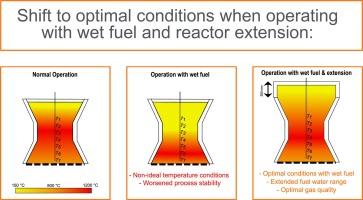
In particular, the water content of the fuel is crucially important, as commercial plants usually only allow a water content of up to 15 m%. In this study, a simple approach was taken to extend the operational limit of a stratified downdraft gasifier by extending the reactor height. In turn, this extends the permissible range of fuel water content. In the experimental part of this study, the reactor with and without a reactor extension was fed with fuel with different water contents (8–24 m%). During operation, the bed temperatures are measured as a function of the reactor height. In addition, permanent gases (CO, CO2, H2, CH4) were measured, and an online tar measurement was ensured. An optimal temperature profile in the gasifier and extremely low tar values in the product gas were determined for all fuel water contents investigated.
By taking this simple approach, the operating limits for the permissible water content of the fuel could be extended from 15 m% to 22 m%, allowing cheaper fuel to be used without significantly reducing the gas quality. These results will help to make small-scale biomass gasification more attractive and economical.
期刊介绍:
The exploration of energy sources remains a critical matter of study. For the past nine decades, fuel has consistently held the forefront in primary research efforts within the field of energy science. This area of investigation encompasses a wide range of subjects, with a particular emphasis on emerging concerns like environmental factors and pollution.




 京公网安备 11010802042870号
京ICP备2023020795号-1
京公网安备 11010802042870号
京ICP备2023020795号-1

 分享
分享
 求助内容:
求助内容: 应助结果提醒方式:
 扫码关注我们
