Kana Eguchi, Takeaki Kubota, Tomoyoshi Koyanagi, Manabu Muto
{"title":"日本智能手机医疗应用程序用户酒精消费行为的真实数据:回顾性研究","authors":"Kana Eguchi, Takeaki Kubota, Tomoyoshi Koyanagi, Manabu Muto","doi":"10.2196/57084","DOIUrl":null,"url":null,"abstract":"<p><strong>Background: </strong>Although many studies have used smartphone apps to examine alcohol consumption, none have clearly delineated long-term (>1 year) consumption among the general population.</p><p><strong>Objective: </strong>The objective of our study is to elucidate in detail the alcohol consumption behavior of alcohol drinkers in Japan using individual real-world data. During the state of emergency associated with the COVID-19 outbreak, the government requested that people restrict social gatherings and stay at home, so we hypothesize that alcohol consumption among Japanese working people decreased during this period due to the decrease in occasions for alcohol consumption. This analysis was only possible with individual real-world data. We also aimed to clarify the effects of digital interventions based on notifications about daily alcohol consumption.</p><p><strong>Methods: </strong>We conducted a retrospective study targeting 5-year log data from January 1, 2018, to December 31, 2022, obtained from a commercial smartphone health care app (CALO mama Plus). First, to investigate the possible size of the real-world data, we investigated the rate of active users of this commercial smartphone app. Second, to validate the individual real-world data recorded in the app, we compared individual real-world data from 9991 randomly selected users with government-provided open data on the number of daily confirmed COVID-19 cases in Japan and with nationwide alcohol consumption data. To clarify the effects of digital interventions, we investigated the relationship between 2 types of notification records (ie, \"good\" and \"bad\") and a 3-day daily alcohol consumption log following the notification. The protocol of this retrospective study was approved by the Ethics Committee of the Kyoto University Graduate School and Faculty of Medicine (R4699).</p>","PeriodicalId":74345,"journal":{"name":"Online journal of public health informatics","volume":"17 ","pages":"e57084"},"PeriodicalIF":1.1000,"publicationDate":"2025-03-25","publicationTypes":"Journal Article","fieldsOfStudy":null,"isOpenAccess":false,"openAccessPdf":"https://www.ncbi.nlm.nih.gov/pmc/articles/PMC11979541/pdf/","citationCount":"0","resultStr":"{\"title\":\"Real-World Data on Alcohol Consumption Behavior Among Smartphone Health Care App Users in Japan: Retrospective Study.\",\"authors\":\"Kana Eguchi, Takeaki Kubota, Tomoyoshi Koyanagi, Manabu Muto\",\"doi\":\"10.2196/57084\",\"DOIUrl\":null,\"url\":null,\"abstract\":\"<p><strong>Background: </strong>Although many studies have used smartphone apps to examine alcohol consumption, none have clearly delineated long-term (>1 year) consumption among the general population.</p><p><strong>Objective: </strong>The objective of our study is to elucidate in detail the alcohol consumption behavior of alcohol drinkers in Japan using individual real-world data. During the state of emergency associated with the COVID-19 outbreak, the government requested that people restrict social gatherings and stay at home, so we hypothesize that alcohol consumption among Japanese working people decreased during this period due to the decrease in occasions for alcohol consumption. This analysis was only possible with individual real-world data. We also aimed to clarify the effects of digital interventions based on notifications about daily alcohol consumption.</p><p><strong>Methods: </strong>We conducted a retrospective study targeting 5-year log data from January 1, 2018, to December 31, 2022, obtained from a commercial smartphone health care app (CALO mama Plus). First, to investigate the possible size of the real-world data, we investigated the rate of active users of this commercial smartphone app. Second, to validate the individual real-world data recorded in the app, we compared individual real-world data from 9991 randomly selected users with government-provided open data on the number of daily confirmed COVID-19 cases in Japan and with nationwide alcohol consumption data. To clarify the effects of digital interventions, we investigated the relationship between 2 types of notification records (ie, \\\"good\\\" and \\\"bad\\\") and a 3-day daily alcohol consumption log following the notification. The protocol of this retrospective study was approved by the Ethics Committee of the Kyoto University Graduate School and Faculty of Medicine (R4699).</p>\",\"PeriodicalId\":74345,\"journal\":{\"name\":\"Online journal of public health informatics\",\"volume\":\"17 \",\"pages\":\"e57084\"},\"PeriodicalIF\":1.1000,\"publicationDate\":\"2025-03-25\",\"publicationTypes\":\"Journal Article\",\"fieldsOfStudy\":null,\"isOpenAccess\":false,\"openAccessPdf\":\"https://www.ncbi.nlm.nih.gov/pmc/articles/PMC11979541/pdf/\",\"citationCount\":\"0\",\"resultStr\":null,\"platform\":\"Semanticscholar\",\"paperid\":null,\"PeriodicalName\":\"Online journal of public health informatics\",\"FirstCategoryId\":\"1085\",\"ListUrlMain\":\"https://doi.org/10.2196/57084\",\"RegionNum\":0,\"RegionCategory\":null,\"ArticlePicture\":[],\"TitleCN\":null,\"AbstractTextCN\":null,\"PMCID\":null,\"EPubDate\":\"\",\"PubModel\":\"\",\"JCR\":\"\",\"JCRName\":\"\",\"Score\":null,\"Total\":0}","platform":"Semanticscholar","paperid":null,"PeriodicalName":"Online journal of public health informatics","FirstCategoryId":"1085","ListUrlMain":"https://doi.org/10.2196/57084","RegionNum":0,"RegionCategory":null,"ArticlePicture":[],"TitleCN":null,"AbstractTextCN":null,"PMCID":null,"EPubDate":"","PubModel":"","JCR":"","JCRName":"","Score":null,"Total":0}
引用次数: 0
摘要
背景:尽管许多研究都使用智能手机应用程序来调查酒精消费量,但没有一个研究清楚地描述了普通人群的长期(10 - 10年)消费量。目的:我们研究的目的是利用真实世界的个人数据详细阐明日本饮酒者的饮酒行为。在新冠肺炎紧急状态期间,政府要求人们限制社交聚会并留在家中,因此我们假设,在此期间,日本劳动阶层的饮酒量减少了,这是由于饮酒场合的减少。这一分析仅适用于真实世界的个人数据。我们还旨在澄清基于每日酒精消费通知的数字干预措施的影响。方法:我们对2018年1月1日至2022年12月31日的5年日志数据进行了回顾性研究,这些数据来自商业智能手机医疗保健应用程序(CALO mama Plus)。首先,为了调查真实世界数据的可能规模,我们调查了这款商业智能手机应用程序的活跃用户比率。其次,为了验证应用程序中记录的个人真实世界数据,我们将随机选择的9991名用户的个人真实世界数据与政府提供的日本每日确诊COVID-19病例数的公开数据以及全国酒精消费数据进行了比较。为了澄清数字干预的影响,我们调查了两种类型的通知记录(即“好”和“坏”)与通知后3天的每日饮酒记录之间的关系。本回顾性研究的方案经京都大学研究生院和医学院伦理委员会批准(R4699)。
Real-World Data on Alcohol Consumption Behavior Among Smartphone Health Care App Users in Japan: Retrospective Study.
Background: Although many studies have used smartphone apps to examine alcohol consumption, none have clearly delineated long-term (>1 year) consumption among the general population.
Objective: The objective of our study is to elucidate in detail the alcohol consumption behavior of alcohol drinkers in Japan using individual real-world data. During the state of emergency associated with the COVID-19 outbreak, the government requested that people restrict social gatherings and stay at home, so we hypothesize that alcohol consumption among Japanese working people decreased during this period due to the decrease in occasions for alcohol consumption. This analysis was only possible with individual real-world data. We also aimed to clarify the effects of digital interventions based on notifications about daily alcohol consumption.
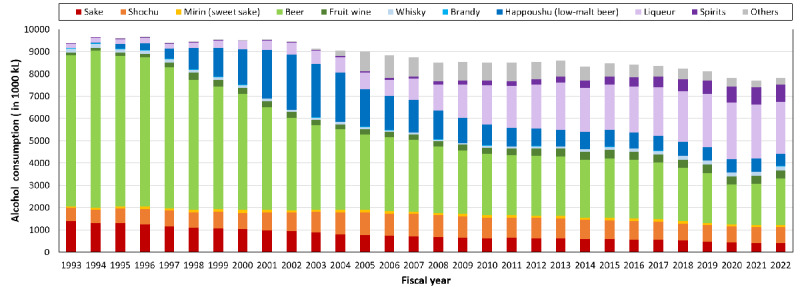
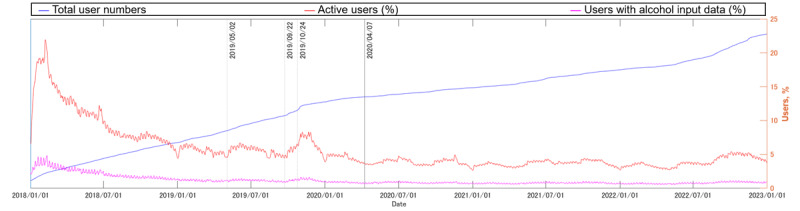
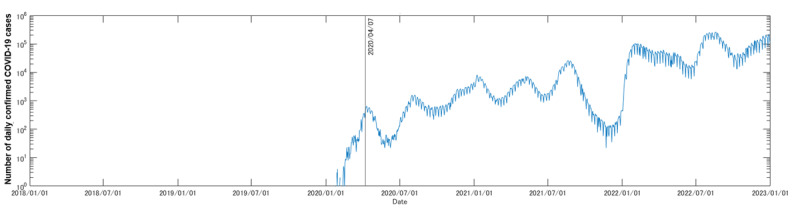
Methods: We conducted a retrospective study targeting 5-year log data from January 1, 2018, to December 31, 2022, obtained from a commercial smartphone health care app (CALO mama Plus). First, to investigate the possible size of the real-world data, we investigated the rate of active users of this commercial smartphone app. Second, to validate the individual real-world data recorded in the app, we compared individual real-world data from 9991 randomly selected users with government-provided open data on the number of daily confirmed COVID-19 cases in Japan and with nationwide alcohol consumption data. To clarify the effects of digital interventions, we investigated the relationship between 2 types of notification records (ie, "good" and "bad") and a 3-day daily alcohol consumption log following the notification. The protocol of this retrospective study was approved by the Ethics Committee of the Kyoto University Graduate School and Faculty of Medicine (R4699).




 京公网安备 11010802042870号
京ICP备2023020795号-1
京公网安备 11010802042870号
京ICP备2023020795号-1

 分享
分享

 求助内容:
求助内容: 应助结果提醒方式:
 扫码关注我们
