{"title":"Pannexin 1, P2×7和CFTR在附睾主细胞ATP释放和自分泌信号传导中的作用。","authors":"Kéliane Brochu, Aram Minas, Larissa Berloffa Belardin, Christine Légaré, Sylvie Breton","doi":"10.1093/function/zqaf016","DOIUrl":null,"url":null,"abstract":"<p><p>Extracellular adenosine triphosphate (ATP) is a signaling molecule that acts as a paracrine and autocrine modulator of cell function. Here, we characterized the role of luminal ATP in the regulation of epithelial principal cells (PCs) in the epididymis, an understudied organ that plays crucial roles in male reproduction. We previously showed that ATP secretion by PCs is part of a complex communication system that ensures the establishment of an optimal luminal acidic environment in the epididymis. However, the molecular mechanisms regulating ATP release and the role of ATP-mediated signaling in PCs acidifying functions are not fully understood. In other cell types, pannexin 1 (PANX-1) has been associated with ATP-induced ATP release through the interaction with the purinergic P2X7 receptor. Here, we show that PANX-1 and P2X7 are located in the apical membrane of PCs in the mouse epididymis. Functional analysis using the immortalized epididymal PC cell line (DC2) and the mouse epididymis perfused in vivo showed that (1) PANX-1 and P2X7 participate in ATP release by DC2 cells, together with cystic fibrosis transmembrane conductance regulator (CFTR); (2) several ATP-activated P2Y and P2X purinergic receptors are expressed in DC2 cells; (3) the nonhydrolyzable ATP analog ATPγS induces a dose-dependent increase in intracellular Ca2+ concentration in DC2 cells, a process that is mainly mediated by P2X7; and (4) perfusion of the epididymal lumen in vivo with ATPγS induces the internalization of apical sodium-hydrogen exchanger 3 (NHE3) in PCs. Altogether, this study shows that luminal ATP, regulated by CFTR, PANX-1, and P2X7, modulates sodium-proton exchange in PCs in an autocrine manner through activation of purinergic receptor-mediated intracellular calcium signaling.</p>","PeriodicalId":73119,"journal":{"name":"Function (Oxford, England)","volume":" ","pages":""},"PeriodicalIF":3.8000,"publicationDate":"2025-03-24","publicationTypes":"Journal Article","fieldsOfStudy":null,"isOpenAccess":false,"openAccessPdf":"https://www.ncbi.nlm.nih.gov/pmc/articles/PMC11980865/pdf/","citationCount":"0","resultStr":"{\"title\":\"Role of Pannexin 1, P2X7, and CFTR in ATP Release and Autocrine Signaling by Principal Cells of the Epididymis.\",\"authors\":\"Kéliane Brochu, Aram Minas, Larissa Berloffa Belardin, Christine Légaré, Sylvie Breton\",\"doi\":\"10.1093/function/zqaf016\",\"DOIUrl\":null,\"url\":null,\"abstract\":\"<p><p>Extracellular adenosine triphosphate (ATP) is a signaling molecule that acts as a paracrine and autocrine modulator of cell function. Here, we characterized the role of luminal ATP in the regulation of epithelial principal cells (PCs) in the epididymis, an understudied organ that plays crucial roles in male reproduction. We previously showed that ATP secretion by PCs is part of a complex communication system that ensures the establishment of an optimal luminal acidic environment in the epididymis. However, the molecular mechanisms regulating ATP release and the role of ATP-mediated signaling in PCs acidifying functions are not fully understood. In other cell types, pannexin 1 (PANX-1) has been associated with ATP-induced ATP release through the interaction with the purinergic P2X7 receptor. Here, we show that PANX-1 and P2X7 are located in the apical membrane of PCs in the mouse epididymis. Functional analysis using the immortalized epididymal PC cell line (DC2) and the mouse epididymis perfused in vivo showed that (1) PANX-1 and P2X7 participate in ATP release by DC2 cells, together with cystic fibrosis transmembrane conductance regulator (CFTR); (2) several ATP-activated P2Y and P2X purinergic receptors are expressed in DC2 cells; (3) the nonhydrolyzable ATP analog ATPγS induces a dose-dependent increase in intracellular Ca2+ concentration in DC2 cells, a process that is mainly mediated by P2X7; and (4) perfusion of the epididymal lumen in vivo with ATPγS induces the internalization of apical sodium-hydrogen exchanger 3 (NHE3) in PCs. Altogether, this study shows that luminal ATP, regulated by CFTR, PANX-1, and P2X7, modulates sodium-proton exchange in PCs in an autocrine manner through activation of purinergic receptor-mediated intracellular calcium signaling.</p>\",\"PeriodicalId\":73119,\"journal\":{\"name\":\"Function (Oxford, England)\",\"volume\":\" \",\"pages\":\"\"},\"PeriodicalIF\":3.8000,\"publicationDate\":\"2025-03-24\",\"publicationTypes\":\"Journal Article\",\"fieldsOfStudy\":null,\"isOpenAccess\":false,\"openAccessPdf\":\"https://www.ncbi.nlm.nih.gov/pmc/articles/PMC11980865/pdf/\",\"citationCount\":\"0\",\"resultStr\":null,\"platform\":\"Semanticscholar\",\"paperid\":null,\"PeriodicalName\":\"Function (Oxford, England)\",\"FirstCategoryId\":\"1085\",\"ListUrlMain\":\"https://doi.org/10.1093/function/zqaf016\",\"RegionNum\":0,\"RegionCategory\":null,\"ArticlePicture\":[],\"TitleCN\":null,\"AbstractTextCN\":null,\"PMCID\":null,\"EPubDate\":\"\",\"PubModel\":\"\",\"JCR\":\"Q2\",\"JCRName\":\"CELL BIOLOGY\",\"Score\":null,\"Total\":0}","platform":"Semanticscholar","paperid":null,"PeriodicalName":"Function (Oxford, England)","FirstCategoryId":"1085","ListUrlMain":"https://doi.org/10.1093/function/zqaf016","RegionNum":0,"RegionCategory":null,"ArticlePicture":[],"TitleCN":null,"AbstractTextCN":null,"PMCID":null,"EPubDate":"","PubModel":"","JCR":"Q2","JCRName":"CELL BIOLOGY","Score":null,"Total":0}
引用次数: 0
摘要
细胞外 ATP 是一种信号分子,可作为细胞功能的旁分泌和自分泌调节剂。在这里,我们描述了管腔内 ATP 在调节附睾上皮主细胞(PCs)中的作用,附睾是一个未被充分研究的器官,在男性生殖中发挥着关键作用。我们以前的研究表明,附睾上皮主细胞分泌 ATP 是一个复杂的通讯系统的一部分,该系统确保在附睾中建立一个最佳的管腔酸性环境。然而,调节 ATP 释放的分子机制以及 ATP 介导的信号在 PCs 酸化功能中的作用还不完全清楚。在其他细胞类型中,Pannexin 1(PANX-1)通过与嘌呤能 P2 × 7 受体相互作用,与 ATP 诱导的 ATP 释放有关。在这里,我们发现 PANX-1 和 P2 × 7 位于小鼠附睾 PCs 的顶端膜。利用永生化附睾 PCs 细胞系(DC2)和体内灌注的小鼠附睾进行的功能分析显示:1)PANX-1 和 P2 × 7 位于小鼠附睾 PCs 的顶端膜:1)PANX-1 和 P2 × 7 与囊性纤维化跨膜传导调节器(CFTR)一起参与了 DC2 细胞的 ATP 释放;2)DC2 细胞中表达了几种 ATP 激活的 P2Y 和 P2X 嘌呤能受体;3)非水解 ATP 类似物 ATPγS 可诱导 DC2 细胞内 Ca2+ 浓度的剂量依赖性增加,这一过程主要由 P2 × 7 介导;以及 4)用 ATPγS 灌注附睾管腔可诱导 PC 中顶端钠-氢交换器 3(NHE3)的内化。总之,本研究表明,管腔内的 ATP 受 CFTR、PANX-1 和 P2 × 7 的调节,通过激活嘌呤能受体介导的细胞内钙信号,以自分泌的方式调节 PCs 中的钠-质子交换。
Role of Pannexin 1, P2X7, and CFTR in ATP Release and Autocrine Signaling by Principal Cells of the Epididymis.
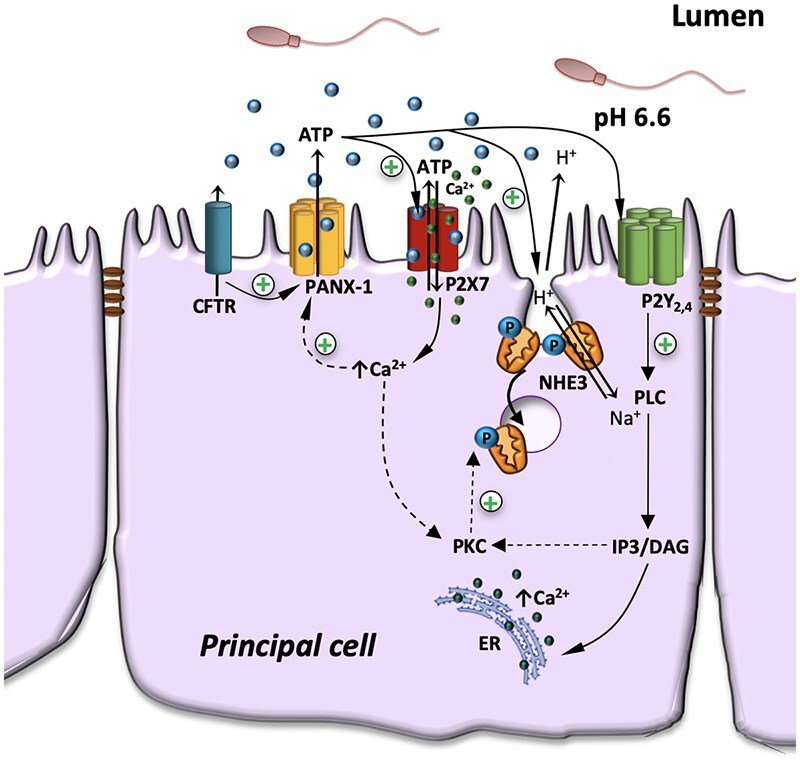
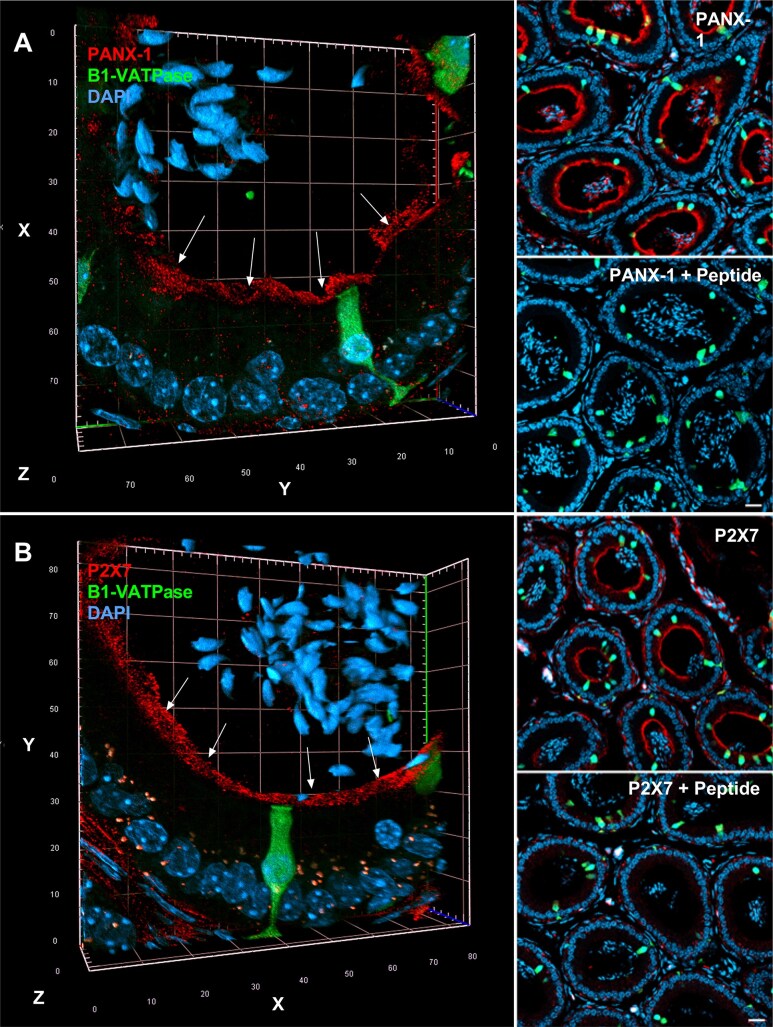
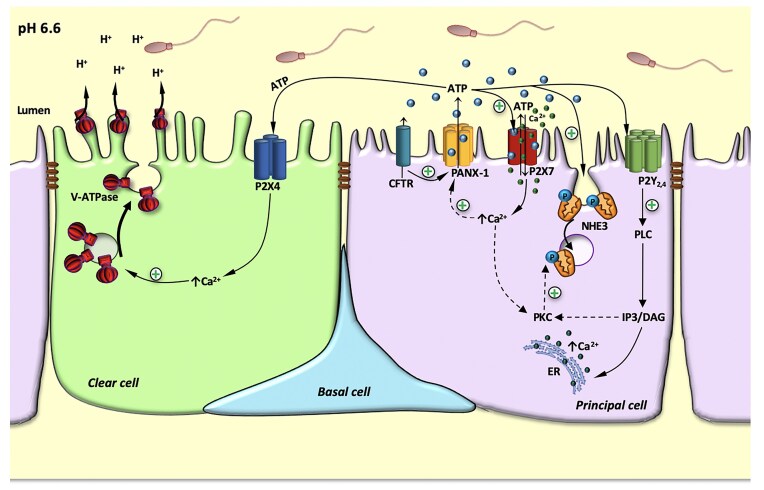
Extracellular adenosine triphosphate (ATP) is a signaling molecule that acts as a paracrine and autocrine modulator of cell function. Here, we characterized the role of luminal ATP in the regulation of epithelial principal cells (PCs) in the epididymis, an understudied organ that plays crucial roles in male reproduction. We previously showed that ATP secretion by PCs is part of a complex communication system that ensures the establishment of an optimal luminal acidic environment in the epididymis. However, the molecular mechanisms regulating ATP release and the role of ATP-mediated signaling in PCs acidifying functions are not fully understood. In other cell types, pannexin 1 (PANX-1) has been associated with ATP-induced ATP release through the interaction with the purinergic P2X7 receptor. Here, we show that PANX-1 and P2X7 are located in the apical membrane of PCs in the mouse epididymis. Functional analysis using the immortalized epididymal PC cell line (DC2) and the mouse epididymis perfused in vivo showed that (1) PANX-1 and P2X7 participate in ATP release by DC2 cells, together with cystic fibrosis transmembrane conductance regulator (CFTR); (2) several ATP-activated P2Y and P2X purinergic receptors are expressed in DC2 cells; (3) the nonhydrolyzable ATP analog ATPγS induces a dose-dependent increase in intracellular Ca2+ concentration in DC2 cells, a process that is mainly mediated by P2X7; and (4) perfusion of the epididymal lumen in vivo with ATPγS induces the internalization of apical sodium-hydrogen exchanger 3 (NHE3) in PCs. Altogether, this study shows that luminal ATP, regulated by CFTR, PANX-1, and P2X7, modulates sodium-proton exchange in PCs in an autocrine manner through activation of purinergic receptor-mediated intracellular calcium signaling.




 京公网安备 11010802042870号
京ICP备2023020795号-1
京公网安备 11010802042870号
京ICP备2023020795号-1

 分享
分享

 求助内容:
求助内容: 应助结果提醒方式:
 扫码关注我们
