Yankho Kaimila, Oyinkansola A Olotu, Miriam E Clegg, Kim G Jackson, Julie A Lovegrove
{"title":"在具有代表性的英国人群中,豆类和豆类的消费与更理想的营养摄入和更高的EAT-Lancet指数有关。","authors":"Yankho Kaimila, Oyinkansola A Olotu, Miriam E Clegg, Kim G Jackson, Julie A Lovegrove","doi":"10.1007/s00394-025-03611-2","DOIUrl":null,"url":null,"abstract":"<p><strong>Purpose: </strong>Diets high in pulses and legumes have been associated with improved cardiovascular disease (CVD) risk markers but the relationship is less well studied in UK populations. To address this, associations between consumption of pulses (dried beans, peas and lentils) and legumes (pulses, fresh peas and green beans) with nutrient intake and status, a sustainable diet quality score (EAT-Lancet index), CVD risk markers and food expenditure was assessed in representative UK populations.</p><p><strong>Methods: </strong>A secondary analysis of data from the UK National Diet and Nutrition Survey (2008-2019) and the Living Costs and Food Survey (2001-2022) was conducted. To assess the relationships, regression models controlling for covariates were used.</p><p><strong>Results: </strong>Children and adults consumed mean ± SD 10.6 ± 27.0 g/day and 15.0 ± 21.0 g/day of pulses, and 16.7 ± 32.5 g/day and 27.3 ± 26.0 g/day of legumes, respectively. Diets rich in pulses and legumes were associated with higher intakes of energy, fibre, vitamin E, thiamine, folate, biotin, sodium, potassium, phosphorus, magnesium, iron, zinc, and manganese; lower intakes of saturated fats, total and free sugars and higher plasma selenium and total carotenoid concentrations (all P < 0.05). Consumption of a portion (80 g) of pulses and legumes was associated with a 3.7 point increase in EAT-Lancet index (P < 0.001). Average expenditure on pulses and legumes/person/week in 2022 was £1.68 and £2.90, equivalent to 0.33% and 0.56% of weekly income respectively.</p><p><strong>Conclusions: </strong>Pulse and legume-rich diets are broadly associated with a more optimum nutrient intake, higher micronutrient status and a more sustainable diet. Strategies are needed to increase pulse and legume consumption in UK populations.</p>","PeriodicalId":12030,"journal":{"name":"European Journal of Nutrition","volume":"64 3","pages":"139"},"PeriodicalIF":4.3000,"publicationDate":"2025-03-26","publicationTypes":"Journal Article","fieldsOfStudy":null,"isOpenAccess":false,"openAccessPdf":"https://www.ncbi.nlm.nih.gov/pmc/articles/PMC11937138/pdf/","citationCount":"0","resultStr":"{\"title\":\"Pulse and legume consumption is associated with a more optimal nutrient intake and a higher EAT-Lancet index in a representative UK population.\",\"authors\":\"Yankho Kaimila, Oyinkansola A Olotu, Miriam E Clegg, Kim G Jackson, Julie A Lovegrove\",\"doi\":\"10.1007/s00394-025-03611-2\",\"DOIUrl\":null,\"url\":null,\"abstract\":\"<p><strong>Purpose: </strong>Diets high in pulses and legumes have been associated with improved cardiovascular disease (CVD) risk markers but the relationship is less well studied in UK populations. To address this, associations between consumption of pulses (dried beans, peas and lentils) and legumes (pulses, fresh peas and green beans) with nutrient intake and status, a sustainable diet quality score (EAT-Lancet index), CVD risk markers and food expenditure was assessed in representative UK populations.</p><p><strong>Methods: </strong>A secondary analysis of data from the UK National Diet and Nutrition Survey (2008-2019) and the Living Costs and Food Survey (2001-2022) was conducted. To assess the relationships, regression models controlling for covariates were used.</p><p><strong>Results: </strong>Children and adults consumed mean ± SD 10.6 ± 27.0 g/day and 15.0 ± 21.0 g/day of pulses, and 16.7 ± 32.5 g/day and 27.3 ± 26.0 g/day of legumes, respectively. Diets rich in pulses and legumes were associated with higher intakes of energy, fibre, vitamin E, thiamine, folate, biotin, sodium, potassium, phosphorus, magnesium, iron, zinc, and manganese; lower intakes of saturated fats, total and free sugars and higher plasma selenium and total carotenoid concentrations (all P < 0.05). Consumption of a portion (80 g) of pulses and legumes was associated with a 3.7 point increase in EAT-Lancet index (P < 0.001). Average expenditure on pulses and legumes/person/week in 2022 was £1.68 and £2.90, equivalent to 0.33% and 0.56% of weekly income respectively.</p><p><strong>Conclusions: </strong>Pulse and legume-rich diets are broadly associated with a more optimum nutrient intake, higher micronutrient status and a more sustainable diet. Strategies are needed to increase pulse and legume consumption in UK populations.</p>\",\"PeriodicalId\":12030,\"journal\":{\"name\":\"European Journal of Nutrition\",\"volume\":\"64 3\",\"pages\":\"139\"},\"PeriodicalIF\":4.3000,\"publicationDate\":\"2025-03-26\",\"publicationTypes\":\"Journal Article\",\"fieldsOfStudy\":null,\"isOpenAccess\":false,\"openAccessPdf\":\"https://www.ncbi.nlm.nih.gov/pmc/articles/PMC11937138/pdf/\",\"citationCount\":\"0\",\"resultStr\":null,\"platform\":\"Semanticscholar\",\"paperid\":null,\"PeriodicalName\":\"European Journal of Nutrition\",\"FirstCategoryId\":\"3\",\"ListUrlMain\":\"https://doi.org/10.1007/s00394-025-03611-2\",\"RegionNum\":2,\"RegionCategory\":\"医学\",\"ArticlePicture\":[],\"TitleCN\":null,\"AbstractTextCN\":null,\"PMCID\":null,\"EPubDate\":\"\",\"PubModel\":\"\",\"JCR\":\"Q2\",\"JCRName\":\"NUTRITION & DIETETICS\",\"Score\":null,\"Total\":0}","platform":"Semanticscholar","paperid":null,"PeriodicalName":"European Journal of Nutrition","FirstCategoryId":"3","ListUrlMain":"https://doi.org/10.1007/s00394-025-03611-2","RegionNum":2,"RegionCategory":"医学","ArticlePicture":[],"TitleCN":null,"AbstractTextCN":null,"PMCID":null,"EPubDate":"","PubModel":"","JCR":"Q2","JCRName":"NUTRITION & DIETETICS","Score":null,"Total":0}
Pulse and legume consumption is associated with a more optimal nutrient intake and a higher EAT-Lancet index in a representative UK population.
Purpose: Diets high in pulses and legumes have been associated with improved cardiovascular disease (CVD) risk markers but the relationship is less well studied in UK populations. To address this, associations between consumption of pulses (dried beans, peas and lentils) and legumes (pulses, fresh peas and green beans) with nutrient intake and status, a sustainable diet quality score (EAT-Lancet index), CVD risk markers and food expenditure was assessed in representative UK populations.
Methods: A secondary analysis of data from the UK National Diet and Nutrition Survey (2008-2019) and the Living Costs and Food Survey (2001-2022) was conducted. To assess the relationships, regression models controlling for covariates were used.
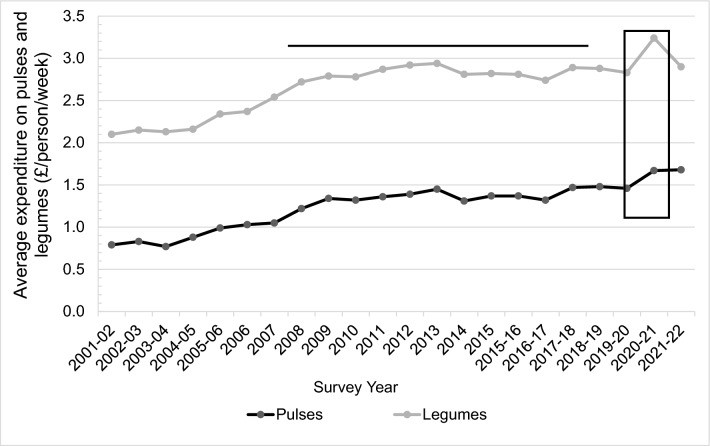
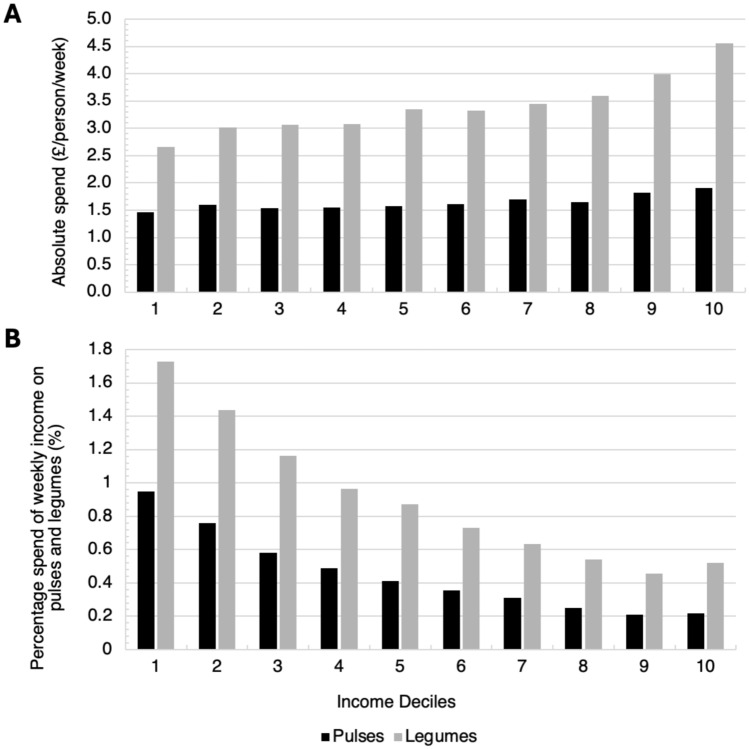
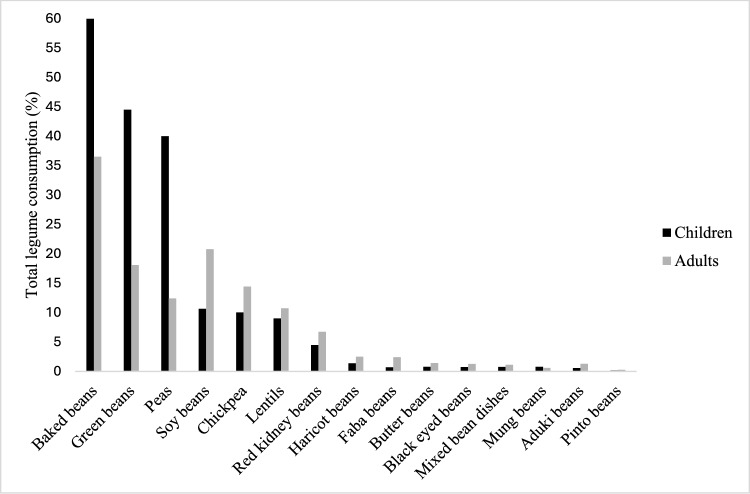
Results: Children and adults consumed mean ± SD 10.6 ± 27.0 g/day and 15.0 ± 21.0 g/day of pulses, and 16.7 ± 32.5 g/day and 27.3 ± 26.0 g/day of legumes, respectively. Diets rich in pulses and legumes were associated with higher intakes of energy, fibre, vitamin E, thiamine, folate, biotin, sodium, potassium, phosphorus, magnesium, iron, zinc, and manganese; lower intakes of saturated fats, total and free sugars and higher plasma selenium and total carotenoid concentrations (all P < 0.05). Consumption of a portion (80 g) of pulses and legumes was associated with a 3.7 point increase in EAT-Lancet index (P < 0.001). Average expenditure on pulses and legumes/person/week in 2022 was £1.68 and £2.90, equivalent to 0.33% and 0.56% of weekly income respectively.
Conclusions: Pulse and legume-rich diets are broadly associated with a more optimum nutrient intake, higher micronutrient status and a more sustainable diet. Strategies are needed to increase pulse and legume consumption in UK populations.
期刊介绍:
The European Journal of Nutrition publishes original papers, reviews, and short communications in the nutritional sciences. The manuscripts submitted to the European Journal of Nutrition should have their major focus on the impact of nutrients and non-nutrients on
immunology and inflammation,
gene expression,
metabolism,
chronic diseases, or
carcinogenesis,
or a major focus on
epidemiology, including intervention studies with healthy subjects and with patients,
biofunctionality of food and food components, or
the impact of diet on the environment.




 京公网安备 11010802042870号
京ICP备2023020795号-1
京公网安备 11010802042870号
京ICP备2023020795号-1

 分享
分享
 求助内容:
求助内容: 应助结果提醒方式:
 扫码关注我们
