Yalini Senathirajah, David R Kaufman, Kenrick Cato, Pia Daniel, Patricia Roblin, Andre Kushniruk, Elizabeth M Borycki, Emanuel Feld, Poli Debi
{"title":"小型独立医院与大型网络医院COVID-19监管报告负担的影响:比较混合方法研究","authors":"Yalini Senathirajah, David R Kaufman, Kenrick Cato, Pia Daniel, Patricia Roblin, Andre Kushniruk, Elizabeth M Borycki, Emanuel Feld, Poli Debi","doi":"10.2196/63681","DOIUrl":null,"url":null,"abstract":"<p><strong>Background: </strong>During the COVID-19 pandemic in 2020, hospitals encountered numerous challenges that compounded their difficulties. Some of these challenges directly impacted patient care, such as the need to expand capacities, adjust services, and use new knowledge to save lives in an ever-evolving situation. In addition, hospitals faced regulatory challenges.</p><p><strong>Objective: </strong>This paper presents the findings of a qualitative study that aimed to compare the effects of reporting requirements on a small independent hospital and a large network hospital during the COVID-19 pandemic.</p><p><strong>Methods: </strong>We used both quantitative and qualitative analyses and conducted 51 interviews, which were thematically analyzed. We quantified the changes in regulatory reporting requirements during the first 14 months of the pandemic.</p><p><strong>Results: </strong>Reporting requirements placed a substantial time burden on key clinical personnel at the small independent hospital, consequently reducing the time available for patient care. Conversely, the large network hospital had dedicated nonclinical staff responsible for reporting duties, and their robust health information system facilitated this work.</p><p><strong>Conclusions: </strong>The discrepancy in health IT capabilities suggests that there may be significant institutional inequities affecting smaller hospitals' ability to respond to a pandemic and adequately support public health efforts. Electronic certification guidelines are essential to addressing the substantial equity issues. We discuss in detail the health care policy implications of these findings.</p>","PeriodicalId":74345,"journal":{"name":"Online journal of public health informatics","volume":"17 ","pages":"e63681"},"PeriodicalIF":1.4000,"publicationDate":"2025-03-26","publicationTypes":"Journal Article","fieldsOfStudy":null,"isOpenAccess":false,"openAccessPdf":"https://www.ncbi.nlm.nih.gov/pmc/articles/PMC11982767/pdf/","citationCount":"0","resultStr":"{\"title\":\"The Impact of the Burden of COVID-19 Regulatory Reporting in a Small Independent Hospital and a Large Network Hospital: Comparative Mixed Methods Study.\",\"authors\":\"Yalini Senathirajah, David R Kaufman, Kenrick Cato, Pia Daniel, Patricia Roblin, Andre Kushniruk, Elizabeth M Borycki, Emanuel Feld, Poli Debi\",\"doi\":\"10.2196/63681\",\"DOIUrl\":null,\"url\":null,\"abstract\":\"<p><strong>Background: </strong>During the COVID-19 pandemic in 2020, hospitals encountered numerous challenges that compounded their difficulties. Some of these challenges directly impacted patient care, such as the need to expand capacities, adjust services, and use new knowledge to save lives in an ever-evolving situation. In addition, hospitals faced regulatory challenges.</p><p><strong>Objective: </strong>This paper presents the findings of a qualitative study that aimed to compare the effects of reporting requirements on a small independent hospital and a large network hospital during the COVID-19 pandemic.</p><p><strong>Methods: </strong>We used both quantitative and qualitative analyses and conducted 51 interviews, which were thematically analyzed. We quantified the changes in regulatory reporting requirements during the first 14 months of the pandemic.</p><p><strong>Results: </strong>Reporting requirements placed a substantial time burden on key clinical personnel at the small independent hospital, consequently reducing the time available for patient care. Conversely, the large network hospital had dedicated nonclinical staff responsible for reporting duties, and their robust health information system facilitated this work.</p><p><strong>Conclusions: </strong>The discrepancy in health IT capabilities suggests that there may be significant institutional inequities affecting smaller hospitals' ability to respond to a pandemic and adequately support public health efforts. Electronic certification guidelines are essential to addressing the substantial equity issues. We discuss in detail the health care policy implications of these findings.</p>\",\"PeriodicalId\":74345,\"journal\":{\"name\":\"Online journal of public health informatics\",\"volume\":\"17 \",\"pages\":\"e63681\"},\"PeriodicalIF\":1.4000,\"publicationDate\":\"2025-03-26\",\"publicationTypes\":\"Journal Article\",\"fieldsOfStudy\":null,\"isOpenAccess\":false,\"openAccessPdf\":\"https://www.ncbi.nlm.nih.gov/pmc/articles/PMC11982767/pdf/\",\"citationCount\":\"0\",\"resultStr\":null,\"platform\":\"Semanticscholar\",\"paperid\":null,\"PeriodicalName\":\"Online journal of public health informatics\",\"FirstCategoryId\":\"1085\",\"ListUrlMain\":\"https://doi.org/10.2196/63681\",\"RegionNum\":0,\"RegionCategory\":null,\"ArticlePicture\":[],\"TitleCN\":null,\"AbstractTextCN\":null,\"PMCID\":null,\"EPubDate\":\"\",\"PubModel\":\"\",\"JCR\":\"\",\"JCRName\":\"\",\"Score\":null,\"Total\":0}","platform":"Semanticscholar","paperid":null,"PeriodicalName":"Online journal of public health informatics","FirstCategoryId":"1085","ListUrlMain":"https://doi.org/10.2196/63681","RegionNum":0,"RegionCategory":null,"ArticlePicture":[],"TitleCN":null,"AbstractTextCN":null,"PMCID":null,"EPubDate":"","PubModel":"","JCR":"","JCRName":"","Score":null,"Total":0}
The Impact of the Burden of COVID-19 Regulatory Reporting in a Small Independent Hospital and a Large Network Hospital: Comparative Mixed Methods Study.
Background: During the COVID-19 pandemic in 2020, hospitals encountered numerous challenges that compounded their difficulties. Some of these challenges directly impacted patient care, such as the need to expand capacities, adjust services, and use new knowledge to save lives in an ever-evolving situation. In addition, hospitals faced regulatory challenges.
Objective: This paper presents the findings of a qualitative study that aimed to compare the effects of reporting requirements on a small independent hospital and a large network hospital during the COVID-19 pandemic.
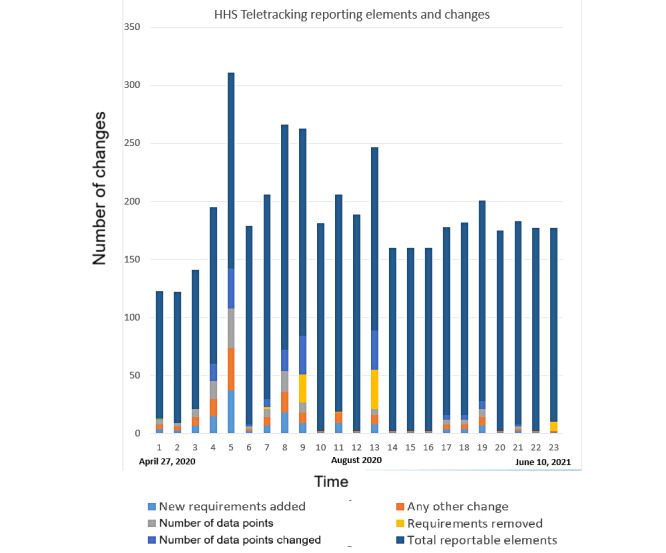
Methods: We used both quantitative and qualitative analyses and conducted 51 interviews, which were thematically analyzed. We quantified the changes in regulatory reporting requirements during the first 14 months of the pandemic.
Results: Reporting requirements placed a substantial time burden on key clinical personnel at the small independent hospital, consequently reducing the time available for patient care. Conversely, the large network hospital had dedicated nonclinical staff responsible for reporting duties, and their robust health information system facilitated this work.
Conclusions: The discrepancy in health IT capabilities suggests that there may be significant institutional inequities affecting smaller hospitals' ability to respond to a pandemic and adequately support public health efforts. Electronic certification guidelines are essential to addressing the substantial equity issues. We discuss in detail the health care policy implications of these findings.




 京公网安备 11010802042870号
京ICP备2023020795号-1
京公网安备 11010802042870号
京ICP备2023020795号-1

 分享
分享

 求助内容:
求助内容: 应助结果提醒方式:
 扫码关注我们
