Chandu V. V. Muralee Gopi, Salem Alzahmi, Venkatesha Narayanaswamy, K. V. G. Raghavendra, Bashar Issa and Ihab M. Obaidat
{"title":"可穿戴生物电子学和植入式生物医学超级电容器电极材料研究进展。","authors":"Chandu V. V. Muralee Gopi, Salem Alzahmi, Venkatesha Narayanaswamy, K. V. G. Raghavendra, Bashar Issa and Ihab M. Obaidat","doi":"10.1039/D4MH01707B","DOIUrl":null,"url":null,"abstract":"<p >Supercapacitors, a class of electrochemical energy storage devices, offer a promising solution for powering wearable bioelectronics and implantable biomedical devices. Their high-power density, rapid charge–discharge capabilities, and long cycle life make them ideal for applications requiring quick bursts of energy and extended operation. To address the challenges of energy density, self-discharge, miniaturization, integration, and power consumption, researchers are exploring various strategies, including developing novel electrode materials, optimizing device architectures, and integrating advanced fabrication techniques. Metal oxides, carbon-based materials, MXenes, and their composites have emerged as promising electrode materials due to their high specific surface area, excellent conductivity, and biocompatibility. For wearable bioelectronics, supercapacitors can power a wide range of devices, including wearable sensors, smart textiles, and other devices that require intermittent or pulsed energy. In implantable biomedical devices, supercapacitors offer a reliable and safe power source for applications such as pacemakers, neural implants, and drug delivery systems. By addressing the challenges and capitalizing on emerging technologies, supercapacitors have the potential to revolutionize the field of bioelectronics and biomedical engineering, enabling the development of innovative devices that improve healthcare and quality of life.</p>","PeriodicalId":87,"journal":{"name":"Materials Horizons","volume":" 12","pages":" 4092-4132"},"PeriodicalIF":11.4000,"publicationDate":"2025-03-20","publicationTypes":"Journal Article","fieldsOfStudy":null,"isOpenAccess":false,"openAccessPdf":"","citationCount":"0","resultStr":"{\"title\":\"A review on electrode materials of supercapacitors used in wearable bioelectronics and implantable biomedical applications\",\"authors\":\"Chandu V. V. Muralee Gopi, Salem Alzahmi, Venkatesha Narayanaswamy, K. V. G. Raghavendra, Bashar Issa and Ihab M. Obaidat\",\"doi\":\"10.1039/D4MH01707B\",\"DOIUrl\":null,\"url\":null,\"abstract\":\"<p >Supercapacitors, a class of electrochemical energy storage devices, offer a promising solution for powering wearable bioelectronics and implantable biomedical devices. Their high-power density, rapid charge–discharge capabilities, and long cycle life make them ideal for applications requiring quick bursts of energy and extended operation. To address the challenges of energy density, self-discharge, miniaturization, integration, and power consumption, researchers are exploring various strategies, including developing novel electrode materials, optimizing device architectures, and integrating advanced fabrication techniques. Metal oxides, carbon-based materials, MXenes, and their composites have emerged as promising electrode materials due to their high specific surface area, excellent conductivity, and biocompatibility. For wearable bioelectronics, supercapacitors can power a wide range of devices, including wearable sensors, smart textiles, and other devices that require intermittent or pulsed energy. In implantable biomedical devices, supercapacitors offer a reliable and safe power source for applications such as pacemakers, neural implants, and drug delivery systems. By addressing the challenges and capitalizing on emerging technologies, supercapacitors have the potential to revolutionize the field of bioelectronics and biomedical engineering, enabling the development of innovative devices that improve healthcare and quality of life.</p>\",\"PeriodicalId\":87,\"journal\":{\"name\":\"Materials Horizons\",\"volume\":\" 12\",\"pages\":\" 4092-4132\"},\"PeriodicalIF\":11.4000,\"publicationDate\":\"2025-03-20\",\"publicationTypes\":\"Journal Article\",\"fieldsOfStudy\":null,\"isOpenAccess\":false,\"openAccessPdf\":\"\",\"citationCount\":\"0\",\"resultStr\":null,\"platform\":\"Semanticscholar\",\"paperid\":null,\"PeriodicalName\":\"Materials Horizons\",\"FirstCategoryId\":\"88\",\"ListUrlMain\":\"https://pubs.rsc.org/en/content/articlelanding/2025/mh/d4mh01707b\",\"RegionNum\":2,\"RegionCategory\":\"材料科学\",\"ArticlePicture\":[],\"TitleCN\":null,\"AbstractTextCN\":null,\"PMCID\":null,\"EPubDate\":\"\",\"PubModel\":\"\",\"JCR\":\"Q1\",\"JCRName\":\"CHEMISTRY, MULTIDISCIPLINARY\",\"Score\":null,\"Total\":0}","platform":"Semanticscholar","paperid":null,"PeriodicalName":"Materials Horizons","FirstCategoryId":"88","ListUrlMain":"https://pubs.rsc.org/en/content/articlelanding/2025/mh/d4mh01707b","RegionNum":2,"RegionCategory":"材料科学","ArticlePicture":[],"TitleCN":null,"AbstractTextCN":null,"PMCID":null,"EPubDate":"","PubModel":"","JCR":"Q1","JCRName":"CHEMISTRY, MULTIDISCIPLINARY","Score":null,"Total":0}
A review on electrode materials of supercapacitors used in wearable bioelectronics and implantable biomedical applications
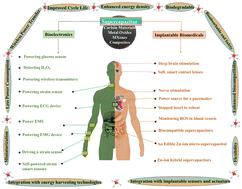
Supercapacitors, a class of electrochemical energy storage devices, offer a promising solution for powering wearable bioelectronics and implantable biomedical devices. Their high-power density, rapid charge–discharge capabilities, and long cycle life make them ideal for applications requiring quick bursts of energy and extended operation. To address the challenges of energy density, self-discharge, miniaturization, integration, and power consumption, researchers are exploring various strategies, including developing novel electrode materials, optimizing device architectures, and integrating advanced fabrication techniques. Metal oxides, carbon-based materials, MXenes, and their composites have emerged as promising electrode materials due to their high specific surface area, excellent conductivity, and biocompatibility. For wearable bioelectronics, supercapacitors can power a wide range of devices, including wearable sensors, smart textiles, and other devices that require intermittent or pulsed energy. In implantable biomedical devices, supercapacitors offer a reliable and safe power source for applications such as pacemakers, neural implants, and drug delivery systems. By addressing the challenges and capitalizing on emerging technologies, supercapacitors have the potential to revolutionize the field of bioelectronics and biomedical engineering, enabling the development of innovative devices that improve healthcare and quality of life.




 京公网安备 11010802042870号
京ICP备2023020795号-1
京公网安备 11010802042870号
京ICP备2023020795号-1

 分享
分享
 求助内容:
求助内容: 应助结果提醒方式:
 扫码关注我们
