Smita Scholtz, Cédric Coppée, Kawa Mohemed, Max Potratz, Vasco Sequeira, Volker Rudolph, Werner Scholtz, Jan-Christian Reil
{"title":"马伐康坦维持剂量的确定:肥厚型心肌病个体化治疗的启示。","authors":"Smita Scholtz, Cédric Coppée, Kawa Mohemed, Max Potratz, Vasco Sequeira, Volker Rudolph, Werner Scholtz, Jan-Christian Reil","doi":"10.1136/openhrt-2025-003192","DOIUrl":null,"url":null,"abstract":"<p><strong>Aims: </strong>Mavacamten, the first approved myosin inhibitor for symptomatic obstructive hypertrophic cardiomyopathy (oHCM), addresses hypercontractility and left ventricular outflow tract (LVOT) obstruction. This study evaluates real-world experience with mavacamten, focusing on maintenance dose determination to optimise individual therapy and enhance patient safety.</p><p><strong>Methods: </strong>36 patients with symptomatic oHCM who completed the initiating phase of mavacamten therapy were analysed. <i>CYP2C19</i> genetic testing determined metabolic status prior to treatment. Echocardiographic measurements (eg, LVOT gradient, left atrial volume index, left ventricular ejection fraction (LVEF) and E/E') and biomarkers (high-sensitivity troponin I, N-terminal pro B-type natriuretic peptide (NT-proBNP)) were assessed at baseline and after 3 months. Clinical status was evaluated using New York Heart Association (NYHA) class and Kansas City Cardiomyopathy Questionnaire (KCCQ) score.</p><p><strong>Results: </strong>The mean age of patients was 60.6±12.1, and all had normal <i>CYP2C19</i> metabolic status. LVEF was 68% (IQR 8) at baseline and decreased mildly to 60.5% (IQR 7.25; p=0.0004) without cases dropping below 50%. Resting and provoked LVOT gradients decreased from 65 mm Hg (IQR 43.75) and 105 mm Hg (IQR 36.25) to 12 mm Hg (IQR 15.5; p<0.001) and 52.5 mm Hg (IQR 46.5; p<0.001), respectively. NT-proBNP and high-sensitivity troponin I decreased significantly from 1040 ng/mL (IQR 1255) to 285 ng/mL (IQR 483; p=0.0005) and from 11 ng/mL (IQR 15.5) to 10 ng/mL (IQR 5; p<0.0001). Diastolic function improved slightly; and clinically, patients improved significantly, with improvement in NYHA class and increase in KCCQ score. Mean time to reach maintenance dose was 14 weeks, with the necessity of dose adjustments in more than 50% of cases.</p><p><strong>Conclusion: </strong>Mavacamten therapy is safe and effective in the initiating phase. Determination of starting and maximum dose is based on <i>CYP2C19</i> metabolic status, while individualised dose adjustments are guided by echocardiographic response to optimise patient safety.</p>","PeriodicalId":19505,"journal":{"name":"Open Heart","volume":"12 1","pages":""},"PeriodicalIF":2.8000,"publicationDate":"2025-03-28","publicationTypes":"Journal Article","fieldsOfStudy":null,"isOpenAccess":false,"openAccessPdf":"https://www.ncbi.nlm.nih.gov/pmc/articles/PMC11956304/pdf/","citationCount":"0","resultStr":"{\"title\":\"Mavacamten maintenance dose determination: insights into individualised therapy for hypertrophic cardiomyopathy.\",\"authors\":\"Smita Scholtz, Cédric Coppée, Kawa Mohemed, Max Potratz, Vasco Sequeira, Volker Rudolph, Werner Scholtz, Jan-Christian Reil\",\"doi\":\"10.1136/openhrt-2025-003192\",\"DOIUrl\":null,\"url\":null,\"abstract\":\"<p><strong>Aims: </strong>Mavacamten, the first approved myosin inhibitor for symptomatic obstructive hypertrophic cardiomyopathy (oHCM), addresses hypercontractility and left ventricular outflow tract (LVOT) obstruction. This study evaluates real-world experience with mavacamten, focusing on maintenance dose determination to optimise individual therapy and enhance patient safety.</p><p><strong>Methods: </strong>36 patients with symptomatic oHCM who completed the initiating phase of mavacamten therapy were analysed. <i>CYP2C19</i> genetic testing determined metabolic status prior to treatment. Echocardiographic measurements (eg, LVOT gradient, left atrial volume index, left ventricular ejection fraction (LVEF) and E/E') and biomarkers (high-sensitivity troponin I, N-terminal pro B-type natriuretic peptide (NT-proBNP)) were assessed at baseline and after 3 months. Clinical status was evaluated using New York Heart Association (NYHA) class and Kansas City Cardiomyopathy Questionnaire (KCCQ) score.</p><p><strong>Results: </strong>The mean age of patients was 60.6±12.1, and all had normal <i>CYP2C19</i> metabolic status. LVEF was 68% (IQR 8) at baseline and decreased mildly to 60.5% (IQR 7.25; p=0.0004) without cases dropping below 50%. Resting and provoked LVOT gradients decreased from 65 mm Hg (IQR 43.75) and 105 mm Hg (IQR 36.25) to 12 mm Hg (IQR 15.5; p<0.001) and 52.5 mm Hg (IQR 46.5; p<0.001), respectively. NT-proBNP and high-sensitivity troponin I decreased significantly from 1040 ng/mL (IQR 1255) to 285 ng/mL (IQR 483; p=0.0005) and from 11 ng/mL (IQR 15.5) to 10 ng/mL (IQR 5; p<0.0001). Diastolic function improved slightly; and clinically, patients improved significantly, with improvement in NYHA class and increase in KCCQ score. Mean time to reach maintenance dose was 14 weeks, with the necessity of dose adjustments in more than 50% of cases.</p><p><strong>Conclusion: </strong>Mavacamten therapy is safe and effective in the initiating phase. Determination of starting and maximum dose is based on <i>CYP2C19</i> metabolic status, while individualised dose adjustments are guided by echocardiographic response to optimise patient safety.</p>\",\"PeriodicalId\":19505,\"journal\":{\"name\":\"Open Heart\",\"volume\":\"12 1\",\"pages\":\"\"},\"PeriodicalIF\":2.8000,\"publicationDate\":\"2025-03-28\",\"publicationTypes\":\"Journal Article\",\"fieldsOfStudy\":null,\"isOpenAccess\":false,\"openAccessPdf\":\"https://www.ncbi.nlm.nih.gov/pmc/articles/PMC11956304/pdf/\",\"citationCount\":\"0\",\"resultStr\":null,\"platform\":\"Semanticscholar\",\"paperid\":null,\"PeriodicalName\":\"Open Heart\",\"FirstCategoryId\":\"1085\",\"ListUrlMain\":\"https://doi.org/10.1136/openhrt-2025-003192\",\"RegionNum\":0,\"RegionCategory\":null,\"ArticlePicture\":[],\"TitleCN\":null,\"AbstractTextCN\":null,\"PMCID\":null,\"EPubDate\":\"\",\"PubModel\":\"\",\"JCR\":\"Q2\",\"JCRName\":\"CARDIAC & CARDIOVASCULAR SYSTEMS\",\"Score\":null,\"Total\":0}","platform":"Semanticscholar","paperid":null,"PeriodicalName":"Open Heart","FirstCategoryId":"1085","ListUrlMain":"https://doi.org/10.1136/openhrt-2025-003192","RegionNum":0,"RegionCategory":null,"ArticlePicture":[],"TitleCN":null,"AbstractTextCN":null,"PMCID":null,"EPubDate":"","PubModel":"","JCR":"Q2","JCRName":"CARDIAC & CARDIOVASCULAR SYSTEMS","Score":null,"Total":0}
引用次数: 0
摘要
目的:Mavacamten是首个被批准用于治疗症状性梗阻性肥厚性心肌病(oHCM)的肌球蛋白抑制剂,用于治疗心肌过度收缩和左心室流出道(LVOT)梗阻。本研究评估了实际使用马伐卡坦的经验,重点是维持剂量的确定,以优化个体化治疗并提高患者的安全性。方法:对36例完成马伐卡坦初始期治疗的症状性oHCM患者进行分析。CYP2C19基因检测确定治疗前的代谢状态。在基线和3个月后评估超声心动图测量(如LVOT梯度、左房容积指数、左室射血分数(LVEF)和E/E’)和生物标志物(高灵敏度肌钙蛋白I、n端前b型利钠肽(NT-proBNP))。采用纽约心脏协会(NYHA)分级和堪萨斯城心肌病问卷(KCCQ)评分评估临床状况。结果:患者平均年龄60.6±12.1岁,CYP2C19代谢正常。基线时LVEF为68% (IQR 8),随后轻度下降至60.5% (IQR 7.25;P =0.0004),病例数不低于50%。静息和激发LVOT梯度从65 mm Hg (IQR 43.75)和105 mm Hg (IQR 36.25)降至12 mm Hg (IQR 15.5;结论:马伐卡坦治疗初期安全有效。起始剂量和最大剂量的确定基于CYP2C19代谢状态,而个体化剂量调整则根据超声心动图反应来指导,以优化患者的安全性。
Mavacamten maintenance dose determination: insights into individualised therapy for hypertrophic cardiomyopathy.
Aims: Mavacamten, the first approved myosin inhibitor for symptomatic obstructive hypertrophic cardiomyopathy (oHCM), addresses hypercontractility and left ventricular outflow tract (LVOT) obstruction. This study evaluates real-world experience with mavacamten, focusing on maintenance dose determination to optimise individual therapy and enhance patient safety.
Methods: 36 patients with symptomatic oHCM who completed the initiating phase of mavacamten therapy were analysed. CYP2C19 genetic testing determined metabolic status prior to treatment. Echocardiographic measurements (eg, LVOT gradient, left atrial volume index, left ventricular ejection fraction (LVEF) and E/E') and biomarkers (high-sensitivity troponin I, N-terminal pro B-type natriuretic peptide (NT-proBNP)) were assessed at baseline and after 3 months. Clinical status was evaluated using New York Heart Association (NYHA) class and Kansas City Cardiomyopathy Questionnaire (KCCQ) score.
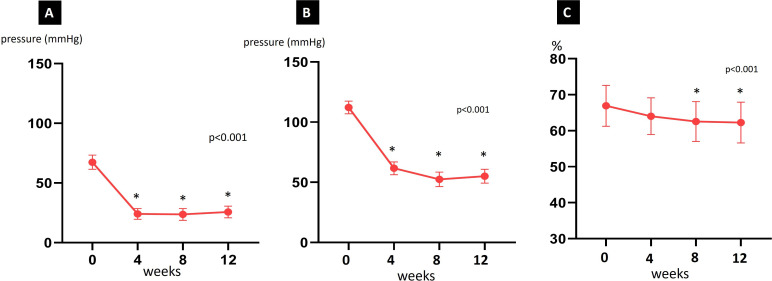
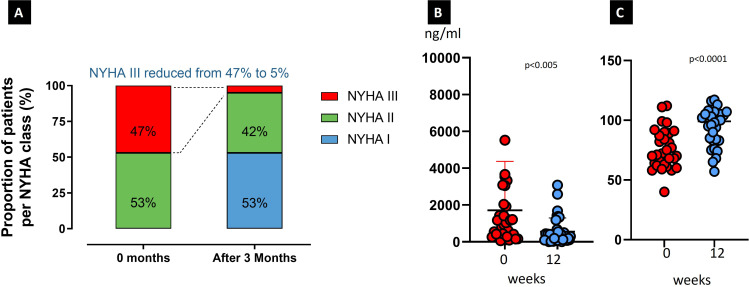
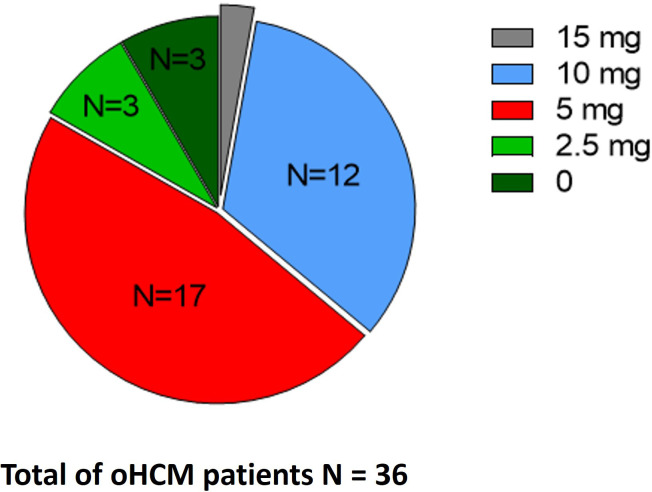
Results: The mean age of patients was 60.6±12.1, and all had normal CYP2C19 metabolic status. LVEF was 68% (IQR 8) at baseline and decreased mildly to 60.5% (IQR 7.25; p=0.0004) without cases dropping below 50%. Resting and provoked LVOT gradients decreased from 65 mm Hg (IQR 43.75) and 105 mm Hg (IQR 36.25) to 12 mm Hg (IQR 15.5; p<0.001) and 52.5 mm Hg (IQR 46.5; p<0.001), respectively. NT-proBNP and high-sensitivity troponin I decreased significantly from 1040 ng/mL (IQR 1255) to 285 ng/mL (IQR 483; p=0.0005) and from 11 ng/mL (IQR 15.5) to 10 ng/mL (IQR 5; p<0.0001). Diastolic function improved slightly; and clinically, patients improved significantly, with improvement in NYHA class and increase in KCCQ score. Mean time to reach maintenance dose was 14 weeks, with the necessity of dose adjustments in more than 50% of cases.
Conclusion: Mavacamten therapy is safe and effective in the initiating phase. Determination of starting and maximum dose is based on CYP2C19 metabolic status, while individualised dose adjustments are guided by echocardiographic response to optimise patient safety.
期刊介绍:
Open Heart is an online-only, open access cardiology journal that aims to be “open” in many ways: open access (free access for all readers), open peer review (unblinded peer review) and open data (data sharing is encouraged). The goal is to ensure maximum transparency and maximum impact on research progress and patient care. The journal is dedicated to publishing high quality, peer reviewed medical research in all disciplines and therapeutic areas of cardiovascular medicine. Research is published across all study phases and designs, from study protocols to phase I trials to meta-analyses, including small or specialist studies. Opinionated discussions on controversial topics are welcomed. Open Heart aims to operate a fast submission and review process with continuous publication online, to ensure timely, up-to-date research is available worldwide. The journal adheres to a rigorous and transparent peer review process, and all articles go through a statistical assessment to ensure robustness of the analyses. Open Heart is an official journal of the British Cardiovascular Society.





 京公网安备 11010802042870号
京ICP备2023020795号-1
京公网安备 11010802042870号
京ICP备2023020795号-1

 分享
分享
 求助内容:
求助内容: 应助结果提醒方式:
 扫码关注我们
