Rohith Krishna , James Langridge , Emmanuelle Claude , Robert Bradshaw , Laura Cole , Simona Francese
{"title":"SELECT系列MALDI MRT上小分子成像的系统方法优化方法-指纹中的药物映射,一个案例研究","authors":"Rohith Krishna , James Langridge , Emmanuelle Claude , Robert Bradshaw , Laura Cole , Simona Francese","doi":"10.1016/j.aca.2025.343998","DOIUrl":null,"url":null,"abstract":"<div><div>Molecular fingerprinting via Matrix Assisted Laser Desorption Ionisation time-of-flight Mass Spectrometry profiling (MALDI MSP) and Imaging (MALDI-MSI) has been proven to provide biometric and lifestyle information from a fingermark. As such, it can be an effective tool to assist police investigations, thus justifying continued effort to improve the quality and range of the forensic intelligence that it is possible to provide. We are currently exploring the advancements in molecular fingerprinting capabilities on the state-of-the -art SELECT SERIES MALDI-MRT mass spectrometer based on its high mass measurement accuracy (sub-ppm) and spatial resolution (15 μm). The unique nature of this instrument requires careful optimisation to maximise the system's performance for the imaging of small molecules in fingerprints. In this study, a systematic approach to setting optimisation including optimisation of laser parameters, source voltage, quadrupole MS profile, and Transfer gas as well as RF voltage settings were determined for the analysis of latent fingerprint imaging and antipsychotics-contaminated fingerprint imaging. The developed method eventually yields significant improvement in image resolution over the default parameters.</div></div>","PeriodicalId":240,"journal":{"name":"Analytica Chimica Acta","volume":"1354 ","pages":"Article 343998"},"PeriodicalIF":6.0000,"publicationDate":"2025-06-08","publicationTypes":"Journal Article","fieldsOfStudy":null,"isOpenAccess":false,"openAccessPdf":"","citationCount":"0","resultStr":"{\"title\":\"Systematic method optimisation approach for small molecule imaging on the SELECT SERIES MALDI MRT - Drug mapping in fingerprints, a case study\",\"authors\":\"Rohith Krishna , James Langridge , Emmanuelle Claude , Robert Bradshaw , Laura Cole , Simona Francese\",\"doi\":\"10.1016/j.aca.2025.343998\",\"DOIUrl\":null,\"url\":null,\"abstract\":\"<div><div>Molecular fingerprinting via Matrix Assisted Laser Desorption Ionisation time-of-flight Mass Spectrometry profiling (MALDI MSP) and Imaging (MALDI-MSI) has been proven to provide biometric and lifestyle information from a fingermark. As such, it can be an effective tool to assist police investigations, thus justifying continued effort to improve the quality and range of the forensic intelligence that it is possible to provide. We are currently exploring the advancements in molecular fingerprinting capabilities on the state-of-the -art SELECT SERIES MALDI-MRT mass spectrometer based on its high mass measurement accuracy (sub-ppm) and spatial resolution (15 μm). The unique nature of this instrument requires careful optimisation to maximise the system's performance for the imaging of small molecules in fingerprints. In this study, a systematic approach to setting optimisation including optimisation of laser parameters, source voltage, quadrupole MS profile, and Transfer gas as well as RF voltage settings were determined for the analysis of latent fingerprint imaging and antipsychotics-contaminated fingerprint imaging. The developed method eventually yields significant improvement in image resolution over the default parameters.</div></div>\",\"PeriodicalId\":240,\"journal\":{\"name\":\"Analytica Chimica Acta\",\"volume\":\"1354 \",\"pages\":\"Article 343998\"},\"PeriodicalIF\":6.0000,\"publicationDate\":\"2025-06-08\",\"publicationTypes\":\"Journal Article\",\"fieldsOfStudy\":null,\"isOpenAccess\":false,\"openAccessPdf\":\"\",\"citationCount\":\"0\",\"resultStr\":null,\"platform\":\"Semanticscholar\",\"paperid\":null,\"PeriodicalName\":\"Analytica Chimica Acta\",\"FirstCategoryId\":\"92\",\"ListUrlMain\":\"https://www.sciencedirect.com/science/article/pii/S0003267025003927\",\"RegionNum\":2,\"RegionCategory\":\"化学\",\"ArticlePicture\":[],\"TitleCN\":null,\"AbstractTextCN\":null,\"PMCID\":null,\"EPubDate\":\"2025/4/1 0:00:00\",\"PubModel\":\"Epub\",\"JCR\":\"Q1\",\"JCRName\":\"CHEMISTRY, ANALYTICAL\",\"Score\":null,\"Total\":0}","platform":"Semanticscholar","paperid":null,"PeriodicalName":"Analytica Chimica Acta","FirstCategoryId":"92","ListUrlMain":"https://www.sciencedirect.com/science/article/pii/S0003267025003927","RegionNum":2,"RegionCategory":"化学","ArticlePicture":[],"TitleCN":null,"AbstractTextCN":null,"PMCID":null,"EPubDate":"2025/4/1 0:00:00","PubModel":"Epub","JCR":"Q1","JCRName":"CHEMISTRY, ANALYTICAL","Score":null,"Total":0}
引用次数: 0
摘要
通过基质辅助激光解吸电离飞行时间质谱分析(MALDI MSP)和成像(MALDI- msi)进行分子指纹识别已被证明可以从手印中提供生物特征和生活方式信息。因此,它可以成为协助警方调查的有效工具,因此有理由继续努力提高可能提供的法医情报的质量和范围。我们目前正在探索基于其高质量测量精度(亚ppm)和空间分辨率(15 μm)的最先进的SELECT SERIES MALDI-MRT质谱仪在分子指纹识别能力方面的进步。该仪器的独特性质需要仔细优化,以最大限度地提高系统对指纹小分子成像的性能。在本研究中,确定了一种系统的设置优化方法,包括优化激光参数、源电压、四极杆质谱、转移气体以及射频电压设置,用于分析潜在指纹成像和抗精神病药物污染的指纹成像。与默认参数相比,开发的方法最终产生了图像分辨率的显着改进。
Systematic method optimisation approach for small molecule imaging on the SELECT SERIES MALDI MRT - Drug mapping in fingerprints, a case study
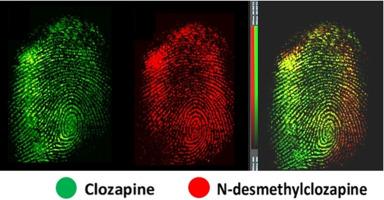
Molecular fingerprinting via Matrix Assisted Laser Desorption Ionisation time-of-flight Mass Spectrometry profiling (MALDI MSP) and Imaging (MALDI-MSI) has been proven to provide biometric and lifestyle information from a fingermark. As such, it can be an effective tool to assist police investigations, thus justifying continued effort to improve the quality and range of the forensic intelligence that it is possible to provide. We are currently exploring the advancements in molecular fingerprinting capabilities on the state-of-the -art SELECT SERIES MALDI-MRT mass spectrometer based on its high mass measurement accuracy (sub-ppm) and spatial resolution (15 μm). The unique nature of this instrument requires careful optimisation to maximise the system's performance for the imaging of small molecules in fingerprints. In this study, a systematic approach to setting optimisation including optimisation of laser parameters, source voltage, quadrupole MS profile, and Transfer gas as well as RF voltage settings were determined for the analysis of latent fingerprint imaging and antipsychotics-contaminated fingerprint imaging. The developed method eventually yields significant improvement in image resolution over the default parameters.
期刊介绍:
Analytica Chimica Acta has an open access mirror journal Analytica Chimica Acta: X, sharing the same aims and scope, editorial team, submission system and rigorous peer review.
Analytica Chimica Acta provides a forum for the rapid publication of original research, and critical, comprehensive reviews dealing with all aspects of fundamental and applied modern analytical chemistry. The journal welcomes the submission of research papers which report studies concerning the development of new and significant analytical methodologies. In determining the suitability of submitted articles for publication, particular scrutiny will be placed on the degree of novelty and impact of the research and the extent to which it adds to the existing body of knowledge in analytical chemistry.





 京公网安备 11010802042870号
京ICP备2023020795号-1
京公网安备 11010802042870号
京ICP备2023020795号-1

 分享
分享
 求助内容:
求助内容: 应助结果提醒方式:
 扫码关注我们
