{"title":"血清钙、钾水平与酒渣鼻之间的遗传关联:来自两样本孟德尔随机研究的证据。","authors":"YanKun Zhang, Xuan Zhang, Jie Dong, Fang Liu","doi":"10.2147/CCID.S508231","DOIUrl":null,"url":null,"abstract":"<p><strong>Purpose: </strong>Recent advances in epidemiological and genetic studies have provided some insights regarding the pathophysiology of rosacea, but the majority of its underlying mechanisms are still poorly understood. In particular, more data are needed to fully understand the role of micronutrients in rosacea development. This study aimed to explore the causality of associations between Calcium, Copper, Selenium, Zinc, Iron, Potassium and Magnesium with the risk of rosacea.</p><p><strong>Patients and methods: </strong>This was a two-sample Mendelian Randomization (MR) study that used data from genome-wide association studies (GWAS) on serum levels of selected micronutrients as exposure and rosacea as the outcome. The analysis primarily employed the Inverse Variance Weighted (IVW) method. Additional methods included weighted median, weighted mode, and MR-Egger regression. Sensitivity analysis included MR-Egger, MR-PRESSO, Cochran's Q, and leave-one-out methods. A total of 301 Instrumental Variables were selected for analysis.</p><p><strong>Results: </strong>The genetic prediction indicated a statistically significant association between serum Calcium levels and higher rosacea risk (Odds Ratio (OR) = 2.27, 95% Confidence Interval (CI): 2.02-2.55, P < 0.001), further confirmed by all supplementary MR methods. Significant association was also found between serum Potassium levels and lower rosacea risk (OR = 0.36, 95% CI: 0.14-0.93, P = 0.0354), further confirmed by the weighted-median method. Sensitivity analyses showed that the results were robust and not driven by any single factor, with low probability of horizontal pleiotropy.</p><p><strong>Conclusion: </strong>This study found an evidence of a causal association between genetically predicted serum levels of Calcium and Potassium with the risk of rosacea. The roles of these micronutrients should be further studied in rosacea, especially as a link to neurovascular dysregulation and oxidative stress.</p>","PeriodicalId":10447,"journal":{"name":"Clinical, Cosmetic and Investigational Dermatology","volume":"18 ","pages":"743-753"},"PeriodicalIF":2.5000,"publicationDate":"2025-03-27","publicationTypes":"Journal Article","fieldsOfStudy":null,"isOpenAccess":false,"openAccessPdf":"https://www.ncbi.nlm.nih.gov/pmc/articles/PMC11956733/pdf/","citationCount":"0","resultStr":"{\"title\":\"Genetic Association Between Serum Calcium, Potassium Levels, and Rosacea: Evidence from a Two-Sample Mendelian Randomization Study.\",\"authors\":\"YanKun Zhang, Xuan Zhang, Jie Dong, Fang Liu\",\"doi\":\"10.2147/CCID.S508231\",\"DOIUrl\":null,\"url\":null,\"abstract\":\"<p><strong>Purpose: </strong>Recent advances in epidemiological and genetic studies have provided some insights regarding the pathophysiology of rosacea, but the majority of its underlying mechanisms are still poorly understood. In particular, more data are needed to fully understand the role of micronutrients in rosacea development. This study aimed to explore the causality of associations between Calcium, Copper, Selenium, Zinc, Iron, Potassium and Magnesium with the risk of rosacea.</p><p><strong>Patients and methods: </strong>This was a two-sample Mendelian Randomization (MR) study that used data from genome-wide association studies (GWAS) on serum levels of selected micronutrients as exposure and rosacea as the outcome. The analysis primarily employed the Inverse Variance Weighted (IVW) method. Additional methods included weighted median, weighted mode, and MR-Egger regression. Sensitivity analysis included MR-Egger, MR-PRESSO, Cochran's Q, and leave-one-out methods. A total of 301 Instrumental Variables were selected for analysis.</p><p><strong>Results: </strong>The genetic prediction indicated a statistically significant association between serum Calcium levels and higher rosacea risk (Odds Ratio (OR) = 2.27, 95% Confidence Interval (CI): 2.02-2.55, P < 0.001), further confirmed by all supplementary MR methods. Significant association was also found between serum Potassium levels and lower rosacea risk (OR = 0.36, 95% CI: 0.14-0.93, P = 0.0354), further confirmed by the weighted-median method. Sensitivity analyses showed that the results were robust and not driven by any single factor, with low probability of horizontal pleiotropy.</p><p><strong>Conclusion: </strong>This study found an evidence of a causal association between genetically predicted serum levels of Calcium and Potassium with the risk of rosacea. The roles of these micronutrients should be further studied in rosacea, especially as a link to neurovascular dysregulation and oxidative stress.</p>\",\"PeriodicalId\":10447,\"journal\":{\"name\":\"Clinical, Cosmetic and Investigational Dermatology\",\"volume\":\"18 \",\"pages\":\"743-753\"},\"PeriodicalIF\":2.5000,\"publicationDate\":\"2025-03-27\",\"publicationTypes\":\"Journal Article\",\"fieldsOfStudy\":null,\"isOpenAccess\":false,\"openAccessPdf\":\"https://www.ncbi.nlm.nih.gov/pmc/articles/PMC11956733/pdf/\",\"citationCount\":\"0\",\"resultStr\":null,\"platform\":\"Semanticscholar\",\"paperid\":null,\"PeriodicalName\":\"Clinical, Cosmetic and Investigational Dermatology\",\"FirstCategoryId\":\"3\",\"ListUrlMain\":\"https://doi.org/10.2147/CCID.S508231\",\"RegionNum\":4,\"RegionCategory\":\"医学\",\"ArticlePicture\":[],\"TitleCN\":null,\"AbstractTextCN\":null,\"PMCID\":null,\"EPubDate\":\"2025/1/1 0:00:00\",\"PubModel\":\"eCollection\",\"JCR\":\"Q3\",\"JCRName\":\"DERMATOLOGY\",\"Score\":null,\"Total\":0}","platform":"Semanticscholar","paperid":null,"PeriodicalName":"Clinical, Cosmetic and Investigational Dermatology","FirstCategoryId":"3","ListUrlMain":"https://doi.org/10.2147/CCID.S508231","RegionNum":4,"RegionCategory":"医学","ArticlePicture":[],"TitleCN":null,"AbstractTextCN":null,"PMCID":null,"EPubDate":"2025/1/1 0:00:00","PubModel":"eCollection","JCR":"Q3","JCRName":"DERMATOLOGY","Score":null,"Total":0}
引用次数: 0
摘要
目的:流行病学和遗传学研究的最新进展为酒渣鼻的病理生理提供了一些见解,但其大部分潜在机制仍然知之甚少。特别是,需要更多的数据来充分了解微量营养素在酒渣鼻发展中的作用。本研究旨在探讨钙、铜、硒、锌、铁、钾和镁与酒渣鼻风险之间的因果关系。患者和方法:这是一项双样本孟德尔随机化(MR)研究,使用来自全基因组关联研究(GWAS)的数据,研究了选定微量营养素的血清水平作为暴露,并将酒渣鼻作为结果。分析主要采用反方差加权(IVW)方法。其他方法包括加权中位数、加权模式和MR-Egger回归。敏感性分析包括MR-Egger、MR-PRESSO、Cochran’s Q和leave-one方法。共选取301个工具变量进行分析。结果:遗传预测显示血清钙水平与较高酒渣鼻风险有统计学意义(优势比(OR) = 2.27, 95%可信区间(CI): 2.02-2.55, P < 0.001),所有补充MR方法进一步证实了这一点。血清钾水平与较低的酒渣鼻风险之间也存在显著关联(OR = 0.36, 95% CI: 0.14-0.93, P = 0.0354),加权中位数法进一步证实了这一点。敏感性分析表明,结果是稳健的,不受任何单一因素的影响,水平多效性的概率很低。结论:本研究发现了基因预测的血清钙和钾水平与酒渣鼻风险之间存在因果关系的证据。这些微量营养素在酒渣鼻中的作用有待进一步研究,特别是它们与神经血管失调和氧化应激的关系。
Genetic Association Between Serum Calcium, Potassium Levels, and Rosacea: Evidence from a Two-Sample Mendelian Randomization Study.
Purpose: Recent advances in epidemiological and genetic studies have provided some insights regarding the pathophysiology of rosacea, but the majority of its underlying mechanisms are still poorly understood. In particular, more data are needed to fully understand the role of micronutrients in rosacea development. This study aimed to explore the causality of associations between Calcium, Copper, Selenium, Zinc, Iron, Potassium and Magnesium with the risk of rosacea.
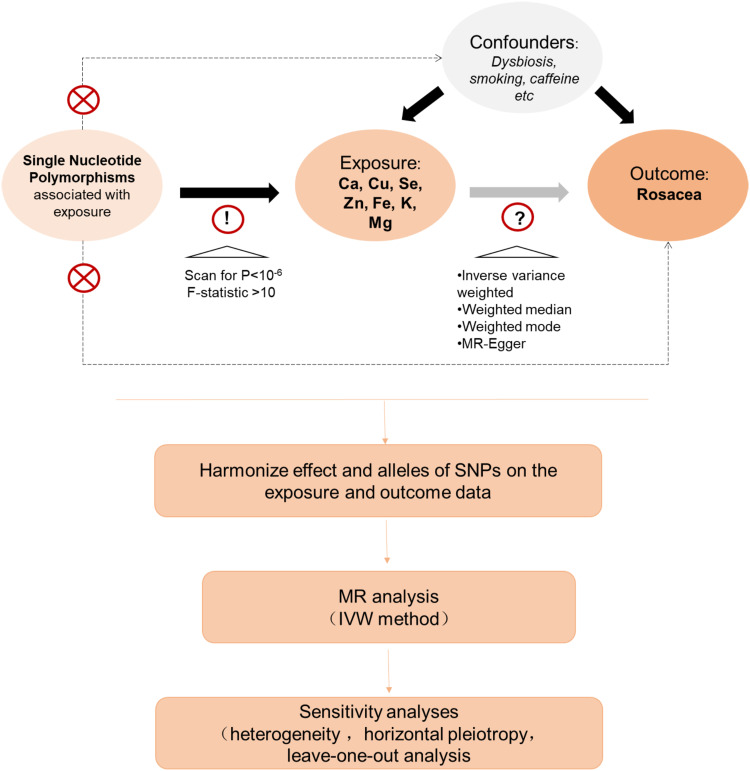
Patients and methods: This was a two-sample Mendelian Randomization (MR) study that used data from genome-wide association studies (GWAS) on serum levels of selected micronutrients as exposure and rosacea as the outcome. The analysis primarily employed the Inverse Variance Weighted (IVW) method. Additional methods included weighted median, weighted mode, and MR-Egger regression. Sensitivity analysis included MR-Egger, MR-PRESSO, Cochran's Q, and leave-one-out methods. A total of 301 Instrumental Variables were selected for analysis.
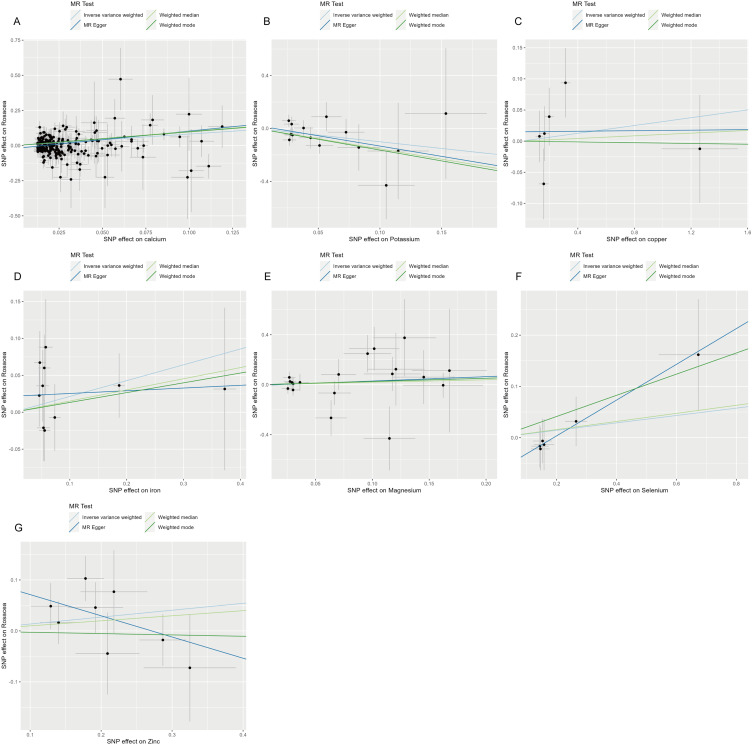
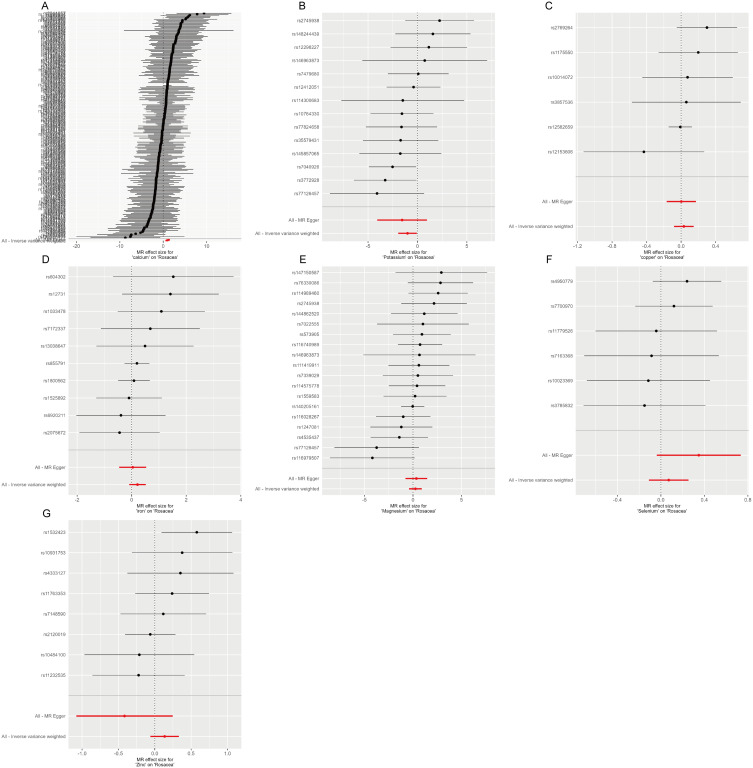
Results: The genetic prediction indicated a statistically significant association between serum Calcium levels and higher rosacea risk (Odds Ratio (OR) = 2.27, 95% Confidence Interval (CI): 2.02-2.55, P < 0.001), further confirmed by all supplementary MR methods. Significant association was also found between serum Potassium levels and lower rosacea risk (OR = 0.36, 95% CI: 0.14-0.93, P = 0.0354), further confirmed by the weighted-median method. Sensitivity analyses showed that the results were robust and not driven by any single factor, with low probability of horizontal pleiotropy.
Conclusion: This study found an evidence of a causal association between genetically predicted serum levels of Calcium and Potassium with the risk of rosacea. The roles of these micronutrients should be further studied in rosacea, especially as a link to neurovascular dysregulation and oxidative stress.
期刊介绍:
Clinical, Cosmetic and Investigational Dermatology is an international, peer-reviewed, open access journal that focuses on the latest clinical and experimental research in all aspects of skin disease and cosmetic interventions. Normal and pathological processes in skin development and aging, their modification and treatment, as well as basic research into histology of dermal and dermal structures that provide clinical insights and potential treatment options are key topics for the journal.
Patient satisfaction, preference, quality of life, compliance, persistence and their role in developing new management options to optimize outcomes for target conditions constitute major areas of interest.
The journal is characterized by the rapid reporting of clinical studies, reviews and original research in skin research and skin care.
All areas of dermatology will be covered; contributions will be welcomed from all clinicians and basic science researchers globally.




 京公网安备 11010802042870号
京ICP备2023020795号-1
京公网安备 11010802042870号
京ICP备2023020795号-1

 分享
分享
 求助内容:
求助内容: 应助结果提醒方式:
 扫码关注我们
