Emily M. Hammermeister, Stathys Papadimitriou, Martin Arundell, Jake Ludgate, Allison Schaap, Matthew C. Mowlem, Sara E. Fowell, Edward Chaney, Socratis Loucaides
{"title":"配备新型pH和总碱度传感器的Autosub远程AUV自主海洋碳观测新能力","authors":"Emily M. Hammermeister, Stathys Papadimitriou, Martin Arundell, Jake Ludgate, Allison Schaap, Matthew C. Mowlem, Sara E. Fowell, Edward Chaney, Socratis Loucaides","doi":"10.1021/acs.est.4c10139","DOIUrl":null,"url":null,"abstract":"The development of marine autonomous platforms has improved our capability to gather ocean observations at fine spatial scales and high temporal frequency, which can be used to better measure, characterize, and model ocean carbon. As part of the OCEANIDS program, novel carbonate sensors were integrated into the Autosub Long-Range (ALR) autonomous underwater vehicle (AUV) and deployed in the Celtic Sea. Autonomous Lab-On-Chip (LOC) sensors measured pH and total alkalinity (TA) while onboard the ALR. Using interpolation, the ALR-sensor data set is compared against CTD co-samples. The average differences between the LOC sensor and co-sample pH range from −0.011 to −0.015. The TA sensor data agrees with co-samples within 1–2 μmol kg<sup>–1</sup> on average. Biogeochemical water properties differing between CTD and ALR observations reveal correlations to carbonate parameter variations. The LOC sensors enabled the characterization of the marine carbonate system from autonomous subsurface measurements for the first time. Sensor pH and TA data were used to calculate dissolved inorganic carbon (DIC), partial pressure of CO<sub>2</sub> (pCO<sub>2</sub>), and aragonite saturation state (Ω<sub>Ar</sub>) and are compared with CTD co-samples with mean residuals of 4–7 μmol kg<sup>–1</sup>, 10–17 μatm, and −0.03 to −0.06, respectively. Future perspectives on sensor deployment and analysis are discussed.","PeriodicalId":36,"journal":{"name":"环境科学与技术","volume":"32 1","pages":""},"PeriodicalIF":11.3000,"publicationDate":"2025-04-01","publicationTypes":"Journal Article","fieldsOfStudy":null,"isOpenAccess":false,"openAccessPdf":"","citationCount":"0","resultStr":"{\"title\":\"New Capability in Autonomous Ocean Carbon Observations Using the Autosub Long-Range AUV Equipped with Novel pH and Total Alkalinity Sensors\",\"authors\":\"Emily M. Hammermeister, Stathys Papadimitriou, Martin Arundell, Jake Ludgate, Allison Schaap, Matthew C. Mowlem, Sara E. Fowell, Edward Chaney, Socratis Loucaides\",\"doi\":\"10.1021/acs.est.4c10139\",\"DOIUrl\":null,\"url\":null,\"abstract\":\"The development of marine autonomous platforms has improved our capability to gather ocean observations at fine spatial scales and high temporal frequency, which can be used to better measure, characterize, and model ocean carbon. As part of the OCEANIDS program, novel carbonate sensors were integrated into the Autosub Long-Range (ALR) autonomous underwater vehicle (AUV) and deployed in the Celtic Sea. Autonomous Lab-On-Chip (LOC) sensors measured pH and total alkalinity (TA) while onboard the ALR. Using interpolation, the ALR-sensor data set is compared against CTD co-samples. The average differences between the LOC sensor and co-sample pH range from −0.011 to −0.015. The TA sensor data agrees with co-samples within 1–2 μmol kg<sup>–1</sup> on average. Biogeochemical water properties differing between CTD and ALR observations reveal correlations to carbonate parameter variations. The LOC sensors enabled the characterization of the marine carbonate system from autonomous subsurface measurements for the first time. Sensor pH and TA data were used to calculate dissolved inorganic carbon (DIC), partial pressure of CO<sub>2</sub> (pCO<sub>2</sub>), and aragonite saturation state (Ω<sub>Ar</sub>) and are compared with CTD co-samples with mean residuals of 4–7 μmol kg<sup>–1</sup>, 10–17 μatm, and −0.03 to −0.06, respectively. Future perspectives on sensor deployment and analysis are discussed.\",\"PeriodicalId\":36,\"journal\":{\"name\":\"环境科学与技术\",\"volume\":\"32 1\",\"pages\":\"\"},\"PeriodicalIF\":11.3000,\"publicationDate\":\"2025-04-01\",\"publicationTypes\":\"Journal Article\",\"fieldsOfStudy\":null,\"isOpenAccess\":false,\"openAccessPdf\":\"\",\"citationCount\":\"0\",\"resultStr\":null,\"platform\":\"Semanticscholar\",\"paperid\":null,\"PeriodicalName\":\"环境科学与技术\",\"FirstCategoryId\":\"1\",\"ListUrlMain\":\"https://doi.org/10.1021/acs.est.4c10139\",\"RegionNum\":1,\"RegionCategory\":\"环境科学与生态学\",\"ArticlePicture\":[],\"TitleCN\":null,\"AbstractTextCN\":null,\"PMCID\":null,\"EPubDate\":\"\",\"PubModel\":\"\",\"JCR\":\"Q1\",\"JCRName\":\"ENGINEERING, ENVIRONMENTAL\",\"Score\":null,\"Total\":0}","platform":"Semanticscholar","paperid":null,"PeriodicalName":"环境科学与技术","FirstCategoryId":"1","ListUrlMain":"https://doi.org/10.1021/acs.est.4c10139","RegionNum":1,"RegionCategory":"环境科学与生态学","ArticlePicture":[],"TitleCN":null,"AbstractTextCN":null,"PMCID":null,"EPubDate":"","PubModel":"","JCR":"Q1","JCRName":"ENGINEERING, ENVIRONMENTAL","Score":null,"Total":0}
New Capability in Autonomous Ocean Carbon Observations Using the Autosub Long-Range AUV Equipped with Novel pH and Total Alkalinity Sensors
The development of marine autonomous platforms has improved our capability to gather ocean observations at fine spatial scales and high temporal frequency, which can be used to better measure, characterize, and model ocean carbon. As part of the OCEANIDS program, novel carbonate sensors were integrated into the Autosub Long-Range (ALR) autonomous underwater vehicle (AUV) and deployed in the Celtic Sea. Autonomous Lab-On-Chip (LOC) sensors measured pH and total alkalinity (TA) while onboard the ALR. Using interpolation, the ALR-sensor data set is compared against CTD co-samples. The average differences between the LOC sensor and co-sample pH range from −0.011 to −0.015. The TA sensor data agrees with co-samples within 1–2 μmol kg–1 on average. Biogeochemical water properties differing between CTD and ALR observations reveal correlations to carbonate parameter variations. The LOC sensors enabled the characterization of the marine carbonate system from autonomous subsurface measurements for the first time. Sensor pH and TA data were used to calculate dissolved inorganic carbon (DIC), partial pressure of CO2 (pCO2), and aragonite saturation state (ΩAr) and are compared with CTD co-samples with mean residuals of 4–7 μmol kg–1, 10–17 μatm, and −0.03 to −0.06, respectively. Future perspectives on sensor deployment and analysis are discussed.
期刊介绍:
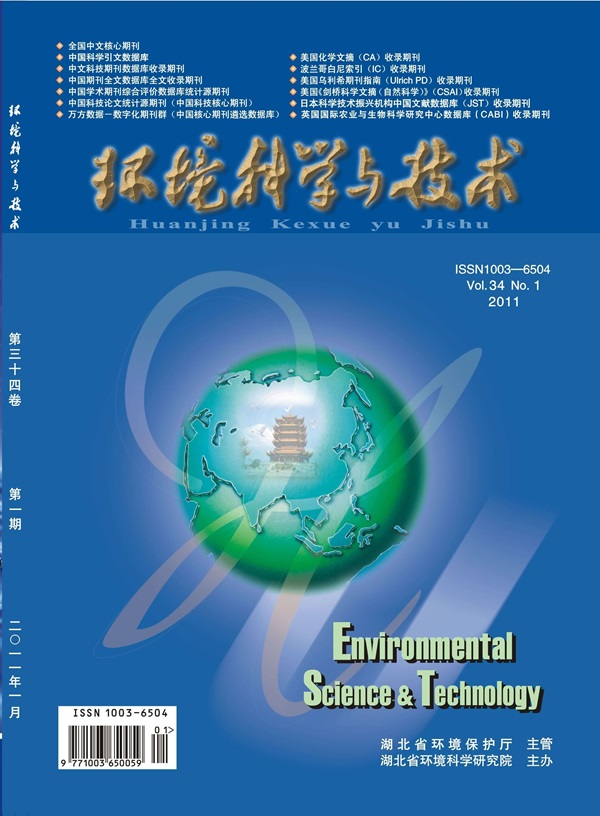
Environmental Science & Technology (ES&T) is a co-sponsored academic and technical magazine by the Hubei Provincial Environmental Protection Bureau and the Hubei Provincial Academy of Environmental Sciences.
Environmental Science & Technology (ES&T) holds the status of Chinese core journals, scientific papers source journals of China, Chinese Science Citation Database source journals, and Chinese Academic Journal Comprehensive Evaluation Database source journals. This publication focuses on the academic field of environmental protection, featuring articles related to environmental protection and technical advancements.





 京公网安备 11010802042870号
京ICP备2023020795号-1
京公网安备 11010802042870号
京ICP备2023020795号-1

 分享
分享
 求助内容:
求助内容: 应助结果提醒方式:
 扫码关注我们
