Seshika Ratwatte, Simon Stewart, David Playford, Geoff Strange, David S Celermajer
{"title":"成人左室舒张功能不全肺动脉高压的特点。","authors":"Seshika Ratwatte, Simon Stewart, David Playford, Geoff Strange, David S Celermajer","doi":"10.1136/openhrt-2025-003174","DOIUrl":null,"url":null,"abstract":"<p><strong>Background and objectives: </strong>Left ventricular diastolic dysfunction (LVDD) is commonly associated with pulmonary hypertension (PHT); however, the factors associated with the presence and severity of PHT in patients with LVDD have not been well characterised.</p><p><strong>Methods: </strong>We analysed the profiles and echo characteristics of 16 058 adults with LVDD and preserved left ventricular ejection fraction (LVEF, >50%) from the National Echocardiography Database of Australia. Peak tricuspid regurgitation velocity (TRV) was used to determine the presence of PHT. Univariate and multivariate analyses were performed to evaluate the parameters associated with the presence/increasing severity of PHT.</p><p><strong>Results: </strong>Mean age was 73±12 years and 9216 (57.4%) were women. 2503 (15.6%) subjects had atrial fibrillation (AF) and 13 555 (84.4%) were in sinus rhythm. Overall, 9976 (62.1%) had PHT (TRV >2.9 m/s). There was a progressive increase in indexed left atrial volume with rising TRV levels. AF and right ventricular (RV) dilation were strongly associated with the presence of PHT (adjusted OR (aOR) 1.27 (95% CI 1.12 to 1.43) and aOR 4.99 (95% CI 4.44 to 5.62), respectively). Increased age, LVEF and body mass index were also independently associated with PHT (p<0.001). On multivariate analysis, older age, female sex, AF, lower E/e' and LVEF were independently associated with the severity of PHT (p<0.001). The presence of AF increased the TRV by an average of 0.32 m/s, RV dilation by 1.82 m/s, female sex by 0.32 m/s and age (per decade) by 0.3 m/s.</p><p><strong>Conclusion: </strong>In this large study, PHT was common in LVDD and was strongly associated with the presence of enlarged left atrium, AF and older age, in particular.</p><p><strong>Trial registration number: </strong>ACTRN12617001387314.</p>","PeriodicalId":19505,"journal":{"name":"Open Heart","volume":"12 1","pages":""},"PeriodicalIF":2.8000,"publicationDate":"2025-04-02","publicationTypes":"Journal Article","fieldsOfStudy":null,"isOpenAccess":false,"openAccessPdf":"https://www.ncbi.nlm.nih.gov/pmc/articles/PMC11969581/pdf/","citationCount":"0","resultStr":"{\"title\":\"Characteristics of pulmonary hypertension in adults with left ventricular diastolic dysfunction.\",\"authors\":\"Seshika Ratwatte, Simon Stewart, David Playford, Geoff Strange, David S Celermajer\",\"doi\":\"10.1136/openhrt-2025-003174\",\"DOIUrl\":null,\"url\":null,\"abstract\":\"<p><strong>Background and objectives: </strong>Left ventricular diastolic dysfunction (LVDD) is commonly associated with pulmonary hypertension (PHT); however, the factors associated with the presence and severity of PHT in patients with LVDD have not been well characterised.</p><p><strong>Methods: </strong>We analysed the profiles and echo characteristics of 16 058 adults with LVDD and preserved left ventricular ejection fraction (LVEF, >50%) from the National Echocardiography Database of Australia. Peak tricuspid regurgitation velocity (TRV) was used to determine the presence of PHT. Univariate and multivariate analyses were performed to evaluate the parameters associated with the presence/increasing severity of PHT.</p><p><strong>Results: </strong>Mean age was 73±12 years and 9216 (57.4%) were women. 2503 (15.6%) subjects had atrial fibrillation (AF) and 13 555 (84.4%) were in sinus rhythm. Overall, 9976 (62.1%) had PHT (TRV >2.9 m/s). There was a progressive increase in indexed left atrial volume with rising TRV levels. AF and right ventricular (RV) dilation were strongly associated with the presence of PHT (adjusted OR (aOR) 1.27 (95% CI 1.12 to 1.43) and aOR 4.99 (95% CI 4.44 to 5.62), respectively). Increased age, LVEF and body mass index were also independently associated with PHT (p<0.001). On multivariate analysis, older age, female sex, AF, lower E/e' and LVEF were independently associated with the severity of PHT (p<0.001). The presence of AF increased the TRV by an average of 0.32 m/s, RV dilation by 1.82 m/s, female sex by 0.32 m/s and age (per decade) by 0.3 m/s.</p><p><strong>Conclusion: </strong>In this large study, PHT was common in LVDD and was strongly associated with the presence of enlarged left atrium, AF and older age, in particular.</p><p><strong>Trial registration number: </strong>ACTRN12617001387314.</p>\",\"PeriodicalId\":19505,\"journal\":{\"name\":\"Open Heart\",\"volume\":\"12 1\",\"pages\":\"\"},\"PeriodicalIF\":2.8000,\"publicationDate\":\"2025-04-02\",\"publicationTypes\":\"Journal Article\",\"fieldsOfStudy\":null,\"isOpenAccess\":false,\"openAccessPdf\":\"https://www.ncbi.nlm.nih.gov/pmc/articles/PMC11969581/pdf/\",\"citationCount\":\"0\",\"resultStr\":null,\"platform\":\"Semanticscholar\",\"paperid\":null,\"PeriodicalName\":\"Open Heart\",\"FirstCategoryId\":\"1085\",\"ListUrlMain\":\"https://doi.org/10.1136/openhrt-2025-003174\",\"RegionNum\":0,\"RegionCategory\":null,\"ArticlePicture\":[],\"TitleCN\":null,\"AbstractTextCN\":null,\"PMCID\":null,\"EPubDate\":\"\",\"PubModel\":\"\",\"JCR\":\"Q2\",\"JCRName\":\"CARDIAC & CARDIOVASCULAR SYSTEMS\",\"Score\":null,\"Total\":0}","platform":"Semanticscholar","paperid":null,"PeriodicalName":"Open Heart","FirstCategoryId":"1085","ListUrlMain":"https://doi.org/10.1136/openhrt-2025-003174","RegionNum":0,"RegionCategory":null,"ArticlePicture":[],"TitleCN":null,"AbstractTextCN":null,"PMCID":null,"EPubDate":"","PubModel":"","JCR":"Q2","JCRName":"CARDIAC & CARDIOVASCULAR SYSTEMS","Score":null,"Total":0}
引用次数: 0
摘要
背景和目的:左室舒张功能障碍(LVDD)通常与肺动脉高压(PHT)相关;然而,LVDD患者中与PHT存在和严重程度相关的因素尚未得到很好的表征。方法:我们分析了来自澳大利亚国家超声心动图数据库的16058例LVDD和保留左室射血分数(LVEF, >50%)的成人的概况和回声特征。采用峰值三尖瓣反流速度(TRV)检测PHT的存在。进行单因素和多因素分析,以评估与PHT存在/严重程度增加相关的参数。结果:平均年龄73±12岁,女性9216例(占57.4%)。房颤2503例(15.6%),窦性心律13555例(84.4%)。总的来说,9976个井(62.1%)有PHT (TRV为2.9 m/s)。随着TRV水平的升高,左房容积逐渐增加。AF和右心室(RV)扩张与PHT的存在密切相关(调整后的OR (aOR)分别为1.27 (95% CI 1.12至1.43)和4.99 (95% CI 4.44至5.62)。年龄增加、LVEF和体重指数也与PHT独立相关(结论:在这项大型研究中,PHT在LVDD中很常见,特别是与左心房扩大、房颤和年龄较大密切相关。试验注册号:ACTRN12617001387314。
Characteristics of pulmonary hypertension in adults with left ventricular diastolic dysfunction.
Background and objectives: Left ventricular diastolic dysfunction (LVDD) is commonly associated with pulmonary hypertension (PHT); however, the factors associated with the presence and severity of PHT in patients with LVDD have not been well characterised.
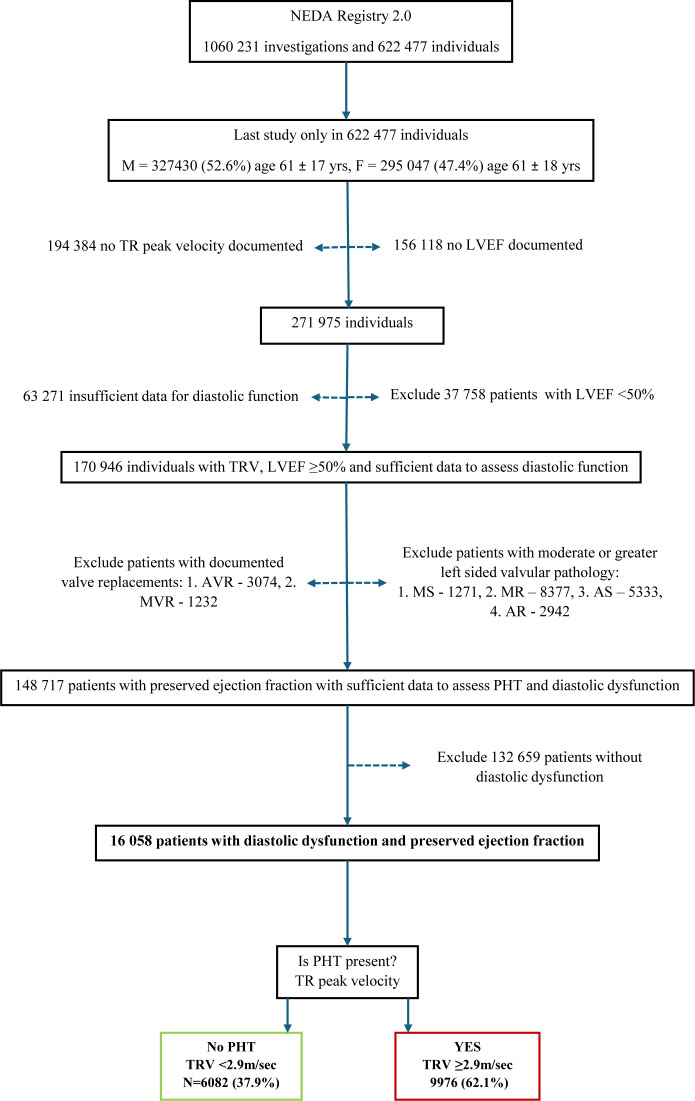
Methods: We analysed the profiles and echo characteristics of 16 058 adults with LVDD and preserved left ventricular ejection fraction (LVEF, >50%) from the National Echocardiography Database of Australia. Peak tricuspid regurgitation velocity (TRV) was used to determine the presence of PHT. Univariate and multivariate analyses were performed to evaluate the parameters associated with the presence/increasing severity of PHT.
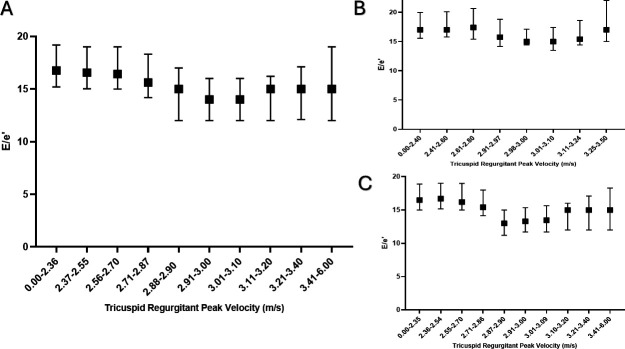
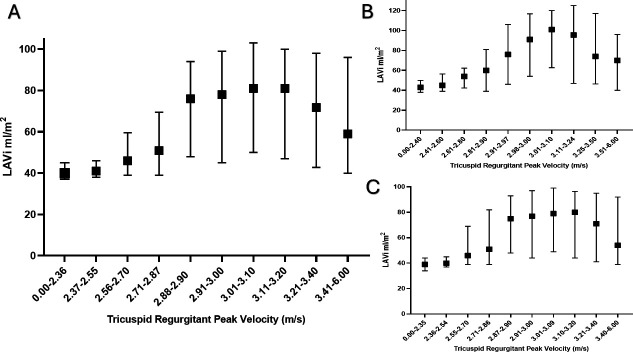
Results: Mean age was 73±12 years and 9216 (57.4%) were women. 2503 (15.6%) subjects had atrial fibrillation (AF) and 13 555 (84.4%) were in sinus rhythm. Overall, 9976 (62.1%) had PHT (TRV >2.9 m/s). There was a progressive increase in indexed left atrial volume with rising TRV levels. AF and right ventricular (RV) dilation were strongly associated with the presence of PHT (adjusted OR (aOR) 1.27 (95% CI 1.12 to 1.43) and aOR 4.99 (95% CI 4.44 to 5.62), respectively). Increased age, LVEF and body mass index were also independently associated with PHT (p<0.001). On multivariate analysis, older age, female sex, AF, lower E/e' and LVEF were independently associated with the severity of PHT (p<0.001). The presence of AF increased the TRV by an average of 0.32 m/s, RV dilation by 1.82 m/s, female sex by 0.32 m/s and age (per decade) by 0.3 m/s.
Conclusion: In this large study, PHT was common in LVDD and was strongly associated with the presence of enlarged left atrium, AF and older age, in particular.
期刊介绍:
Open Heart is an online-only, open access cardiology journal that aims to be “open” in many ways: open access (free access for all readers), open peer review (unblinded peer review) and open data (data sharing is encouraged). The goal is to ensure maximum transparency and maximum impact on research progress and patient care. The journal is dedicated to publishing high quality, peer reviewed medical research in all disciplines and therapeutic areas of cardiovascular medicine. Research is published across all study phases and designs, from study protocols to phase I trials to meta-analyses, including small or specialist studies. Opinionated discussions on controversial topics are welcomed. Open Heart aims to operate a fast submission and review process with continuous publication online, to ensure timely, up-to-date research is available worldwide. The journal adheres to a rigorous and transparent peer review process, and all articles go through a statistical assessment to ensure robustness of the analyses. Open Heart is an official journal of the British Cardiovascular Society.





 京公网安备 11010802042870号
京ICP备2023020795号-1
京公网安备 11010802042870号
京ICP备2023020795号-1

 分享
分享
 求助内容:
求助内容: 应助结果提醒方式:
 扫码关注我们
