Hana Šigutová, Petr Pyszko, Eva Bílková, Aleš Dolný
{"title":"面对气候变化的高度保护生态系统:中欧沼泽蜥目动物群落的快速变化","authors":"Hana Šigutová, Petr Pyszko, Eva Bílková, Aleš Dolný","doi":"10.1111/gcb.70183","DOIUrl":null,"url":null,"abstract":"<p>Freshwater diversity is declining at an alarming rate worldwide, and climate change is a key driver. However, attributing biological shifts solely to climate warming remains challenging because of confounding anthropogenic stressors. Peatbogs, being highly conserved, strictly protected, and minimally disturbed, offer a unique study system to isolate climate effects. We compared odonate assemblages in 27 Central European raised and transitional bogs between two sets of standardized surveys approximately 20 years apart (1998–2006 and 2020–2024). During this period, the mean annual air temperature has increased by 1.23°C. We tracked species richness, composition, taxonomic diversity, and functional traits (thermal tolerance, conservation value indicators, and selected morphological and life-history traits) and also examined phylogenetic patterns of species turnover. Although species richness remained stable, assemblage composition shifted markedly from cold-adapted, vulnerable bog specialists toward warm-adapted habitat generalists with lower conservation value. Notably, Ponto-Mediterranean species and those with a lower upper elevational limit increased their occupancy. Although the phylogenetic signal across the evolutionary tree of odonates was low, implying that the responses of the species to climate change were independent of their phylogenetic position, we revealed frequent genus-level replacements. These findings reinforce the position of odonates as a model group for detecting climate-driven changes in freshwater communities. Our study has revealed that climate warming alone can trigger profound reorganization of insect communities in inherently stable peatbog habitats. Specific traits linked to vulnerability (e.g., thermal index, red list status) and specialization proved to be promising predictors of future shifts in odonatofauna of temperate peatlands. The pronounced changes documented here may precede irreversible transformations of these unique ecosystems, highlighting the urgency of monitoring bog habitats and maintaining their stability under ongoing global change.</p>","PeriodicalId":175,"journal":{"name":"Global Change Biology","volume":"31 4","pages":""},"PeriodicalIF":12.5000,"publicationDate":"2025-04-09","publicationTypes":"Journal Article","fieldsOfStudy":null,"isOpenAccess":false,"openAccessPdf":"https://onlinelibrary.wiley.com/doi/epdf/10.1111/gcb.70183","citationCount":"0","resultStr":"{\"title\":\"Highly Conserved Ecosystems Facing Climate Change: Rapid Shifts in Odonata Assemblages of Central European Bogs\",\"authors\":\"Hana Šigutová, Petr Pyszko, Eva Bílková, Aleš Dolný\",\"doi\":\"10.1111/gcb.70183\",\"DOIUrl\":null,\"url\":null,\"abstract\":\"<p>Freshwater diversity is declining at an alarming rate worldwide, and climate change is a key driver. However, attributing biological shifts solely to climate warming remains challenging because of confounding anthropogenic stressors. Peatbogs, being highly conserved, strictly protected, and minimally disturbed, offer a unique study system to isolate climate effects. We compared odonate assemblages in 27 Central European raised and transitional bogs between two sets of standardized surveys approximately 20 years apart (1998–2006 and 2020–2024). During this period, the mean annual air temperature has increased by 1.23°C. We tracked species richness, composition, taxonomic diversity, and functional traits (thermal tolerance, conservation value indicators, and selected morphological and life-history traits) and also examined phylogenetic patterns of species turnover. Although species richness remained stable, assemblage composition shifted markedly from cold-adapted, vulnerable bog specialists toward warm-adapted habitat generalists with lower conservation value. Notably, Ponto-Mediterranean species and those with a lower upper elevational limit increased their occupancy. Although the phylogenetic signal across the evolutionary tree of odonates was low, implying that the responses of the species to climate change were independent of their phylogenetic position, we revealed frequent genus-level replacements. These findings reinforce the position of odonates as a model group for detecting climate-driven changes in freshwater communities. Our study has revealed that climate warming alone can trigger profound reorganization of insect communities in inherently stable peatbog habitats. Specific traits linked to vulnerability (e.g., thermal index, red list status) and specialization proved to be promising predictors of future shifts in odonatofauna of temperate peatlands. The pronounced changes documented here may precede irreversible transformations of these unique ecosystems, highlighting the urgency of monitoring bog habitats and maintaining their stability under ongoing global change.</p>\",\"PeriodicalId\":175,\"journal\":{\"name\":\"Global Change Biology\",\"volume\":\"31 4\",\"pages\":\"\"},\"PeriodicalIF\":12.5000,\"publicationDate\":\"2025-04-09\",\"publicationTypes\":\"Journal Article\",\"fieldsOfStudy\":null,\"isOpenAccess\":false,\"openAccessPdf\":\"https://onlinelibrary.wiley.com/doi/epdf/10.1111/gcb.70183\",\"citationCount\":\"0\",\"resultStr\":null,\"platform\":\"Semanticscholar\",\"paperid\":null,\"PeriodicalName\":\"Global Change Biology\",\"FirstCategoryId\":\"93\",\"ListUrlMain\":\"https://onlinelibrary.wiley.com/doi/10.1111/gcb.70183\",\"RegionNum\":1,\"RegionCategory\":\"环境科学与生态学\",\"ArticlePicture\":[],\"TitleCN\":null,\"AbstractTextCN\":null,\"PMCID\":null,\"EPubDate\":\"\",\"PubModel\":\"\",\"JCR\":\"Q1\",\"JCRName\":\"BIODIVERSITY CONSERVATION\",\"Score\":null,\"Total\":0}","platform":"Semanticscholar","paperid":null,"PeriodicalName":"Global Change Biology","FirstCategoryId":"93","ListUrlMain":"https://onlinelibrary.wiley.com/doi/10.1111/gcb.70183","RegionNum":1,"RegionCategory":"环境科学与生态学","ArticlePicture":[],"TitleCN":null,"AbstractTextCN":null,"PMCID":null,"EPubDate":"","PubModel":"","JCR":"Q1","JCRName":"BIODIVERSITY CONSERVATION","Score":null,"Total":0}
Highly Conserved Ecosystems Facing Climate Change: Rapid Shifts in Odonata Assemblages of Central European Bogs
Freshwater diversity is declining at an alarming rate worldwide, and climate change is a key driver. However, attributing biological shifts solely to climate warming remains challenging because of confounding anthropogenic stressors. Peatbogs, being highly conserved, strictly protected, and minimally disturbed, offer a unique study system to isolate climate effects. We compared odonate assemblages in 27 Central European raised and transitional bogs between two sets of standardized surveys approximately 20 years apart (1998–2006 and 2020–2024). During this period, the mean annual air temperature has increased by 1.23°C. We tracked species richness, composition, taxonomic diversity, and functional traits (thermal tolerance, conservation value indicators, and selected morphological and life-history traits) and also examined phylogenetic patterns of species turnover. Although species richness remained stable, assemblage composition shifted markedly from cold-adapted, vulnerable bog specialists toward warm-adapted habitat generalists with lower conservation value. Notably, Ponto-Mediterranean species and those with a lower upper elevational limit increased their occupancy. Although the phylogenetic signal across the evolutionary tree of odonates was low, implying that the responses of the species to climate change were independent of their phylogenetic position, we revealed frequent genus-level replacements. These findings reinforce the position of odonates as a model group for detecting climate-driven changes in freshwater communities. Our study has revealed that climate warming alone can trigger profound reorganization of insect communities in inherently stable peatbog habitats. Specific traits linked to vulnerability (e.g., thermal index, red list status) and specialization proved to be promising predictors of future shifts in odonatofauna of temperate peatlands. The pronounced changes documented here may precede irreversible transformations of these unique ecosystems, highlighting the urgency of monitoring bog habitats and maintaining their stability under ongoing global change.
期刊介绍:
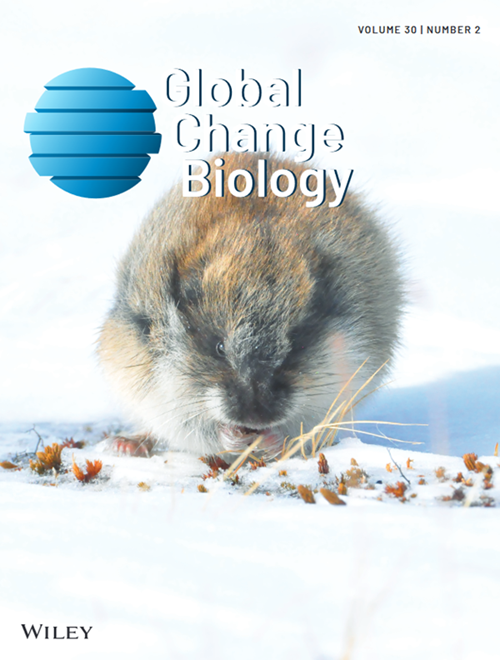
Global Change Biology is an environmental change journal committed to shaping the future and addressing the world's most pressing challenges, including sustainability, climate change, environmental protection, food and water safety, and global health.
Dedicated to fostering a profound understanding of the impacts of global change on biological systems and offering innovative solutions, the journal publishes a diverse range of content, including primary research articles, technical advances, research reviews, reports, opinions, perspectives, commentaries, and letters. Starting with the 2024 volume, Global Change Biology will transition to an online-only format, enhancing accessibility and contributing to the evolution of scholarly communication.





 京公网安备 11010802042870号
京ICP备2023020795号-1
京公网安备 11010802042870号
京ICP备2023020795号-1

 分享
分享
 求助内容:
求助内容: 应助结果提醒方式:
 扫码关注我们
