Helena Duering , Thomas Westerhoff , Frank Kipp , Claudia Stein
{"title":"紫外- c发光二极管照射:控制可移动遗传因子传播的潜力和局限性的评价","authors":"Helena Duering , Thomas Westerhoff , Frank Kipp , Claudia Stein","doi":"10.1016/j.envint.2025.109453","DOIUrl":null,"url":null,"abstract":"<div><h3>Background</h3><div>Recent reports of multispecies outbreaks show that, in addition to multidrug-resistant bacteria, the accumulation and spread of antibiotic resistance-conferring genes (ARGs) in clinical settings is a growing concern. Ultraviolet-C (UV-C) technology is an effective method for inactivating microorganisms. This study aims to investigate whether it also offers a potential method to inactivate mobile genetic elements that confer antibiotic resistance by examining the effects of UV-C irradiation on plasmid-encoded resistance genes, focusing on DNA degradation and whether sublethal doses impact bacterial competence.</div></div><div><h3>Method</h3><div>We examined the effects of UV-C on the plasmids pCR™-Blunt II-TOPO and pUC19, focusing on DNA integrity and functionality post-irradiation. DNA concentration measurements and gel electrophoresis were used to assess plasmid integrity, while transformation assays evaluated gene functionality and the impact of sub-inhibitory UV-C doses on bacterial competence in <em>Escherichia coli</em> and <em>Citrobacter freundii</em>.</div></div><div><h3>Results</h3><div>Results showed a dose-dependent change in plasmid integrity and transformation efficiency. Significant DNA damage was observed at higher UV-C doses, particularly in the TOPO plasmid, which exhibited more pronounced structural damage compared to pUC19. This damage led to a loss of gene functionality, as evidenced by reduced transformation efficiency. Sub-inhibitory doses of UV-C irradiation did not enhance transformation frequency in <em>Escherichia coli</em> or <em>Citrobacter freundii</em>, indicating that UV-C does not promote bacterial competence.</div></div><div><h3>Conclusion</h3><div>UV-C irradiation effectively damages plasmid DNA, reducing the functionality of ARGs. The study confirms that sub-inhibitory single doses of UV-C do not promote bacterial transformation through increased competence.</div></div>","PeriodicalId":308,"journal":{"name":"Environment International","volume":"199 ","pages":"Article 109453"},"PeriodicalIF":9.7000,"publicationDate":"2025-05-01","publicationTypes":"Journal Article","fieldsOfStudy":null,"isOpenAccess":false,"openAccessPdf":"","citationCount":"0","resultStr":"{\"title\":\"Irradiation with Ultraviolet-C Light-Emitting Diodes: Evaluation of the potential and limitations in controlling the spread of mobile genetic elements\",\"authors\":\"Helena Duering , Thomas Westerhoff , Frank Kipp , Claudia Stein\",\"doi\":\"10.1016/j.envint.2025.109453\",\"DOIUrl\":null,\"url\":null,\"abstract\":\"<div><h3>Background</h3><div>Recent reports of multispecies outbreaks show that, in addition to multidrug-resistant bacteria, the accumulation and spread of antibiotic resistance-conferring genes (ARGs) in clinical settings is a growing concern. Ultraviolet-C (UV-C) technology is an effective method for inactivating microorganisms. This study aims to investigate whether it also offers a potential method to inactivate mobile genetic elements that confer antibiotic resistance by examining the effects of UV-C irradiation on plasmid-encoded resistance genes, focusing on DNA degradation and whether sublethal doses impact bacterial competence.</div></div><div><h3>Method</h3><div>We examined the effects of UV-C on the plasmids pCR™-Blunt II-TOPO and pUC19, focusing on DNA integrity and functionality post-irradiation. DNA concentration measurements and gel electrophoresis were used to assess plasmid integrity, while transformation assays evaluated gene functionality and the impact of sub-inhibitory UV-C doses on bacterial competence in <em>Escherichia coli</em> and <em>Citrobacter freundii</em>.</div></div><div><h3>Results</h3><div>Results showed a dose-dependent change in plasmid integrity and transformation efficiency. Significant DNA damage was observed at higher UV-C doses, particularly in the TOPO plasmid, which exhibited more pronounced structural damage compared to pUC19. This damage led to a loss of gene functionality, as evidenced by reduced transformation efficiency. Sub-inhibitory doses of UV-C irradiation did not enhance transformation frequency in <em>Escherichia coli</em> or <em>Citrobacter freundii</em>, indicating that UV-C does not promote bacterial competence.</div></div><div><h3>Conclusion</h3><div>UV-C irradiation effectively damages plasmid DNA, reducing the functionality of ARGs. The study confirms that sub-inhibitory single doses of UV-C do not promote bacterial transformation through increased competence.</div></div>\",\"PeriodicalId\":308,\"journal\":{\"name\":\"Environment International\",\"volume\":\"199 \",\"pages\":\"Article 109453\"},\"PeriodicalIF\":9.7000,\"publicationDate\":\"2025-05-01\",\"publicationTypes\":\"Journal Article\",\"fieldsOfStudy\":null,\"isOpenAccess\":false,\"openAccessPdf\":\"\",\"citationCount\":\"0\",\"resultStr\":null,\"platform\":\"Semanticscholar\",\"paperid\":null,\"PeriodicalName\":\"Environment International\",\"FirstCategoryId\":\"93\",\"ListUrlMain\":\"https://www.sciencedirect.com/science/article/pii/S0160412025002041\",\"RegionNum\":1,\"RegionCategory\":\"环境科学与生态学\",\"ArticlePicture\":[],\"TitleCN\":null,\"AbstractTextCN\":null,\"PMCID\":null,\"EPubDate\":\"2025/4/11 0:00:00\",\"PubModel\":\"Epub\",\"JCR\":\"Q1\",\"JCRName\":\"ENVIRONMENTAL SCIENCES\",\"Score\":null,\"Total\":0}","platform":"Semanticscholar","paperid":null,"PeriodicalName":"Environment International","FirstCategoryId":"93","ListUrlMain":"https://www.sciencedirect.com/science/article/pii/S0160412025002041","RegionNum":1,"RegionCategory":"环境科学与生态学","ArticlePicture":[],"TitleCN":null,"AbstractTextCN":null,"PMCID":null,"EPubDate":"2025/4/11 0:00:00","PubModel":"Epub","JCR":"Q1","JCRName":"ENVIRONMENTAL SCIENCES","Score":null,"Total":0}
引用次数: 0
摘要
最近关于多物种暴发的报告表明,除了耐多药细菌外,抗生素耐药基因(ARGs)在临床环境中的积累和传播日益受到关注。紫外- c (UV-C)技术是一种有效的微生物灭活方法。本研究旨在通过检测UV-C照射对质粒编码的耐药基因的影响(重点是DNA降解)以及亚致死剂量是否会影响细菌的能力,研究它是否也提供了一种潜在的方法来灭活赋予抗生素耐药性的可移动遗传元件。方法我们检测了UV-C对质粒pCR™-Blunt II-TOPO和pUC19的影响,重点关注辐照后DNA的完整性和功能。DNA浓度测量和凝胶电泳用于评估质粒的完整性,而转化试验用于评估基因功能以及亚抑制UV-C剂量对大肠杆菌和弗氏柠檬酸杆菌细菌能力的影响。结果质粒完整性和转化效率呈剂量依赖性变化。在较高的UV-C剂量下,观察到明显的DNA损伤,特别是在TOPO质粒中,与pUC19相比,它表现出更明显的结构损伤。这种损伤导致基因功能丧失,转化效率降低就是证据。亚抑制剂量的UV-C照射并没有提高大肠杆菌或弗氏柠檬酸杆菌的转化频率,表明UV-C并没有提高细菌的能力。结论uv - c照射可有效损伤质粒DNA,降低ARGs的功能。该研究证实,亚抑制单剂量UV-C不会通过增强能力来促进细菌转化。
Irradiation with Ultraviolet-C Light-Emitting Diodes: Evaluation of the potential and limitations in controlling the spread of mobile genetic elements
Background
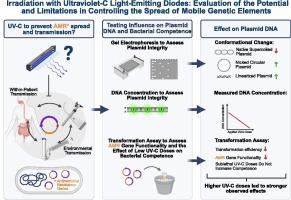
Recent reports of multispecies outbreaks show that, in addition to multidrug-resistant bacteria, the accumulation and spread of antibiotic resistance-conferring genes (ARGs) in clinical settings is a growing concern. Ultraviolet-C (UV-C) technology is an effective method for inactivating microorganisms. This study aims to investigate whether it also offers a potential method to inactivate mobile genetic elements that confer antibiotic resistance by examining the effects of UV-C irradiation on plasmid-encoded resistance genes, focusing on DNA degradation and whether sublethal doses impact bacterial competence.
Method
We examined the effects of UV-C on the plasmids pCR™-Blunt II-TOPO and pUC19, focusing on DNA integrity and functionality post-irradiation. DNA concentration measurements and gel electrophoresis were used to assess plasmid integrity, while transformation assays evaluated gene functionality and the impact of sub-inhibitory UV-C doses on bacterial competence in Escherichia coli and Citrobacter freundii.
Results
Results showed a dose-dependent change in plasmid integrity and transformation efficiency. Significant DNA damage was observed at higher UV-C doses, particularly in the TOPO plasmid, which exhibited more pronounced structural damage compared to pUC19. This damage led to a loss of gene functionality, as evidenced by reduced transformation efficiency. Sub-inhibitory doses of UV-C irradiation did not enhance transformation frequency in Escherichia coli or Citrobacter freundii, indicating that UV-C does not promote bacterial competence.
Conclusion
UV-C irradiation effectively damages plasmid DNA, reducing the functionality of ARGs. The study confirms that sub-inhibitory single doses of UV-C do not promote bacterial transformation through increased competence.
期刊介绍:
Environmental Health publishes manuscripts focusing on critical aspects of environmental and occupational medicine, including studies in toxicology and epidemiology, to illuminate the human health implications of exposure to environmental hazards. The journal adopts an open-access model and practices open peer review.
It caters to scientists and practitioners across all environmental science domains, directly or indirectly impacting human health and well-being. With a commitment to enhancing the prevention of environmentally-related health risks, Environmental Health serves as a public health journal for the community and scientists engaged in matters of public health significance concerning the environment.





 京公网安备 11010802042870号
京ICP备2023020795号-1
京公网安备 11010802042870号
京ICP备2023020795号-1

 分享
分享
 求助内容:
求助内容: 应助结果提醒方式:
 扫码关注我们
