Nivedya T., Nilmadhab Roy, Priyankar Paira and Rinku Chakrabarty
{"title":"挖掘查耳酮的药用价值,开辟癌症化疗新领域","authors":"Nivedya T., Nilmadhab Roy, Priyankar Paira and Rinku Chakrabarty","doi":"10.1039/D5RA01280E","DOIUrl":null,"url":null,"abstract":"<p >A common simple scaffold, 1,3-diaryl-2-propen-1-one (also known as chalcone), is present in many important natural products. This scaffold is the backbone of several flavonoids and isoflavonoids. Owing to the simple approachable synthetic strategies and the rigid backbone of chalcone and its derivatives, they have captivated the attention of researchers for several decades. Chalcone and its derivatives possess strong biological activities, <em>viz.</em> anti-tumor activity and anticancer potency. Accordingly, the <em>in vitro</em> and <em>in vivo</em> anticancer activities of several chalcone-based compounds with strong anticancer potential have been identified, which relies on mechanisms such as cell cycle arrest, regulation of autophagy, and induction of apoptosis. Therefore, researchers have successfully introduced chalcone derivatives to achieve enhanced anticancer activity in traditional chemotherapy. Nevertheless, in-depth research on this highly impactful scaffold is lacking to date. Thus, in this review, we shed light on the recent advances in the relatively unexplored scaffolds of chalcone and its derivatives, which have substantial anticancer activities. Furthermore, future perspectives of the mushrooming research on chalcones as potential anticancer agents (therapeutics) are emphasized.</p>","PeriodicalId":102,"journal":{"name":"RSC Advances","volume":" 15","pages":" 11617-11638"},"PeriodicalIF":4.6000,"publicationDate":"2025-04-14","publicationTypes":"Journal Article","fieldsOfStudy":null,"isOpenAccess":false,"openAccessPdf":"https://pubs.rsc.org/en/content/articlepdf/2025/ra/d5ra01280e?page=search","citationCount":"0","resultStr":"{\"title\":\"Excavating medicinal virtues of chalcones to illuminate a new scope in cancer chemotherapy\",\"authors\":\"Nivedya T., Nilmadhab Roy, Priyankar Paira and Rinku Chakrabarty\",\"doi\":\"10.1039/D5RA01280E\",\"DOIUrl\":null,\"url\":null,\"abstract\":\"<p >A common simple scaffold, 1,3-diaryl-2-propen-1-one (also known as chalcone), is present in many important natural products. This scaffold is the backbone of several flavonoids and isoflavonoids. Owing to the simple approachable synthetic strategies and the rigid backbone of chalcone and its derivatives, they have captivated the attention of researchers for several decades. Chalcone and its derivatives possess strong biological activities, <em>viz.</em> anti-tumor activity and anticancer potency. Accordingly, the <em>in vitro</em> and <em>in vivo</em> anticancer activities of several chalcone-based compounds with strong anticancer potential have been identified, which relies on mechanisms such as cell cycle arrest, regulation of autophagy, and induction of apoptosis. Therefore, researchers have successfully introduced chalcone derivatives to achieve enhanced anticancer activity in traditional chemotherapy. Nevertheless, in-depth research on this highly impactful scaffold is lacking to date. Thus, in this review, we shed light on the recent advances in the relatively unexplored scaffolds of chalcone and its derivatives, which have substantial anticancer activities. Furthermore, future perspectives of the mushrooming research on chalcones as potential anticancer agents (therapeutics) are emphasized.</p>\",\"PeriodicalId\":102,\"journal\":{\"name\":\"RSC Advances\",\"volume\":\" 15\",\"pages\":\" 11617-11638\"},\"PeriodicalIF\":4.6000,\"publicationDate\":\"2025-04-14\",\"publicationTypes\":\"Journal Article\",\"fieldsOfStudy\":null,\"isOpenAccess\":false,\"openAccessPdf\":\"https://pubs.rsc.org/en/content/articlepdf/2025/ra/d5ra01280e?page=search\",\"citationCount\":\"0\",\"resultStr\":null,\"platform\":\"Semanticscholar\",\"paperid\":null,\"PeriodicalName\":\"RSC Advances\",\"FirstCategoryId\":\"92\",\"ListUrlMain\":\"https://pubs.rsc.org/en/content/articlelanding/2025/ra/d5ra01280e\",\"RegionNum\":3,\"RegionCategory\":\"化学\",\"ArticlePicture\":[],\"TitleCN\":null,\"AbstractTextCN\":null,\"PMCID\":null,\"EPubDate\":\"\",\"PubModel\":\"\",\"JCR\":\"Q2\",\"JCRName\":\"CHEMISTRY, MULTIDISCIPLINARY\",\"Score\":null,\"Total\":0}","platform":"Semanticscholar","paperid":null,"PeriodicalName":"RSC Advances","FirstCategoryId":"92","ListUrlMain":"https://pubs.rsc.org/en/content/articlelanding/2025/ra/d5ra01280e","RegionNum":3,"RegionCategory":"化学","ArticlePicture":[],"TitleCN":null,"AbstractTextCN":null,"PMCID":null,"EPubDate":"","PubModel":"","JCR":"Q2","JCRName":"CHEMISTRY, MULTIDISCIPLINARY","Score":null,"Total":0}
Excavating medicinal virtues of chalcones to illuminate a new scope in cancer chemotherapy
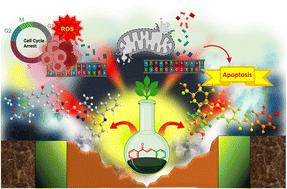
A common simple scaffold, 1,3-diaryl-2-propen-1-one (also known as chalcone), is present in many important natural products. This scaffold is the backbone of several flavonoids and isoflavonoids. Owing to the simple approachable synthetic strategies and the rigid backbone of chalcone and its derivatives, they have captivated the attention of researchers for several decades. Chalcone and its derivatives possess strong biological activities, viz. anti-tumor activity and anticancer potency. Accordingly, the in vitro and in vivo anticancer activities of several chalcone-based compounds with strong anticancer potential have been identified, which relies on mechanisms such as cell cycle arrest, regulation of autophagy, and induction of apoptosis. Therefore, researchers have successfully introduced chalcone derivatives to achieve enhanced anticancer activity in traditional chemotherapy. Nevertheless, in-depth research on this highly impactful scaffold is lacking to date. Thus, in this review, we shed light on the recent advances in the relatively unexplored scaffolds of chalcone and its derivatives, which have substantial anticancer activities. Furthermore, future perspectives of the mushrooming research on chalcones as potential anticancer agents (therapeutics) are emphasized.
期刊介绍:
An international, peer-reviewed journal covering all of the chemical sciences, including multidisciplinary and emerging areas. RSC Advances is a gold open access journal allowing researchers free access to research articles, and offering an affordable open access publishing option for authors around the world.




 京公网安备 11010802042870号
京ICP备2023020795号-1
京公网安备 11010802042870号
京ICP备2023020795号-1

 分享
分享
 求助内容:
求助内容: 应助结果提醒方式:
 扫码关注我们
