Hiren Jungi, Asma A. Virani, Sumana Podder, Harpal Girase, Joyee Mitra
{"title":"废物与废物的可持续结合:利用生物质从废旧锂离子电池中回收关键金属","authors":"Hiren Jungi, Asma A. Virani, Sumana Podder, Harpal Girase, Joyee Mitra","doi":"10.1002/batt.202400518","DOIUrl":null,"url":null,"abstract":"<p>The generation of e-waste from lithium ion batteries (LIBs) is rapidly increasing due to the rising utilization of LIBs in portable electronics, and electric vehicles, with an average life span of 3–5 years. The disposal of spent LIBs is a major environmental concern due to the presence of high percentages of toxic heavy metals and corrosive electrolytes. Efficient and sustainable recycling of spent LIBs has become immensely important, both environmentally and from a circular economy perspective, as LIBs serve as secondary sources of critical metals needed for renewable energy conversion and storage systems. We provide a concise review of metal recovery from spent LIBs using waste biomass in a green and sustainable approach for resource generation, in addition to the valorization of waste biomass. Biomass is used to recover metals from spent LIBs, acting as lixivient, reductant, and as absorbent. We have also discussed a reverse strategy utilizing ‘black mass’ from spent LIBs as catalyst for biomass conversion to value-added products. The concept of “circular economy” is highlighted in a “killing two birds with one stone” approach through the utilization of biomass for the recovery of metals from spent LIBs and vice versa.</p>","PeriodicalId":132,"journal":{"name":"Batteries & Supercaps","volume":"8 4","pages":""},"PeriodicalIF":4.7000,"publicationDate":"2024-11-16","publicationTypes":"Journal Article","fieldsOfStudy":null,"isOpenAccess":false,"openAccessPdf":"","citationCount":"0","resultStr":"{\"title\":\"Sustainable Combination of Waste with Waste: Utilization of Biomass to Recover Critical Metals from Spent Lithium ion Batteries\",\"authors\":\"Hiren Jungi, Asma A. Virani, Sumana Podder, Harpal Girase, Joyee Mitra\",\"doi\":\"10.1002/batt.202400518\",\"DOIUrl\":null,\"url\":null,\"abstract\":\"<p>The generation of e-waste from lithium ion batteries (LIBs) is rapidly increasing due to the rising utilization of LIBs in portable electronics, and electric vehicles, with an average life span of 3–5 years. The disposal of spent LIBs is a major environmental concern due to the presence of high percentages of toxic heavy metals and corrosive electrolytes. Efficient and sustainable recycling of spent LIBs has become immensely important, both environmentally and from a circular economy perspective, as LIBs serve as secondary sources of critical metals needed for renewable energy conversion and storage systems. We provide a concise review of metal recovery from spent LIBs using waste biomass in a green and sustainable approach for resource generation, in addition to the valorization of waste biomass. Biomass is used to recover metals from spent LIBs, acting as lixivient, reductant, and as absorbent. We have also discussed a reverse strategy utilizing ‘black mass’ from spent LIBs as catalyst for biomass conversion to value-added products. The concept of “circular economy” is highlighted in a “killing two birds with one stone” approach through the utilization of biomass for the recovery of metals from spent LIBs and vice versa.</p>\",\"PeriodicalId\":132,\"journal\":{\"name\":\"Batteries & Supercaps\",\"volume\":\"8 4\",\"pages\":\"\"},\"PeriodicalIF\":4.7000,\"publicationDate\":\"2024-11-16\",\"publicationTypes\":\"Journal Article\",\"fieldsOfStudy\":null,\"isOpenAccess\":false,\"openAccessPdf\":\"\",\"citationCount\":\"0\",\"resultStr\":null,\"platform\":\"Semanticscholar\",\"paperid\":null,\"PeriodicalName\":\"Batteries & Supercaps\",\"FirstCategoryId\":\"88\",\"ListUrlMain\":\"https://chemistry-europe.onlinelibrary.wiley.com/doi/10.1002/batt.202400518\",\"RegionNum\":4,\"RegionCategory\":\"材料科学\",\"ArticlePicture\":[],\"TitleCN\":null,\"AbstractTextCN\":null,\"PMCID\":null,\"EPubDate\":\"\",\"PubModel\":\"\",\"JCR\":\"Q2\",\"JCRName\":\"ELECTROCHEMISTRY\",\"Score\":null,\"Total\":0}","platform":"Semanticscholar","paperid":null,"PeriodicalName":"Batteries & Supercaps","FirstCategoryId":"88","ListUrlMain":"https://chemistry-europe.onlinelibrary.wiley.com/doi/10.1002/batt.202400518","RegionNum":4,"RegionCategory":"材料科学","ArticlePicture":[],"TitleCN":null,"AbstractTextCN":null,"PMCID":null,"EPubDate":"","PubModel":"","JCR":"Q2","JCRName":"ELECTROCHEMISTRY","Score":null,"Total":0}
Sustainable Combination of Waste with Waste: Utilization of Biomass to Recover Critical Metals from Spent Lithium ion Batteries
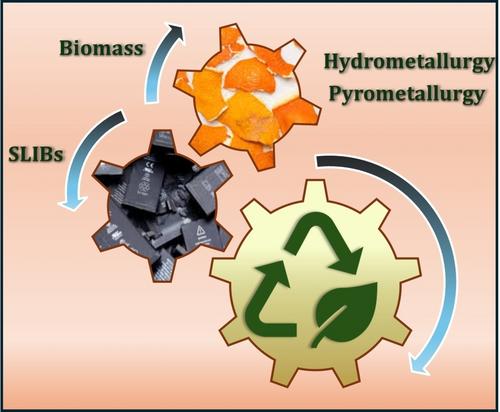
The generation of e-waste from lithium ion batteries (LIBs) is rapidly increasing due to the rising utilization of LIBs in portable electronics, and electric vehicles, with an average life span of 3–5 years. The disposal of spent LIBs is a major environmental concern due to the presence of high percentages of toxic heavy metals and corrosive electrolytes. Efficient and sustainable recycling of spent LIBs has become immensely important, both environmentally and from a circular economy perspective, as LIBs serve as secondary sources of critical metals needed for renewable energy conversion and storage systems. We provide a concise review of metal recovery from spent LIBs using waste biomass in a green and sustainable approach for resource generation, in addition to the valorization of waste biomass. Biomass is used to recover metals from spent LIBs, acting as lixivient, reductant, and as absorbent. We have also discussed a reverse strategy utilizing ‘black mass’ from spent LIBs as catalyst for biomass conversion to value-added products. The concept of “circular economy” is highlighted in a “killing two birds with one stone” approach through the utilization of biomass for the recovery of metals from spent LIBs and vice versa.
期刊介绍:
Electrochemical energy storage devices play a transformative role in our societies. They have allowed the emergence of portable electronics devices, have triggered the resurgence of electric transportation and constitute key components in smart power grids. Batteries & Supercaps publishes international high-impact experimental and theoretical research on the fundamentals and applications of electrochemical energy storage. We support the scientific community to advance energy efficiency and sustainability.






 京公网安备 11010802042870号
京ICP备2023020795号-1
京公网安备 11010802042870号
京ICP备2023020795号-1

 分享
分享
 求助内容:
求助内容: 应助结果提醒方式:
 扫码关注我们
